
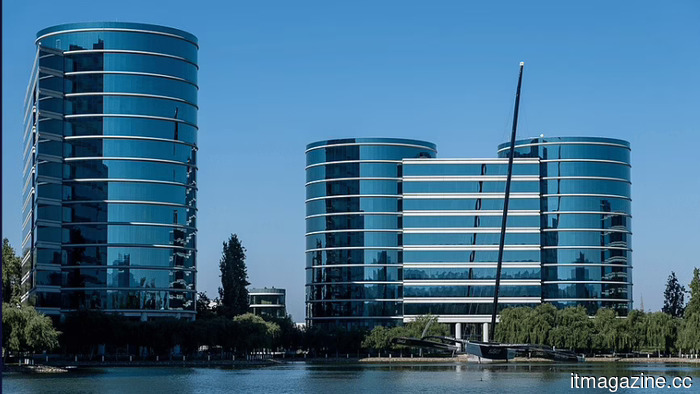
Oracle's stock drops 50% even with a buy consensus from Wall Street, as concerns about concentration arise from a $300B deal with OpenAI.
**TL;DR** Oracle’s stock has decreased by 50% since its peak in September, even though 41 out of 51 Wall Street analysts have issued buy recommendations with an implied upside of 43%. This discrepancy revolves around Oracle's $300 billion Stargate agreement with OpenAI, leading investors to perceive a risk related to circular financing; OpenAI is both a customer and an investor in the companies funding it. Analysts, however, contend that the demand for AI infrastructure is adaptable and that Oracle remains significantly undervalued.
Oracle’s shares have dropped nearly 50% from a record high in September, with a 14% decline in the past six trading days, marking its worst performance in months. Of the 51 Wall Street analysts following the company, 41 recommend buying the stock, with only one issuing a sell rating. The consensus price target suggests a 43% increase over the next year, one of the highest potential upsides among Oracle's large-cap competitors. One portfolio manager noted that the stock presents "an incredibly attractive entry point" with a target price twice the current level, while another dismissed concerns about Oracle’s debt as "ridiculous." While analysts maintain a positive outlook, investors are selling, and this divide does not stem from Oracle’s quarterly performance, which highlighted a 95% rise in net income and a 433% year-on-year increase in remaining performance obligations of $523 billion. The issue revolves around a single customer.
**The Deal** Oracle’s growth strategy significantly relies on a $300 billion, five-year partnership with OpenAI to provide cloud computing infrastructure for Stargate, an AI infrastructure joint venture announced in January 2025 between OpenAI, SoftBank, and Oracle. SoftBank has secured a $40 billion loan to partially finance the initiative. Oracle is tasked with building and operating the data centers necessary for the computational resources OpenAI requires to train and run its models. Initially, the $300 billion deal boosted Oracle’s stock; however, it is now a major factor in its decline. Investors are questioning not Oracle's capacity to erect the infrastructure but whether OpenAI can afford the associated costs.
OpenAI has made commitments for access to hundreds of billions in cloud infrastructure from various providers, based on projections that its revenue will soar from about $25 billion to $280 billion by 2030. The firm anticipates a cash burn of $25 billion in 2026 against a revenue aim of $30 billion. A recent report indicated that OpenAI failed to meet its internal revenue and user growth goals, prompting the company's finance leader to caution that without an acceleration in revenue growth, funding future compute agreements could become problematic. Following this report, Oracle's shares dropped 4.1%.
**The Circularity** Investors have highlighted a structural concern regarding Oracle's partnership with OpenAI that analysts largely overlook. OpenAI is both a client of its financiers and a recipient of funding. It has raised capital from Microsoft, providing Azure infrastructure, contracted with Oracle, which has invested in Stargate, and committed $100 billion to AWS over an eight-year timeframe. Consequently, the firms supplying OpenAI’s infrastructure are often the same ones financing its operations. Should OpenAI's revenue growth stall, it would weaken its capacity to meet these contracts, creating a scenario in which Oracle and others lose both a significant customer and an investment. The risk isn’t solely that Oracle depends on OpenAI for revenue; it relates to the entire financing model's circularity, wherein a downturn at OpenAI could simultaneously reduce Oracle's revenue, impair its investment, and diminish the value of the infrastructure built for this partnership.
OpenAI has already halted its UK Stargate data center project due to high energy costs and an unfavorable regulatory landscape for AI copyright. The planned Stargate facility in Abu Dhabi is exposed to geopolitical risks stemming from the Iran conflict. In March, when Oracle and OpenAI abandoned plans to expand a data center in Abilene, Texas, Meta swiftly considered leasing the location, with assistance from Nvidia in discussions. Oracle proponents argue that Meta's interest demonstrates that the demand for AI infrastructure is interchangeable: if one client cannot occupy a data center, another will. Opponents point out that Meta is already a customer of CoreWeave and Nebius, not Oracle, and that merely considering a lease is not equivalent to signing a $300 billion agreement.
**The Bull Case** Wall Street's rationale is clear: the demand for AI infrastructure is tangible and increasing. Oracle has laid off up to 30,000 employees to redirect $8 billion to $10 billion in annual cash flow towards data center construction, a strategy that TD Cowen analysts label as accelerating Oracle’s shift towards AI. The infrastructure being developed, featuring data centers outfitted with Nvidia GPUs and high-bandwidth networking, is necessary for every entity engaged in training or operating AI models—not just OpenAI. Larry Ellison, Oracle’s leader for 40 years, is noted for his visionary execution,
Other articles
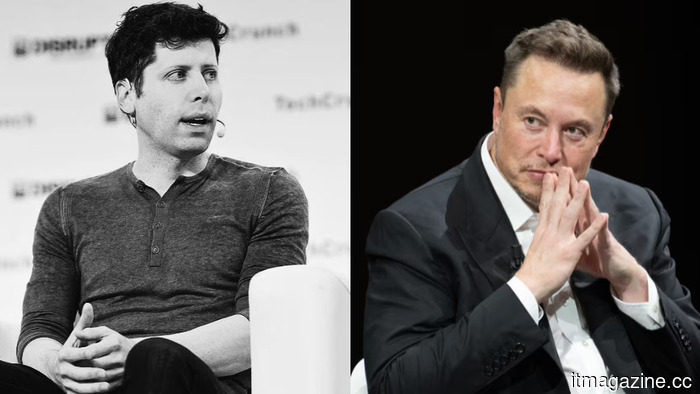 Musk's lawsuit against OpenAI is entering its first week.
La demanda de Elon Musk de $130 mil millones contra OpenAI enfrentó varios obstáculos en su primera semana, incluida su admisión de que xAI se basa en los modelos de OpenAI para su entrenamiento.
Musk's lawsuit against OpenAI is entering its first week.
La demanda de Elon Musk de $130 mil millones contra OpenAI enfrentó varios obstáculos en su primera semana, incluida su admisión de que xAI se basa en los modelos de OpenAI para su entrenamiento.
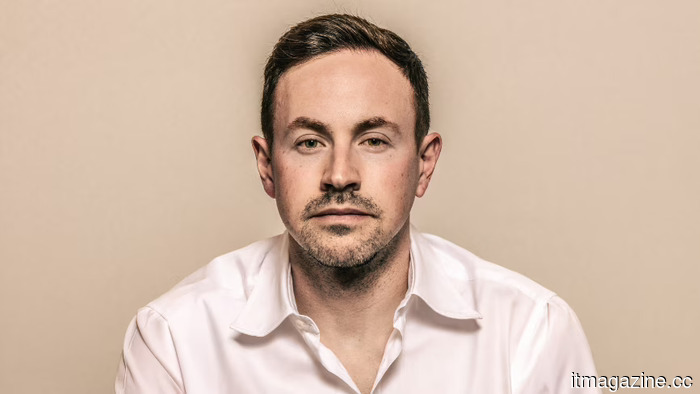 GameStop is getting ready to make an offer on eBay as Cohen aims for a $100 billion valuation.
GameStop is getting ready to make a proposal for eBay. CEO Ryan Cohen is discreetly acquiring shares in the $46 billion marketplace as he aims for a company valuation of $100 billion.
GameStop is getting ready to make an offer on eBay as Cohen aims for a $100 billion valuation.
GameStop is getting ready to make a proposal for eBay. CEO Ryan Cohen is discreetly acquiring shares in the $46 billion marketplace as he aims for a company valuation of $100 billion.
 Why a Canadian bank is attempting to forecast earthquakes using quantum computers.
BMO has submitted a provisional patent for a quantum algorithm designed to predict earthquakes and employs AI to send mobile branches into areas affected by wildfires.
Why a Canadian bank is attempting to forecast earthquakes using quantum computers.
BMO has submitted a provisional patent for a quantum algorithm designed to predict earthquakes and employs AI to send mobile branches into areas affected by wildfires.
 Why a Canadian bank is attempting to forecast earthquakes using quantum computers.
BMO has submitted a provisional patent for a quantum algorithm designed to predict earthquakes and employs AI to deploy mobile branches in areas affected by wildfires.
Apple's $599 Mac mini is no longer available. The reason? The AI agents.
Apple has phased out the $599 Mac mini and increased the starting price to $799, citing high demand for AI and agentic tools that are putting pressure on its desktop supply.
Why a Canadian bank is attempting to forecast earthquakes using quantum computers.
BMO has submitted a provisional patent for a quantum algorithm designed to predict earthquakes and employs AI to deploy mobile branches in areas affected by wildfires.
Apple's $599 Mac mini is no longer available. The reason? The AI agents.
Apple has phased out the $599 Mac mini and increased the starting price to $799, citing high demand for AI and agentic tools that are putting pressure on its desktop supply.
Oracle's stock drops 50% even with a buy consensus from Wall Street, as concerns about concentration arise from a $300B deal with OpenAI.
Out of 51 analysts, 41 recommend Oracle as a buy. The stock has decreased by 50%. This difference represents a $300 billion wager on OpenAI's potential to increase its revenue tenfold.