
Why a Canadian bank is attempting to forecast earthquakes using quantum computers.
BMO has submitted a provisional patent for a quantum algorithm aimed at seismic forecasting and is deploying mobile branches to wildfire areas with AI-driven dispatch. The bank asserts this is the future of risk management.
Typically, banks do not engage directly in earthquake phenomena; their focus is on assessing risk, which is related. Historically, the responsibility of predicting ground movements has resided with seismologists, government agencies, and a select group of specialized insurers. However, Bank of Montreal aims to shift this paradigm or at least participate in it.
In a Bloomberg interview published on May 1, Kristin Milchanowski, BMO’s newly appointed Chief AI and Quantum Officer, revealed that the bank has filed a provisional patent for a quantum algorithm designed to assist in earthquake forecasting. She also mentioned that the same team is leveraging artificial intelligence to send mobile banking units to communities impacted by wildfires, including those that affected parts of Los Angeles last year.
This is an atypical portfolio for a major Canadian financial institution, and BMO intends for it to be so.
BMO solidified its commitment last month with the establishment of the BMO Institute for Applied Artificial Intelligence & Quantum, announced on April 9. This Institute is designed to unify the bank's research, governance, and practical work in technologies that have, until recently, been at opposite ends of the development spectrum.
AI is widespread in financial services, used in fraud detection, credit assessment, and customer service. In contrast, quantum computing remains largely in the research phase, being valuable theoretically but not yet proven in active banking operations.
Milchanowski, who previously served as the bank's chief AI and data officer for 18 months, heads the Institute as its founding director. Shortly after its launch, BMO revealed collaborations with Quantum Industry Canada and the Chicago Quantum Exchange, two respected entities in quantum policy and research in North America.
On paper, this seems like administrative organization, but functionally, it serves as a pointed message: BMO wishes to be recognized not just as an AI-competent bank but also as one interested in quantum innovations.
For the time being, the provisional patent stands as the most tangible indication of this goal. Quantum algorithms are theoretically well-suited to tackle high-dimensional optimization and combinatorial search problems, which become unwieldy for classical hardware as data sizes increase. Seismic forecasting, which depends on vast quantities of geophysical signal data and notoriously complex models, fits this description.
In the published interview, Milchanowski did not assert that BMO had solved this issue. The patent is provisional, the algorithm has yet to be independently assessed, and practical quantum hardware capable of executing such tasks on a large scale is not currently available outside research facilities.
What this filing signifies is intention and a modest investment in potential opportunities. Should quantum advances in this field ever occur, BMO aims to have a stake in it.
Furthermore, there is an immediate commercial rationale. Improved catastrophe modeling has direct implications for insurance, mortgage assets, and infrastructure lending—the sectors where Canadian banks are significantly involved and where patterns of climate-induced losses are necessitating a reevaluation of underwriting processes.
While quantum represents a long-term prospect, the bank's AI initiatives are already operational. Milchanowski indicated to Bloomberg that BMO is employing AI models to pinpoint communities isolated by wildfires and to direct mobile banking units, effectively creating banks-on-wheels, into these areas.
The early 2025 fires in Los Angeles left many residents without access to traditional banking; according to the bank, AI-driven dispatch helps shorten the time from displacement to service reestablishment.
Though this use case may not be glamorous, it differentiates AI applied in operations from AI used for marketing and aligns with a broader trend at BMO, which has been less vocal than some rivals regarding its AI strategy but more prominent in showcasing its applied efforts.
The timing is also significant. Bloomberg recently reported that the broader financial sector is splitting regarding its approach to quantum technology. Goldman Sachs has toned down certain aspects of its quantum research, while JPMorgan continues to invest heavily. BMO’s announcement places it on the investment side of the divide, albeit on a smaller scale.
Whether these efforts will yield returns in the typical timeframe for investors remains uncertain. Researchers broadly agree that quantum hardware capable of addressing real-world issues more efficiently than classical systems is still several years away.
BMO essentially posits that the risks of tardiness surpass the costs of premature investment. This is a justifiable stance, especially for a bank with considerable climate-related exposure and a vested interest in demonstrating its commitment to the technology. However, inherently, it is a gamble that may not yield results for years, if at all.
At present, the most innovative outcome the bank can present is a document at the US Patent and Trademark Office and a fleet of mobile branches arriving in areas cleared of smoke.
Other articles
 Cerebras, a manufacturer of AI chips, aims for an IPO of up to $4 billion, with a valuation of $40 billion.
Cerebras aims to raise up to $4 billion in its Nasdaq IPO, which is valuing the company at $40 billion. This move is supported by a $10 billion computing agreement with OpenAI and clearance from CFIUS.
Cerebras, a manufacturer of AI chips, aims for an IPO of up to $4 billion, with a valuation of $40 billion.
Cerebras aims to raise up to $4 billion in its Nasdaq IPO, which is valuing the company at $40 billion. This move is supported by a $10 billion computing agreement with OpenAI and clearance from CFIUS.
 Why a Canadian bank is attempting to forecast earthquakes using quantum computers.
BMO has submitted a provisional patent for a quantum algorithm aimed at predicting earthquakes and employs AI to deploy mobile branches into areas affected by wildfires.
Why a Canadian bank is attempting to forecast earthquakes using quantum computers.
BMO has submitted a provisional patent for a quantum algorithm aimed at predicting earthquakes and employs AI to deploy mobile branches into areas affected by wildfires.
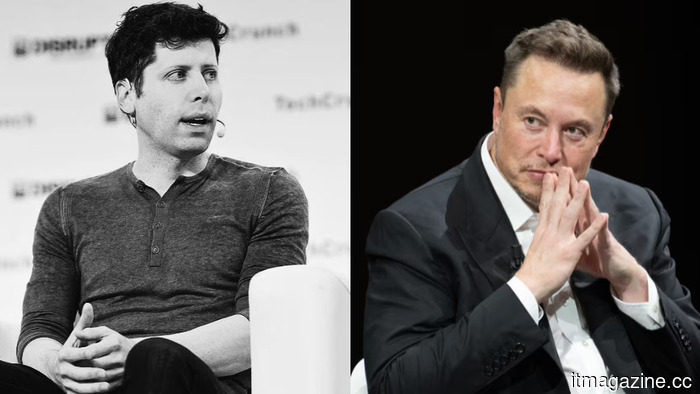 Musk's lawsuit against OpenAI is entering its first week.
La demanda de Elon Musk de $130 mil millones contra OpenAI enfrentó varios obstáculos en su primera semana, incluida su admisión de que xAI se basa en los modelos de OpenAI para su entrenamiento.
The $599 Mac mini from Apple is no longer available. The cause? The AI agents.
Apple has stopped offering the $599 Mac mini and increased the starting price to $799, mentioning the demand for AI and agentic tools as the reason for the strain on its desktop supply.
The $599 Mac mini from Apple is no longer available. The reason? It’s the fault of the AI agents.
Apple has phased out the $599 Mac mini and increased the starting price to $799, attributing this change to the rising demand for AI and agentic tools that is putting pressure on its desktop supply.
Musk's lawsuit against OpenAI is entering its first week.
La demanda de Elon Musk de $130 mil millones contra OpenAI enfrentó varios obstáculos en su primera semana, incluida su admisión de que xAI se basa en los modelos de OpenAI para su entrenamiento.
The $599 Mac mini from Apple is no longer available. The cause? The AI agents.
Apple has stopped offering the $599 Mac mini and increased the starting price to $799, mentioning the demand for AI and agentic tools as the reason for the strain on its desktop supply.
The $599 Mac mini from Apple is no longer available. The reason? It’s the fault of the AI agents.
Apple has phased out the $599 Mac mini and increased the starting price to $799, attributing this change to the rising demand for AI and agentic tools that is putting pressure on its desktop supply.
 ByteDance's Anew Labs unveils its inaugural AI-created therapy as the parent company of TikTok joins the competition in drug discovery.
ByteDance's pharmaceutical division presented an AI-designed IL-17 inhibitor at a conference in Boston. This molecule focuses on interactions that the pharmaceutical industry has labeled as undruggable. Only clinical trials will provide answers.
ByteDance's Anew Labs unveils its inaugural AI-created therapy as the parent company of TikTok joins the competition in drug discovery.
ByteDance's pharmaceutical division presented an AI-designed IL-17 inhibitor at a conference in Boston. This molecule focuses on interactions that the pharmaceutical industry has labeled as undruggable. Only clinical trials will provide answers.
Why a Canadian bank is attempting to forecast earthquakes using quantum computers.
BMO has submitted a provisional patent for a quantum algorithm designed to predict earthquakes and employs AI to deploy mobile branches in areas affected by wildfires.