
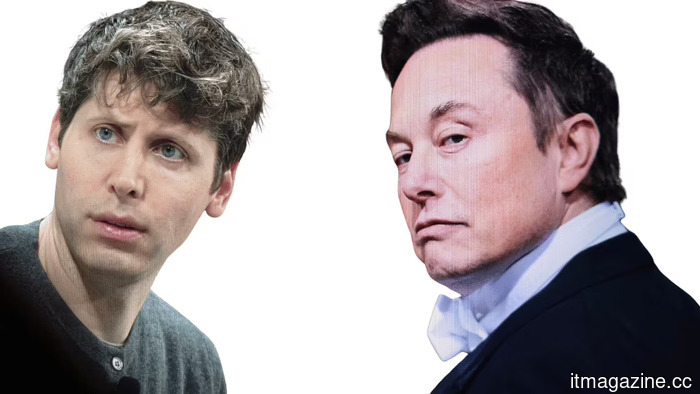
Musk v. Altman opening statements:
Opening arguments in the case of Musk v. Altman commenced on Tuesday in Oakland. Musk's attorney, Steven Molo, stated to the jury that "the defendants stole a charity," using an analogy involving a museum and Picasso. In response, OpenAI’s William Savitt argued that Musk "didn’t get his way" and sought to merge OpenAI with Tesla. A significant piece of evidence presented was an email from Shivon Zilis indicating that Musk had been offered for-profit alternatives. Musk was the first witness, declaring that he was not seeking personal damages and would donate any potential award to OpenAI’s nonprofit. The judge cautioned Musk regarding his "Scam Altman" posts on social media.
“Ladies and gentlemen, we are here today because the defendants in this case stole a charity,” Molo began in an Oakland federal courtroom, setting the stage for what could be an unprecedented technology trial. He asserted to the nine-member advisory jury that without Musk, “there would be no OpenAI, pure and simple,” and accused Sam Altman and Greg Brockman of betraying their co-founder and public trust by transforming a nonprofit committed to the safe advancement of AI into what Molo termed a “wealth machine.” Savitt, defending OpenAI, Altman, and Brockman, offered a more direct explanation: “We are here because Mr. Musk didn’t get his way at OpenAI. That’s what happened. He quit, predicting they would surely fail. But my clients had the audacity to succeed without him. Mr. Musk may not like this, but it does not justify a lawsuit.” Musk later took the stand, dressed in a suit, alongside Altman, sitting at separate tables. The trial is expected to last around four weeks, potentially resulting in remedies up to $134 billion directed back to OpenAI’s nonprofit foundation, removal of Altman and Brockman from their positions, or a return of OpenAI to its nonprofit status.
Molo aimed to simplify the case, avoiding technical AI jargon and framing it as a moral issue of charity theft. His primary analogy illustrated that while a nonprofit museum can operate a gift shop, “the museum store can’t loot the museum and sell the Picassos.” He highlighted Microsoft’s $10 billion investment in January 2023, which valued OpenAI at $20 billion, arguing that such financial maneuvers contradicted the nonprofit’s mission. Molo characterized Musk's approximately $38 million in donations as creating a charitable trust that mandated eternal nonprofit status for the organization, viewing the conversion to for-profit as a violation of that trust. Molo asked Musk to stand during the introduction; Musk complied and acknowledged the courtroom. Molo encouraged jurors to abandon any preconceptions about Musk.
Savitt countered by suggesting Musk’s motives were grounded in a desire for control rather than charity. He told jurors that in 2017, Musk attempted to take control of OpenAI and merge it with Tesla, which the other founders rejected. “They were unwilling to give one person control over AI, as that contradicted OpenAI’s mission.” Savitt presented an email from Zilis to Sam Teller, outlining two restructuring options: merging into a B corporation or establishing a separate OpenAI C Corp alongside the nonprofit. Savitt contended that Musk had been given for-profit alternatives he supported, asserting, “He endorsed a for-profit, provided he remained in charge.” He claimed Musk “never suggested that OpenAI must stay completely nonprofit or even that he believed it should.” An email from Altman to Musk in 2023, entered as evidence, included Altman calling Musk his “hero” but expressing pain over Musk’s criticisms of OpenAI. The exhibit repository consists of hundreds of pages of emails, texts, and call logs.
Musk took the stand after a brief recess following the opening statements. “Allowing looting of a charity would destroy the entire foundation of charitable giving in America. That’s my concern,” he stated to the jury, recounting his history, including his roles at Tesla, SpaceX, and Neuralink, to underscore his long-standing commitment to safe AI development. He is no longer pursuing personal damages but has renounced any financial gain from the case, promising to redirect any award to OpenAI’s nonprofit foundation. The two remaining claims, unjust enrichment and breach of charitable trust, seek up to $134 billion in ill-gotten gains returned to the charity, alongside the removal of Altman as CEO and Brockman as president, and a reversion of OpenAI to its original nonprofit format. After jury selection on Monday, the trial has entered the liability phase, with the jury’s verdict offering advisory guidance for Judge Yvonne Gonzalez Rogers, who will have the final say. Should Musk succeed in establishing liability, a remedies phase is anticipated to start on May 18.
The trial is expected to span about four weeks, with witness testimonies planned based on each individual’s importance.
Other articles
 Nvidia has launched the Nemotron 3 Nano Omni, an open multimodal model featuring 30 billion parameters, with 3 billion active, designed for edge AI agents.
Nvidia's Nemotron 3 Nano Omni integrates vision, audio, and text into a single open-weight model, achieving 9x throughput. Only 3 billion out of 30 billion parameters are utilized per step. It is designed for edge AI agents operating on individual GPUs.
Nvidia has launched the Nemotron 3 Nano Omni, an open multimodal model featuring 30 billion parameters, with 3 billion active, designed for edge AI agents.
Nvidia's Nemotron 3 Nano Omni integrates vision, audio, and text into a single open-weight model, achieving 9x throughput. Only 3 billion out of 30 billion parameters are utilized per step. It is designed for edge AI agents operating on individual GPUs.
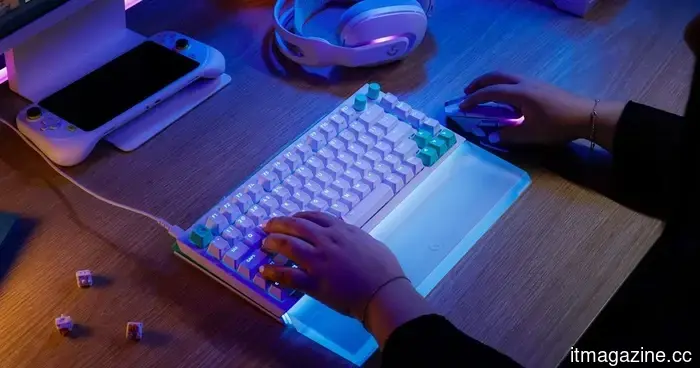 Logitech's latest G512 X gaming keyboard delivers exceptional performance alongside extensive customization options.
Logitech's newest gaming keyboard offers PC gamers additional options to customize, adjust, and showcase their setup, including the responsiveness of each key.
Logitech's latest G512 X gaming keyboard delivers exceptional performance alongside extensive customization options.
Logitech's newest gaming keyboard offers PC gamers additional options to customize, adjust, and showcase their setup, including the responsiveness of each key.
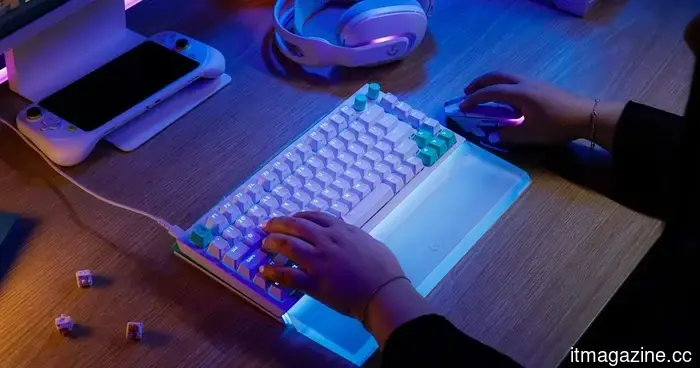 Logitech’s latest G512 X gaming keyboard combines top-tier performance with extensive customization options.
Logitech's newest gaming keyboard offers PC gamers additional options to customize, adjust, and display their setup, including the responsiveness of each key.
Logitech’s latest G512 X gaming keyboard combines top-tier performance with extensive customization options.
Logitech's newest gaming keyboard offers PC gamers additional options to customize, adjust, and display their setup, including the responsiveness of each key.
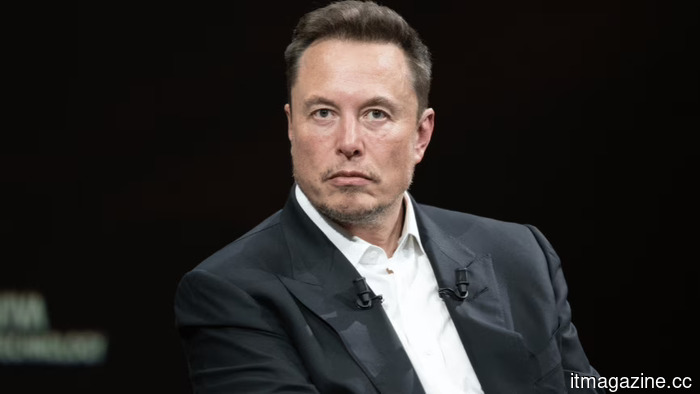 Musk states that the OpenAI case will establish a precedent for
Musk informed the jurors that his lawsuit against OpenAI is focused on safeguarding charitable contributions rather than seeking personal advantages. He has given up any financial benefit and is advocating for a return to the nonprofit status. OpenAI, however, claims that he was aiming for control.
Musk states that the OpenAI case will establish a precedent for
Musk informed the jurors that his lawsuit against OpenAI is focused on safeguarding charitable contributions rather than seeking personal advantages. He has given up any financial benefit and is advocating for a return to the nonprofit status. OpenAI, however, claims that he was aiming for control.
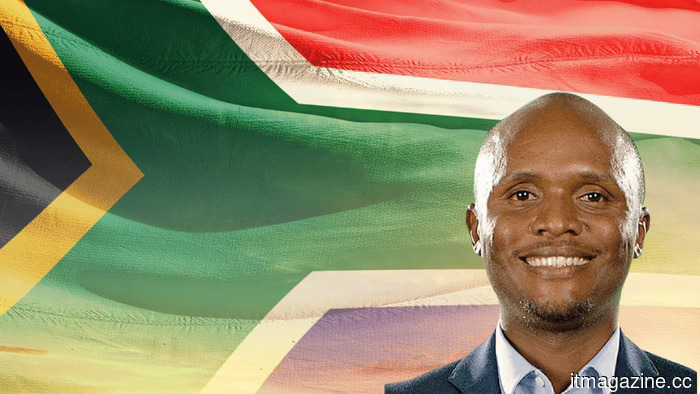 South Africa has retracted its national AI policy after discovering that at least 6 out of 67 academic references were identified as AI-generated fabrications.
South Africa withdrew its proposed AI policy after News24 discovered fraudulent citations in actual journals. Minister Malatsi described it as an "unacceptable lapse." This issue compromised the integrity of the policy intended to regulate AI.
South Africa has retracted its national AI policy after discovering that at least 6 out of 67 academic references were identified as AI-generated fabrications.
South Africa withdrew its proposed AI policy after News24 discovered fraudulent citations in actual journals. Minister Malatsi described it as an "unacceptable lapse." This issue compromised the integrity of the policy intended to regulate AI.
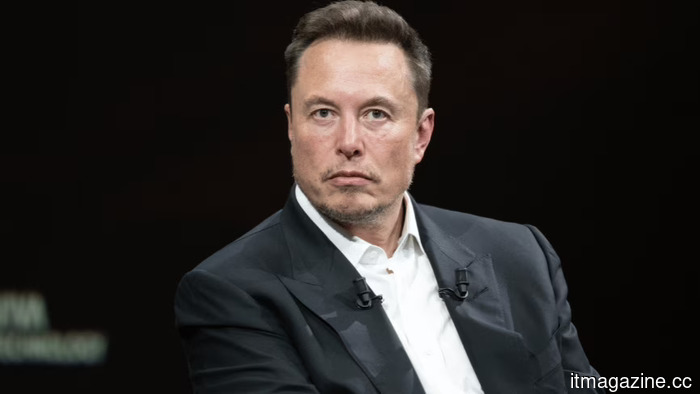 Musk states that the OpenAI trial will establish a significant precedent for
Musk informed the jurors that his lawsuit against OpenAI aims to safeguard charitable contributions rather than serve his own interests. He has rejected any financial advantage and is advocating for a mandatory return to a nonprofit status. In response, OpenAI claims he was seeking to exert control.
Musk states that the OpenAI trial will establish a significant precedent for
Musk informed the jurors that his lawsuit against OpenAI aims to safeguard charitable contributions rather than serve his own interests. He has rejected any financial advantage and is advocating for a mandatory return to a nonprofit status. In response, OpenAI claims he was seeking to exert control.
Musk v. Altman opening statements:
The opening statements in the Musk-Altman trial highlighted the strategies of both parties. Musk's attorney claimed, "they took a charity." In contrast, OpenAI's lawyer stated, "he resigned and filed a lawsuit once they achieved success." Musk was the first to testify.