
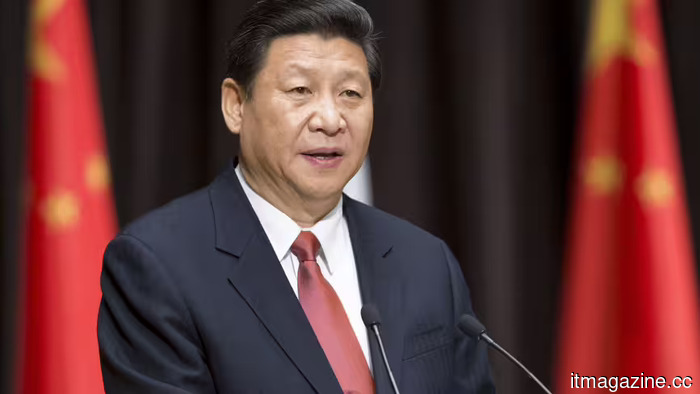
Beijing admonishes the EU following the inclusion of 27 Chinese companies in the 20th sanctions package against Russia and responds by taking action against European defense firms.
TL;DR: China denounced the EU's 20th sanctions package, which included around 27 entities from China and Hong Kong for supplying dual-use goods to Russia's military. In response, Beijing swiftly added seven EU defense companies to its export control list, framing the action as related to Taiwan rather than acknowledging the sanctions on Russia. The EU faces a dilemma: its need to restrict tech exports to Russia conflicts with its reliance on Chinese rare earth minerals essential for its defense capabilities. China's Ministry of Commerce formally criticized the EU's sanctions on Saturday after the bloc listed 27 Chinese and Hong Kong entities, marking the largest sanctions round in two years. Beijing claimed this undermines mutual trust and warned of necessary measures to protect Chinese interests. Within 24 hours, China retaliated by placing seven EU entities on its export control list, specifically targeting defense companies, but framed the response as related to Taiwan, allowing China to escalate tensions without recognizing the core issue.
The sanctions package, adopted on April 23 after a delay due to Hungary and Slovakia's vetoes over Russian oil flows, adds 120 new listings and targets 56 entities in military and energy sectors, along with transaction bans on Russian banks and additional restrictions on cryptocurrency transactions. The EU also approved a 90 billion euro loan to Ukraine, with discussions on the next package already underway.
The firms sanctioned include 16 in third countries and 28 in China and Hong Kong facing tighter export controls on dual-use goods. The escalation is evident in the increasing numbers of sanctioned Chinese entities across the sanctions packages.
China-Russia trade stabilized at $245 billion in 2024 before declining in 2025 due to sanctions affecting payment channels. However, China's exports of critical dual-use items to Russia remained high, with significant increases in various goods like manganese ore and turbojet engines. The U.S. has been sanctioning Chinese firms supporting Russia since 2024, with actions taken against Chinese drone manufacturers and technology transfers to the defense sector.
China's retaliation was swift, targeting defense firms from the EU and emphasizing a Taiwan-related justification. This diplomatic maneuver helps China avoid admitting to materially supporting Russia while still inflicting costs on European industry.
The EU finds itself in a structural contradiction where its sanctions on Russia require action against Chinese entities but also relies on critical Chinese goods for its defense policy. The EU-China trade relationship, valued at €759 billion in 2025, creates dependencies that complicate the EU's ability to escalate sanctions. Ukraine's growth as a defense technology leader underscores the importance of limiting Russian access to Chinese dual-use goods. However, each sanction against Chinese firms risks pushing Beijing to retaliate more forcefully, potentially harming European industry significantly.
The EU's decoupling from China in sensitive technology domains shows that sanctions on Russian-linked Chinese firms are part of a larger rebalancing strategy. The relationship has entered a “do no harm” phase, indicating mutual incremental harm while trying to maintain balance. The trajectory suggests cumulative consequences from ongoing sanctions will pose risks to the EU-China trade relationship, raising the stakes for both sides. The concern is not solely if the relationship can endure additional sanctions but how many it can take before the resulting damage becomes unsustainable, and which side will reach that breaking point first.
Other articles
 Oracle's $16.3 billion financing for data centers needed PIMCO to step in and provide $10 billion after U.S. banks withdrew.
PIMCO acquired $10 billion of Oracle's unprecedented $16.3 billion data center bond offering after U.S. banks stepped back. The Michigan campus is included in the $72 billion Stargate infrastructure debt, which has a maturity of 19.5 years.
Oracle's $16.3 billion financing for data centers needed PIMCO to step in and provide $10 billion after U.S. banks withdrew.
PIMCO acquired $10 billion of Oracle's unprecedented $16.3 billion data center bond offering after U.S. banks stepped back. The Michigan campus is included in the $72 billion Stargate infrastructure debt, which has a maturity of 19.5 years.
 The upcoming iPad may abandon conventional naming conventions as Apple reassesses its product lineup.
Apple might streamline its iPad naming convention by eliminating confusing generation labels. This change is part of a wider plan to enhance clarity in its product lineup and better align it with shifting product positioning.
Sequoia hands out 200 engraved Mac Minis at the AI event as OpenClaw establishes itself as the infrastructure layer that venture capitalists cannot possess.
Alfred Lin distributed 200 engraved Mac Minis that operate on OpenClaw, the open-source AI agent framework that has outperformed Apple's stock and exceeded React on GitHub. Sequoia is unable to invest in it. That is the approach being used.
The upcoming iPad may abandon conventional naming conventions as Apple reassesses its product lineup.
Apple might streamline its iPad naming convention by eliminating confusing generation labels. This change is part of a wider plan to enhance clarity in its product lineup and better align it with shifting product positioning.
Sequoia hands out 200 engraved Mac Minis at the AI event as OpenClaw establishes itself as the infrastructure layer that venture capitalists cannot possess.
Alfred Lin distributed 200 engraved Mac Minis that operate on OpenClaw, the open-source AI agent framework that has outperformed Apple's stock and exceeded React on GitHub. Sequoia is unable to invest in it. That is the approach being used.
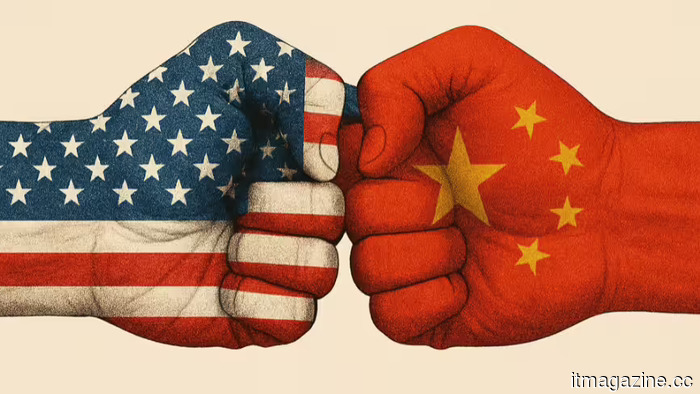 The United States aims to restrict China's access to chip manufacturing equipment. In response, China claims that this move will disrupt the supply chain for all parties involved.
China cautions that the MATCH Act could disturb global chip supply chains as the U.S. Congress moves forward with the most extensive export control markup in history.
The United States aims to restrict China's access to chip manufacturing equipment. In response, China claims that this move will disrupt the supply chain for all parties involved.
China cautions that the MATCH Act could disturb global chip supply chains as the U.S. Congress moves forward with the most extensive export control markup in history.
 Beijing has issued a warning to the EU following the inclusion of 27 Chinese companies in the 20th sanctions package against Russia, and it has taken retaliatory measures against European defense firms.
China denounced the EU's 20th sanctions package aimed at 27 Chinese entities and responded within 24 hours by taking action against seven EU defense companies. Europe's rearmament is reliant on the rare earth materials controlled by Beijing.
Sequoia distributes 200 engraved Mac Minis at an AI event as OpenClaw emerges as the infrastructure layer that VCs cannot possess.
Alfred Lin distributed 200 engraved Mac Minis that operate on OpenClaw, the open-source AI agent framework that has surpassed Apple's stock in sales and outperformed React on GitHub. Sequoia is unable to invest in it. That's the approach.
Beijing has issued a warning to the EU following the inclusion of 27 Chinese companies in the 20th sanctions package against Russia, and it has taken retaliatory measures against European defense firms.
China denounced the EU's 20th sanctions package aimed at 27 Chinese entities and responded within 24 hours by taking action against seven EU defense companies. Europe's rearmament is reliant on the rare earth materials controlled by Beijing.
Sequoia distributes 200 engraved Mac Minis at an AI event as OpenClaw emerges as the infrastructure layer that VCs cannot possess.
Alfred Lin distributed 200 engraved Mac Minis that operate on OpenClaw, the open-source AI agent framework that has surpassed Apple's stock in sales and outperformed React on GitHub. Sequoia is unable to invest in it. That's the approach.
Beijing admonishes the EU following the inclusion of 27 Chinese companies in the 20th sanctions package against Russia and responds by taking action against European defense firms.
China criticized the EU's 20th sanctions package aimed at 27 Chinese entities and responded within a day by targeting seven EU defense companies. Europe's rearmament relies on the rare earth materials that Beijing oversees.