
Sequoia hands out 200 engraved Mac Minis at the AI event as OpenClaw establishes itself as the infrastructure layer that venture capitalists cannot possess.
**TL;DR**: Alfred Lin, of Sequoia Capital, gave away 200 bespoke, numbered Mac Minis at the firm’s "AI at the Frontier" event, featuring easter eggs and a design by Sequoia’s design chief. These Mac Minis have unofficially become the hardware of OpenClaw, an open-source AI framework that has outshone React as GitHub's most-starred project, leading to hardware shortages from Apple. Sequoia did not invest in OpenClaw, as there’s no company to invest in; instead, the giveaway places the firm at the forefront of the AI infrastructure linking models to real-world actions, where Lin anticipates the next wave of venture-backed companies to emerge.
Alfred Lin from Sequoia Capital purchased 200 Mac Minis, each customized with engravings that blend old maps and machine learning visuals, and distributed them at the firm's "AI at the Frontier" event. Each Mac Mini included two easter eggs: Sequoia’s ethos statement and a quote from an AI model. The engravings were the work of Andreas Weiland, Sequoia’s design lead. These numbered machines are visually stunning and priced at $599, having turned into the unofficial hardware of OpenClaw, a popular open-source AI agent framework that outperformed React on GitHub, leading Apple to run out of basic Mac Minis in the U.S. and establishing itself as the fastest-growing open-source project ever. Sequoia did not invest in OpenClaw, as there is no OpenClaw Inc. The firm is giving away hardware related to a project it doesn’t own, which is intentional.
**The project:**
Peter Steinberger, an Austrian developer who previously founded PSPDFKit, built OpenClaw after stepping back from coding following its sale for around $100 million in 2024. He resumed coding in November 2025, initially naming it WhatsApp Relay, later Clawdbot, and then OpenClaw. It’s an open-source AI agent framework that operates locally on consumer hardware and connects to various external language models like Claude, GPT, and DeepSeek. Users can interact via familiar messaging platforms like WhatsApp, Signal, Discord, and Slack. The agent manages multi-step tasks such as scheduling, flight bookings, emailing, coding, and researching multiple sources. By March 2026, OpenClaw garnered around 247,000 GitHub stars and 47,700 forks, with Jensen Huang labeling it “the next ChatGPT.”
The chosen hardware, Mac Minis, features Apple’s unified memory architecture suited for local AI inference. The base model, with 16 gigabytes of RAM, became popular, and higher-memory models quickly sold out. By April 22, the base Mac Mini was no longer available through Apple’s U.S. online store, with eBay listings reaching between $795 and $979 for these models. Delivery times for more capable units extended from six days to six weeks. The demand for Mac Mini and Mac Studio stems from OpenClaw and a wider DRAM shortage, but OpenClaw has set the Mac Mini as the standard hardware for local AI agents like no other project. On April 4, Anthropic discontinued OpenClaw’s access to Claude Pro and Max subscriptions due to API misuse, further compelling users to adopt local inference and amplifying hardware demand.
**The ecosystem:**
In February, Sam Altman announced Steinberger’s addition to OpenAI to develop “next-generation personal agents,” effectively an acqui-hire focusing on the developer rather than the software. OpenClaw transitioned into an independent open-source foundation, with OpenAI as a sponsor but not a controlling entity. Steinberger declined an offer from Meta, and while no acquisition figure was disclosed, social media speculation varied widely. The project's commercial potential is more in the ecosystem around it, with 168 startups creating hosting, deployment, and plugin services based on OpenClaw, generating around $400,000 monthly in revenue. Tencent implemented OpenClaw for over 200 organizations through its enterprise AI platform, ClawPro, while Nvidia introduced NemoClaw to improve enterprise security, announced at GTC 2026. Cisco launched DefenseClaw in response to a security breach that exposed 42,665 publicly accessible OpenClaw instances and a supply-chain attack that identified over 800 malicious skills.
The security challenges are significant. A critical remote code execution flaw, CVE-2026-25253, was found by researcher Mav Levin, with a CVSS score of 8.8. The “ClawHavoc” attack on ClawHub seeded 341 malicious skills into the marketplace, growing to over 800 before detection. These issues reflect the growing pains of an open-source project that swiftly became GitHub's top repository within four months without the necessary security framework typical of enterprise software. OpenAI’s support of the foundation and Nvidia’s NemoClaw reflect efforts
Other articles
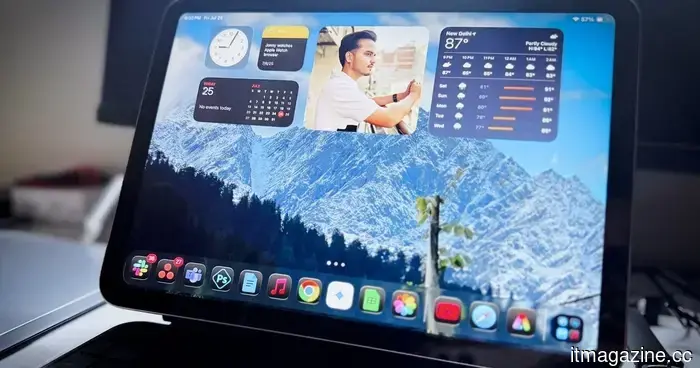 The upcoming iPad may abandon conventional naming conventions as Apple reassesses its product lineup.
Apple might streamline its iPad naming convention by eliminating confusing generation labels. This change is part of a wider plan to enhance clarity in its product lineup and better align it with shifting product positioning.
Foundation Future Industries secures $24 million contracts from the Pentagon for humanoid robot soldiers, supported by Eric Trump and evaluated in Ukraine.
Foundation Future Industries has obtained $24 million in contracts from the Pentagon for humanoid robots that were tested in Ukraine. The company's CEO previously led a bankrupt fintech, one of its advisers is Eric Trump, and it is seeking $500 million at a valuation exceeding $3 billion.
Foundation Future Industries secures $24 million in Pentagon contracts for humanoid robot soldiers, supported by Eric Trump and trialed in Ukraine.
Foundation Future Industries has obtained $24 million in contracts from the Pentagon for humanoid robots that have been tested in Ukraine. The company's CEO previously led a bankrupt fintech firm, an adviser to the company is Eric Trump, and it is seeking $500 million with a valuation exceeding $3 billion.
The upcoming iPad may abandon conventional naming conventions as Apple reassesses its product lineup.
Apple might streamline its iPad naming convention by eliminating confusing generation labels. This change is part of a wider plan to enhance clarity in its product lineup and better align it with shifting product positioning.
Foundation Future Industries secures $24 million contracts from the Pentagon for humanoid robot soldiers, supported by Eric Trump and evaluated in Ukraine.
Foundation Future Industries has obtained $24 million in contracts from the Pentagon for humanoid robots that were tested in Ukraine. The company's CEO previously led a bankrupt fintech, one of its advisers is Eric Trump, and it is seeking $500 million at a valuation exceeding $3 billion.
Foundation Future Industries secures $24 million in Pentagon contracts for humanoid robot soldiers, supported by Eric Trump and trialed in Ukraine.
Foundation Future Industries has obtained $24 million in contracts from the Pentagon for humanoid robots that have been tested in Ukraine. The company's CEO previously led a bankrupt fintech firm, an adviser to the company is Eric Trump, and it is seeking $500 million with a valuation exceeding $3 billion.
 I never expected AI to introduce typos – but it does seem to make sense.
A novel AI tool intentionally introduces typos into emails, indicating a trend where flawed writing is perceived as more human and dependable in an era dominated by AI-generated communication.
I never expected AI to introduce typos – but it does seem to make sense.
A novel AI tool intentionally introduces typos into emails, indicating a trend where flawed writing is perceived as more human and dependable in an era dominated by AI-generated communication.
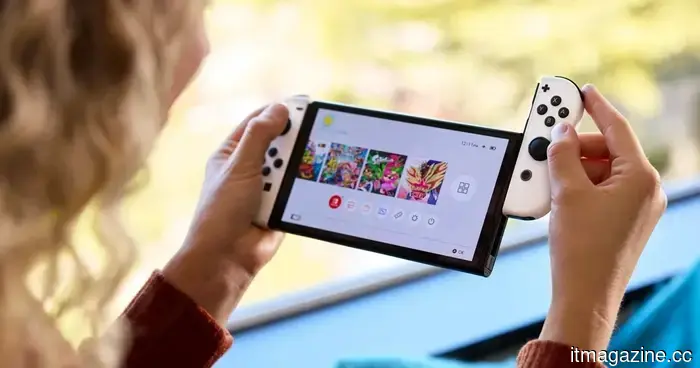 I'm still enjoying the original Switch in 2026. It’s reliable since everything else has become more complicated.
Although Nintendo's original Switch is less powerful than current handhelds, in 2026, its simplicity appears to be less of a disadvantage and more like its main appeal.
I'm still enjoying the original Switch in 2026. It’s reliable since everything else has become more complicated.
Although Nintendo's original Switch is less powerful than current handhelds, in 2026, its simplicity appears to be less of a disadvantage and more like its main appeal.
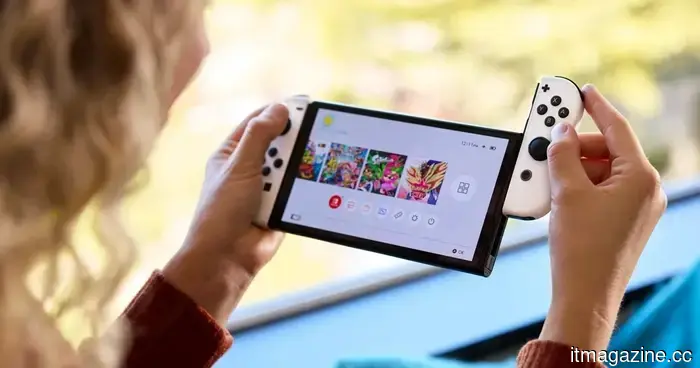 I'm still using the original Switch in 2026. It simply works since everything else has become too complicated.
The original Switch from Nintendo may be less powerful than current handheld devices, but by 2026, its straightforwardness seems less of a drawback and more like a key feature.
I'm still using the original Switch in 2026. It simply works since everything else has become too complicated.
The original Switch from Nintendo may be less powerful than current handheld devices, but by 2026, its straightforwardness seems less of a drawback and more like a key feature.
Sequoia hands out 200 engraved Mac Minis at the AI event as OpenClaw establishes itself as the infrastructure layer that venture capitalists cannot possess.
Alfred Lin distributed 200 engraved Mac Minis that operate on OpenClaw, the open-source AI agent framework that has outperformed Apple's stock and exceeded React on GitHub. Sequoia is unable to invest in it. That is the approach being used.