
Sequoia distributes 200 engraved Mac Minis at an AI event as OpenClaw emerges as the infrastructure layer that VCs cannot possess.
**TL;DR** Alfred Lin, co-steward of Sequoia Capital, handed out 200 custom-engraved, numbered Mac Minis at the firm's "AI at the Frontier" event. Each Mac Mini, designed by Sequoia's design principal, features easter eggs and represents a significant object in the realm of OpenClaw, an open-source AI agent framework that has gained immense popularity, overtaking React on GitHub and causing Apple hardware shortages. Although Sequoia has not invested in OpenClaw, this initiative positions the firm at the forefront of the agentic AI space, which Lin believes will be the foundation for the next wave of venture-capital companies.
At Sequoia's "AI at the Frontier" event, Alfred Lin personally bought 200 Mac Minis, each uniquely engraved with a design combining antique maps and machine learning contour graphs. The attendees received these machines, which contain two easter eggs: Sequoia’s ethos statement regarding creativity and underdogs, along with an AI-generated quote. The engravings were crafted by Andreas Weiland, Sequoia's design principal, and each Mac Mini was individually numbered, noted for being aesthetically pleasing. This $599 computer has emerged as the unofficial hardware for OpenClaw, an open-source AI agent framework that surpassed React in GitHub stars in March, led to the depletion of base Mac Minis in the US, and became the fastest-growing open-source project on the platform. Sequoia did not invest in OpenClaw, as there is no separate entity to invest in; the distribution of this hardware underscores the firm’s strategy.
**The Project**
OpenClaw was developed by Peter Steinberger, an Austrian developer who previously created PSPDFKit, a popular PDF toolkit acquired by Insight Partners for around $100 million in 2024. After taking a break from coding post-sale, Steinberger returned in November 2025, initially naming his new venture WhatsApp Relay, which later evolved into Clawdbot and then OpenClaw. This free, open-source AI agent framework operates locally on consumer hardware and links with external language models like Claude, GPT, and DeepSeek. Users can interact via messaging platforms such as WhatsApp, Signal, Telegram, Discord, and Slack. OpenClaw manages complex workflows including calendar management, flight bookings, email communication, code execution, and multi-source research. By March 2026, it accumulated around 247,000 stars on GitHub and 47,700 forks, with Jensen Huang dubbing it “the next ChatGPT.”
The preference for Mac Minis stems from Apple's centralized memory architecture, making them ideal for local AI inference. The starting model of $599 with 16GB of RAM became the baseline for users, with higher-memory models selling out initially. By April 22, the base Mac Mini was no longer available on Apple's US online store, with eBay prices soaring between $795 and $979. The delivery timeline for high-memory units extended from six days to six weeks. Stock shortages of Mac Mini and Mac Studio arise from OpenClaw demand coupled with a broader DRAM shortage, establishing the Mac Mini as the reference hardware for local AI agents like no other project has done. On April 4, Anthropic prohibited OpenClaw from accessing Claude Pro and Max subscriptions due to API misuse, which further pushed users towards local solutions and increased hardware demand.
**The Ecosystem**
In February, Sam Altman announced Steinberger's recruitment to OpenAI to develop “next-generation personal agents.” This hiring was effectively an acqui-hire focused on Steinberger rather than the software itself. OpenClaw has since transitioned to an independent open-source foundation, sponsored but not controlled by OpenAI. Steinberger also turned down an offer from Meta. No acquisition price was made public, although speculation circulated widely on social media. The project's true value lies not in its codebase but in the surrounding ecosystem: 168 startups providing hosting, deployment, and plugin services centered around OpenClaw, generating around $400,000 per month. Tencent built its enterprise AI agent platform called ClawPro on OpenClaw, deploying it across more than 200 organizations in beta. Nvidia developed NemoClaw atop OpenClaw to enhance security and privacy measures, revealed at GTC 2026. Cisco introduced DefenseClaw in response to a security incident that exposed 42,665 publicly accessible OpenClaw instances alongside a supply-chain attack on the ClawHub marketplace, which revealed over 800 malicious skills.
These security issues are both real and substantial. A major remote code execution vulnerability, CVE-2026-25253 with a CVSS score of 8.8, was uncovered by researcher Mav Levin. The ClawHub supply-chain attack, known as “ClawHavoc,” stemmed from a coordinated effort that introduced 341 malicious skills into the marketplace, later growing to over 800 before detection.
Other articles
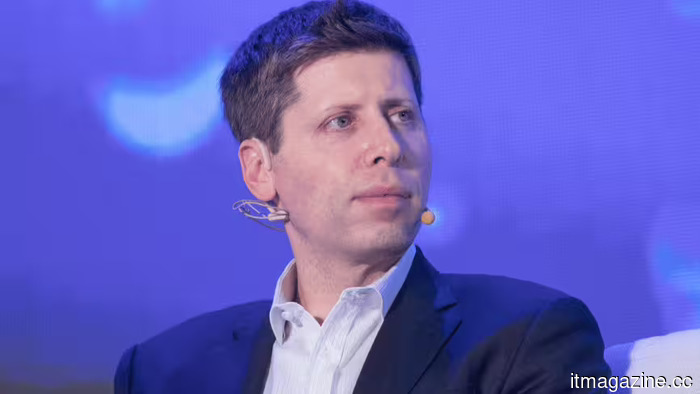 Sam Altman has issued an apology following OpenAI's decision not to report a ChatGPT user involved in the Tumbler Ridge school shooting.
OpenAI marked the ChatGPT account of the Tumbler Ridge shooter as suspicious eight months prior to the attack. Staff suggested notifying law enforcement, but their leadership decided against it. Altman's apology does not bridge the gap.
Foundation Future Industries secures $24 million contracts from the Pentagon for humanoid robot soldiers, with support from Eric Trump and trialed in Ukraine.
Foundation Future Industries has obtained $24 million in Pentagon contracts for humanoid robots that were tested in Ukraine. The company's CEO previously led a bankrupt fintech, an adviser to the firm is Eric Trump, and it is seeking $500 million at a valuation exceeding $3 billion.
Sam Altman has issued an apology following OpenAI's decision not to report a ChatGPT user involved in the Tumbler Ridge school shooting.
OpenAI marked the ChatGPT account of the Tumbler Ridge shooter as suspicious eight months prior to the attack. Staff suggested notifying law enforcement, but their leadership decided against it. Altman's apology does not bridge the gap.
Foundation Future Industries secures $24 million contracts from the Pentagon for humanoid robot soldiers, with support from Eric Trump and trialed in Ukraine.
Foundation Future Industries has obtained $24 million in Pentagon contracts for humanoid robots that were tested in Ukraine. The company's CEO previously led a bankrupt fintech, an adviser to the firm is Eric Trump, and it is seeking $500 million at a valuation exceeding $3 billion.
 NotebookLM now has the ability to automatically arrange your research sources.
Google has introduced automatic source labeling and categorization for NotebookLM. This feature activates automatically when you have five or more sources in a notebook.
Sequoia hands out 200 engraved Mac Minis at an AI event as OpenClaw emerges as the infrastructure layer that VCs cannot possess.
Alfred Lin donated 200 engraved Mac Minis operating on OpenClaw, the open-source AI agent framework that has outpaced Apple's stock and exceeded React on GitHub. Sequoia is unable to invest in it. That's the tactic.
The trial between Musk and Altman commences, with $150 billion involved regarding the transition of OpenAI from a nonprofit to a profit-driven model.
Jury selection for the Musk-Altman trial begins on Monday. Brockman's diary from 2017 referred to OpenAI's commitment to nonprofit status as "a lie." The judge has determined there is "ample evidence" and will independently decide on the remedies.
NotebookLM now has the ability to automatically arrange your research sources.
Google has introduced automatic source labeling and categorization for NotebookLM. This feature activates automatically when you have five or more sources in a notebook.
Sequoia hands out 200 engraved Mac Minis at an AI event as OpenClaw emerges as the infrastructure layer that VCs cannot possess.
Alfred Lin donated 200 engraved Mac Minis operating on OpenClaw, the open-source AI agent framework that has outpaced Apple's stock and exceeded React on GitHub. Sequoia is unable to invest in it. That's the tactic.
The trial between Musk and Altman commences, with $150 billion involved regarding the transition of OpenAI from a nonprofit to a profit-driven model.
Jury selection for the Musk-Altman trial begins on Monday. Brockman's diary from 2017 referred to OpenAI's commitment to nonprofit status as "a lie." The judge has determined there is "ample evidence" and will independently decide on the remedies.
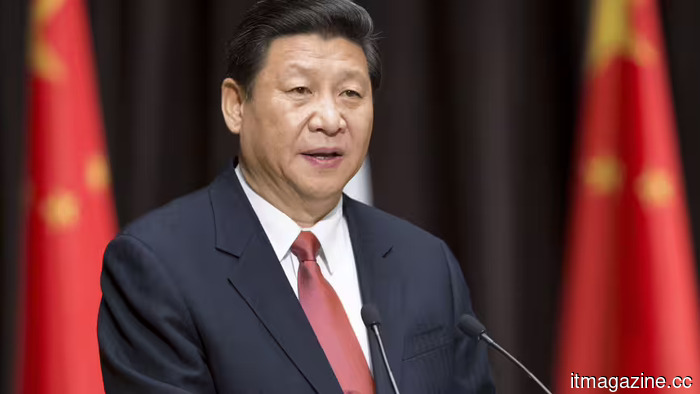 Beijing issues a warning to the EU following the inclusion of 27 Chinese companies in the 20th sanctions package against Russia and responds by taking action against European defense firms.
China criticized the European Union's 20th sanctions package, which affects 27 Chinese entities, and responded within a day by targeting seven EU defense companies. Europe's rearmament relies on the rare earth materials that Beijing possesses.
Beijing issues a warning to the EU following the inclusion of 27 Chinese companies in the 20th sanctions package against Russia and responds by taking action against European defense firms.
China criticized the European Union's 20th sanctions package, which affects 27 Chinese entities, and responded within a day by targeting seven EU defense companies. Europe's rearmament relies on the rare earth materials that Beijing possesses.
Sequoia distributes 200 engraved Mac Minis at an AI event as OpenClaw emerges as the infrastructure layer that VCs cannot possess.
Alfred Lin distributed 200 engraved Mac Minis that operate on OpenClaw, the open-source AI agent framework that has surpassed Apple's stock in sales and outperformed React on GitHub. Sequoia is unable to invest in it. That's the approach.