
Apple places its confidence in Ternus for decisive leadership reminiscent of the Jobs era as the gap in AI technology grows, delays with Siri increase, and tariffs alter the supply chain.
Summary: Bloomberg presents Apple's CEO transition as a gamble on "Jobs-era decisiveness," anticipating that John Ternus will streamline decision-making and accelerate AI initiatives, where Apple's models lag behind competitors and the Siri revamp has faced three delays since 2024. He takes over a product roadmap that includes a foldable iPhone, smart glasses, and a HomePod, alongside a supply chain pivoting to India amidst tariff pressures, EUR 500 million in EU DMA fines, and a 95% drop in Vision Pro sales. Despite this, no key analysts downgraded the stock, and the closest historical comparison is Microsoft's transformation under Nadella.
In Bloomberg’s depiction of the CEO transition at Apple, released the morning after the announcement, the message is clear: the company is banking on Ternus to restore "Jobs-era decisiveness." This suggests that Tim Cook’s consensus-focused leadership, which achieved $416 billion in annual revenue and a $4 trillion market cap, may have been too gradual for a time requiring quicker resolutions regarding AI, product direction, and a supply chain facing geopolitical challenges. Ternus is anticipated to adopt a more centralized decision-making style, having already reorganized the hardware engineering team in early April to align with a new AI platform aimed at speeding up product development.
The reorganization is already taking shape. Johny Srouji, the new chief hardware officer, has divided the hardware division into five areas: hardware engineering overseen by Tom Marieb, silicon led by Sri Santhanam, advanced technologies with Zongjian Chen, platform architecture under Tim Millet, and project management headed by Donny Nordhues. This structure concentrates technical leadership and provides Ternus with a more streamlined reporting mechanism than Cook had. Bloomberg also mentions Ternus's "opposition" to the Vision Pro headset and the terminated autonomous vehicle project to varying extents, indicating sharper instincts about product decisions.
The AI challenge
Ternus's most pressing issue is an AI strategy that is noticeably lagging behind. Apple's server-based model is assessed as inferior to OpenAI's one-year-old GPT-4o. In image analysis tests, human evaluators preferred Meta’s Llama 4 Scout over Apple's cloud model, while Apple's on-device models feature around 150 billion parameters. The custom Gemini model licensed from Google, announced in January and estimated to cost approximately $1 billion annually, boasts a 1.2-trillion-parameter mixture-of-experts architecture, eight times larger than Apple's internal models.
The revamp of Siri, intended to showcase Apple’s AI capabilities, has faced ongoing delays. Initially set for iOS 18 in 2024, it was delayed to spring 2025, then spring 2026, and eventually to partial integration with iOS 27 in September 2026. Apple transitioned from a first-generation architecture to a comprehensive rebuild after determining that the original could not meet required quality levels, necessitating an effective restart for engineers. The Gemini-enhanced Siri is projected to reach 1.5 billion daily users through iOS 26.4, but these delays have also pushed back the HomePod smart home hub’s release from spring to autumn.
Ternus expresses a measured view of the AI challenge. “I think Apple Intelligence is going to continue to grow, and it’ll just make things you do better and easier,” he stated in an interview this month. “If we’re doing it right, people won’t even really notice or think about it.” While this philosophy is coherent, consumers remain unconvinced that AI features warrant new hardware purchases, resulting in an expanding gap between Apple's capabilities and those of its rivals. Gene Munster, an established Apple analyst at Deepwater Asset Management, remarked that Ternus has “an opportunity to elevate AAPL’s multiple by altering the narrative, which represents the greatest opportunity in big tech.” He anticipates “significant hiring under Ternus from AI-focused organizations like Anthropic and OpenAI.”
The product roadmap
The hardware lineup for 2026 and 2027 represents Apple's most ambitious endeavor in years and aligns directly with Ternus’s expertise. A foldable iPhone is set to debut alongside the iPhone 18 Pro in September, featuring a book-style design and a display roughly the size of an iPad mini, priced higher than existing models. Apple is assessing at least four frame designs for AI smart glasses aimed at mass production in late 2026 or early 2027, with anticipated shipments of three to five million units in the launch year. These glasses will not function as standalone devices: they will depend on a connected iPhone for processing, which ties their success to the already delayed Siri revamp.
The M5 generation of Apple Silicon is being rolled out across the Mac product line. The Vision Pro, which sold around 390,000 units upon its launch before experiencing a 95% drop in sales to an estimated 80,000 to 90
Other articles
 You can now engage in conversations that feel human-like with Google’s intelligent home device, Gemini.
Google is introducing Continued Conversation to Gemini for Home, allowing users of Nest and Google Home to ask follow-up questions without needing to repeat the wake phrase each time.
You can now engage in conversations that feel human-like with Google’s intelligent home device, Gemini.
Google is introducing Continued Conversation to Gemini for Home, allowing users of Nest and Google Home to ask follow-up questions without needing to repeat the wake phrase each time.
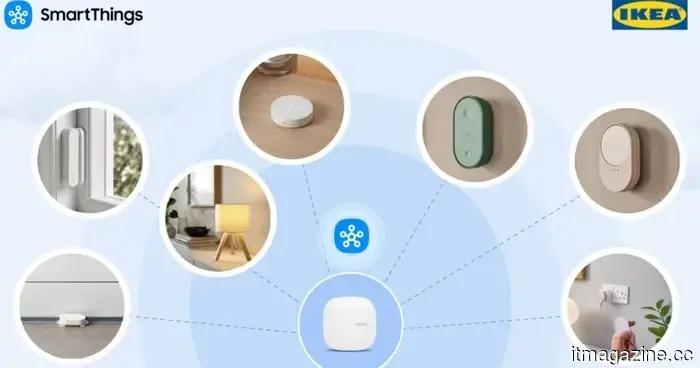 The Samsung SmartThings network will be compatible with Ikea's Matter-ready devices.
Samsung SmartThings now accommodates 25 IKEA Matter-over-Thread devices, which feature smart bulbs, plugs, sensors, and a remote with a scroll wheel.
The Samsung SmartThings network will be compatible with Ikea's Matter-ready devices.
Samsung SmartThings now accommodates 25 IKEA Matter-over-Thread devices, which feature smart bulbs, plugs, sensors, and a remote with a scroll wheel.
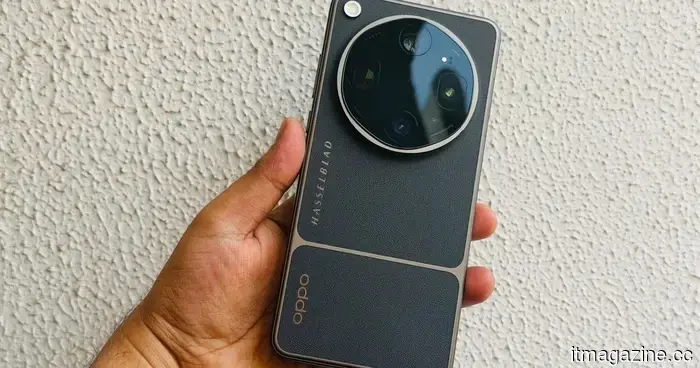 Oppo Find X9 Ultra arrives with camera capabilities that Apple and Samsung would likely avoid attempting.
The Oppo Find X9 Ultra has arrived, and although it includes all the typical flagship features, its incredibly ambitious camera technology is what should truly make Samsung and Apple a bit uneasy.
Oppo Find X9 Ultra arrives with camera capabilities that Apple and Samsung would likely avoid attempting.
The Oppo Find X9 Ultra has arrived, and although it includes all the typical flagship features, its incredibly ambitious camera technology is what should truly make Samsung and Apple a bit uneasy.
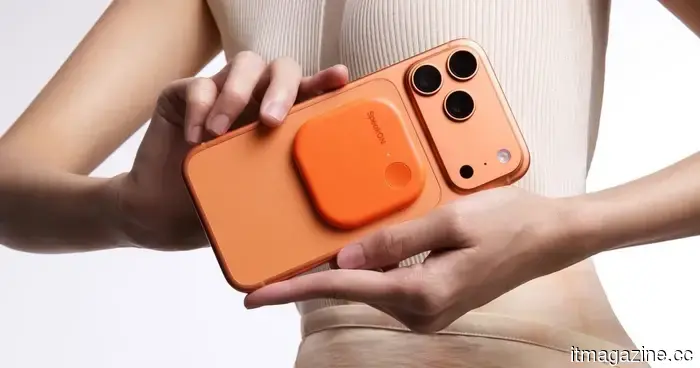 SpeakON: A Revolutionary Approach to Voice-First Productivity
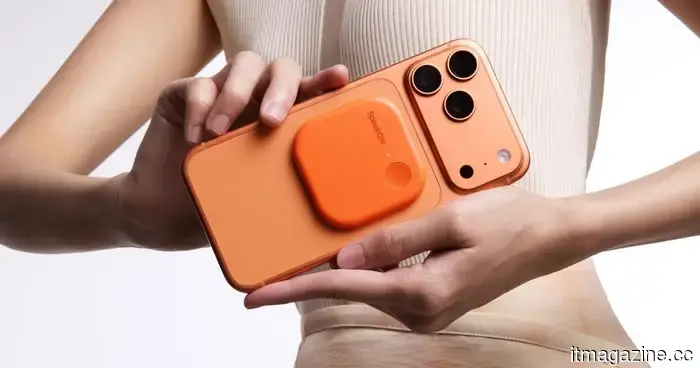
SpeakOn transforms voice into refined, professional text. Moreover, in addition to its remarkable function as an idea archiver, it serves as an essential MagSafe accessory for your iPhone.
SpeakON: A Revolutionary Approach to Voice-First Productivity
SpeakOn transforms voice into refined, professional text. Moreover, in addition to its remarkable function as an idea archiver, it serves as an essential MagSafe accessory for your iPhone.
 SpeakON: A New Phase of Voice-Driven Productivity
SpeakOn transforms voice into refined, professional text, and in addition to its remarkable functionality as an idea repository, it serves as an essential MagSafe accessory for your iPhone.
SpeakON: A New Phase of Voice-Driven Productivity
SpeakOn transforms voice into refined, professional text, and in addition to its remarkable functionality as an idea repository, it serves as an essential MagSafe accessory for your iPhone.
 Apple places its confidence in Ternus for decisiveness reminiscent of the Jobs era, as the gap in AI technology expands, delays with Siri increase, and tariffs alter the supply chain.
Bloomberg reports that Apple is expecting Ternus to demonstrate the decisiveness characteristic of the Jobs era. He takes over an AI strategy that includes GPT-4o, a Siri overhaul that has faced three delays, and $100 billion in imports from China that are currently under tariff pressure.
Apple places its confidence in Ternus for decisiveness reminiscent of the Jobs era, as the gap in AI technology expands, delays with Siri increase, and tariffs alter the supply chain.
Bloomberg reports that Apple is expecting Ternus to demonstrate the decisiveness characteristic of the Jobs era. He takes over an AI strategy that includes GPT-4o, a Siri overhaul that has faced three delays, and $100 billion in imports from China that are currently under tariff pressure.
Apple places its confidence in Ternus for decisive leadership reminiscent of the Jobs era as the gap in AI technology grows, delays with Siri increase, and tariffs alter the supply chain.
Bloomberg reports that Apple is looking for the kind of decisiveness from Ternus that characterized the Jobs era. He takes over an AI strategy linked to GPT-4o, a Siri overhaul that has faced three delays, and $100 billion in imports from China that are under tariff scrutiny.