
Apple places its confidence in Ternus for decisiveness reminiscent of the Jobs era, as the gap in AI technology expands, delays with Siri increase, and tariffs alter the supply chain.
Summary: Bloomberg emphasizes Apple's CEO transition as a wager on “Jobs-era decisiveness,” with John Ternus anticipated to centralize decision-making and accelerate AI developments, an area where Apple’s models lag behind competitors’ year-old offerings. The overhaul of Siri has also faced three delays since 2024. Ternus will manage a product roadmap that includes a foldable iPhone, smart glasses, and a HomePod while navigating a supply chain shifting to India amid tariff pressures, EUR 500 million in EU DMA fines, and a Vision Pro whose sales have plummeted by 95%. Despite these challenges, analysts have not downgraded the stock, drawing parallels to Nadella’s transformation of Microsoft.
Bloomberg's portrayal of the transition, published shortly after the announcement, conveyed that the company is counting on John Ternus to restore “Jobs-era decisiveness.” This suggests that while Tim Cook’s consensus-driven style yielded $416 billion in annual revenue and a $4 trillion market cap, it may be too slow for the current demand for quicker decisions regarding AI, product strategy, and a supply chain under geopolitical strain. Ternus is expected to adopt a more centralized decision-making role, having already restructured the hardware engineering organization in early April to align with a new AI platform aimed at speeding up product development.
The reorganization is evident, as chief hardware officer Johny Srouji has divided the hardware group into five divisions: hardware engineering led by Tom Marieb, silicon by Sri Santhanam, advanced technologies by Zongjian Chen, platform architecture by Tim Millet, and project management by Donny Nordhues. This structure enhances technical leadership and establishes a flatter reporting hierarchy for Ternus compared to Cook. Bloomberg highlights that Ternus “opposed” both the Vision Pro headset and the shelved autonomous car initiative to varying extents, indicating a more discerning approach to product offerings.
The most pressing challenge Ternus faces is an AI strategy that has noticeably fallen behind. Apple’s server-based model is rated lower than OpenAI’s GPT-4o, while human evaluators have found Meta’s Llama 4 Scout superior to Apple’s model in image analysis. Apple’s on-device models operate with around 150 billion parameters, whereas the custom Gemini model licensed from Google, estimated to cost around $1 billion annually, features a 1.2-trillion-parameter architecture—eight times larger than Apple's internal development.
The overhaul of Siri, intended to showcase Apple’s AI capabilities, has encountered multiple delays. Initially scheduled for iOS 18 in 2024, it has been postponed to spring 2025, then to spring 2026, and partially to iOS 27 in September 2026. Apple switched from a first-generation system to a complete redevelopment upon discovering the original could not meet the required quality standards, leading engineers to restart the project. The Gemini-powered Siri version is forecasted to reach 1.5 billion daily users by iOS 26.4, but these delays have also postponed the release of the HomePod smart home hub, which relies on the updated assistant.
Ternus adopts a measured view of the AI challenge. He expressed to Tom’s Guide this month that “Apple Intelligence is going to keep growing and will make tasks easier and better.” This philosophy is sound; however, consumers have yet to be convinced that AI enhancements warrant new hardware purchases, resulting in a widening gap between Apple’s capabilities and those of its rivals. Gene Munster, a veteran Apple analyst at Deepwater Asset Management, noted that Ternus has the chance to enhance AAPL’s valuation by shifting the narrative, which he views as a significant opportunity in big tech. He anticipates “significant hires from AI-focused firms like Anthropic and OpenAI” under Ternus.
The product pipeline for 2026 and 2027 is the most ambitious Apple has pursued in years, aligning with Ternus’s expertise. A foldable iPhone is expected alongside the iPhone 18 Pro in September, featuring a book-style design and an internal display about the size of an iPad mini, priced higher than current models. Apple is testing at least four design prototypes for AI smart glasses aimed at mass production in late 2026 or early 2027, projecting shipments of three to five million units in the inaugural year. These glasses will not function independently, relying on a connected iPhone for processing, tying their success to the yet-to-be-realized Siri enhancement.
The rollout of the M5 generation of Apple Silicon is underway across the Mac range. The Vision Pro, which released approximately 390,000 units in its inaugural year before experiencing a 95% decline in sales to an estimated 80,000 to 90,000 units in 2025, has been deprioritized. Apple has slashed its marketing expenditures on the headset by up to 95% and is reallocating engineering resources toward the smart glasses
Other articles
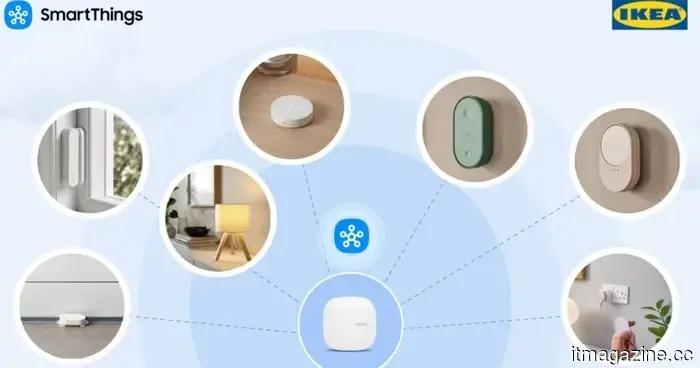 The Samsung SmartThings network will be compatible with Ikea's Matter-ready devices.
Samsung SmartThings now accommodates 25 IKEA Matter-over-Thread devices, which feature smart bulbs, plugs, sensors, and a remote with a scroll wheel.
The Samsung SmartThings network will be compatible with Ikea's Matter-ready devices.
Samsung SmartThings now accommodates 25 IKEA Matter-over-Thread devices, which feature smart bulbs, plugs, sensors, and a remote with a scroll wheel.
 You can now engage in human-like conversations with Google’s advanced smart home device, Gemini.
Google is introducing Continued Conversation to Gemini for Home, enabling Nest and Google Home users to ask follow-up questions without needing to repeat the wake phrase each time.
You can now engage in human-like conversations with Google’s advanced smart home device, Gemini.
Google is introducing Continued Conversation to Gemini for Home, enabling Nest and Google Home users to ask follow-up questions without needing to repeat the wake phrase each time.
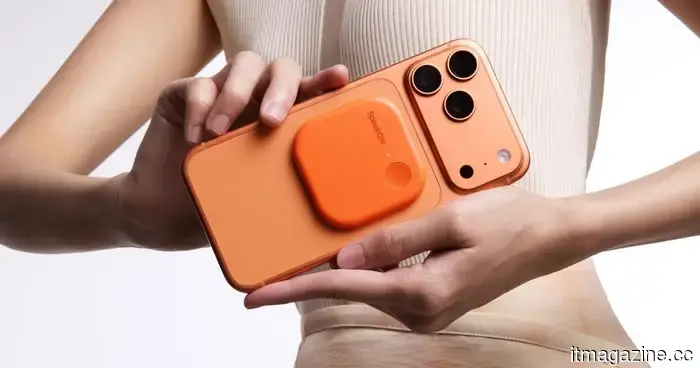 SpeakON: A New Phase of Voice-Driven Productivity
SpeakOn transforms voice into refined, professional text, and in addition to its remarkable functionality as an idea repository, it serves as an essential MagSafe accessory for your iPhone.
SpeakON: A New Phase of Voice-Driven Productivity
SpeakOn transforms voice into refined, professional text, and in addition to its remarkable functionality as an idea repository, it serves as an essential MagSafe accessory for your iPhone.
 Apple places its confidence in Ternus for decisive leadership reminiscent of the Jobs era as the gap in AI technology grows, delays with Siri increase, and tariffs alter the supply chain.
Bloomberg reports that Apple is looking for the kind of decisiveness from Ternus that characterized the Jobs era. He takes over an AI strategy linked to GPT-4o, a Siri overhaul that has faced three delays, and $100 billion in imports from China that are under tariff scrutiny.
Apple places its confidence in Ternus for decisive leadership reminiscent of the Jobs era as the gap in AI technology grows, delays with Siri increase, and tariffs alter the supply chain.
Bloomberg reports that Apple is looking for the kind of decisiveness from Ternus that characterized the Jobs era. He takes over an AI strategy linked to GPT-4o, a Siri overhaul that has faced three delays, and $100 billion in imports from China that are under tariff scrutiny.
 You can now engage in conversations that feel human-like with Google’s intelligent home device, Gemini.
Google is introducing Continued Conversation to Gemini for Home, allowing users of Nest and Google Home to ask follow-up questions without needing to repeat the wake phrase each time.
You can now engage in conversations that feel human-like with Google’s intelligent home device, Gemini.
Google is introducing Continued Conversation to Gemini for Home, allowing users of Nest and Google Home to ask follow-up questions without needing to repeat the wake phrase each time.
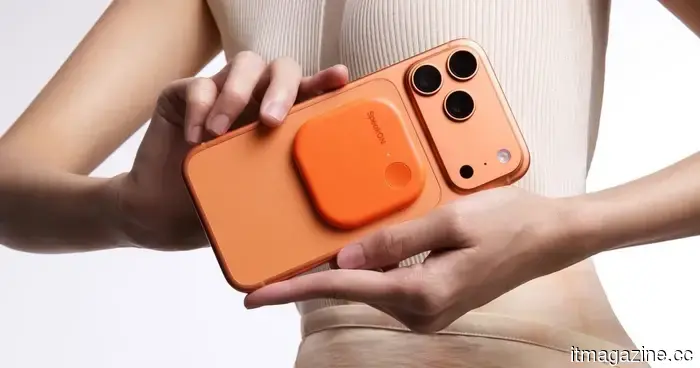 SpeakON: A Revolutionary Approach to Voice-First Productivity
SpeakOn transforms voice into refined, professional text. Moreover, in addition to its remarkable function as an idea archiver, it serves as an essential MagSafe accessory for your iPhone.
SpeakON: A Revolutionary Approach to Voice-First Productivity
SpeakOn transforms voice into refined, professional text. Moreover, in addition to its remarkable function as an idea archiver, it serves as an essential MagSafe accessory for your iPhone.
Apple places its confidence in Ternus for decisiveness reminiscent of the Jobs era, as the gap in AI technology expands, delays with Siri increase, and tariffs alter the supply chain.
Bloomberg reports that Apple is expecting Ternus to demonstrate the decisiveness characteristic of the Jobs era. He takes over an AI strategy that includes GPT-4o, a Siri overhaul that has faced three delays, and $100 billion in imports from China that are currently under tariff pressure.