
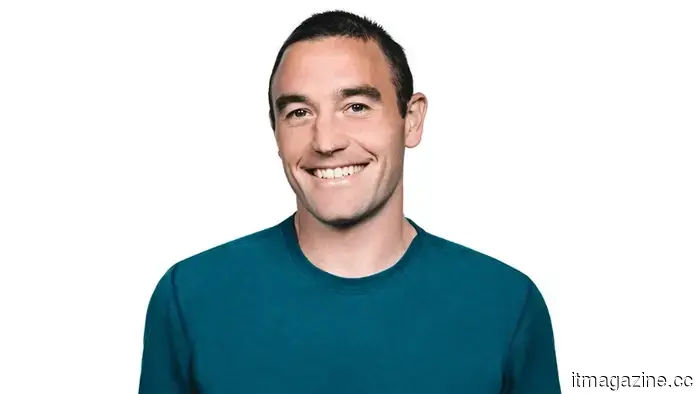
OpenAI experiences a triple exit in one day as the product chief, head of Sora, and enterprise CTO all depart.
Summary: On the same day, three high-ranking OpenAI executives—former Chief Product Officer Kevin Weil, Sora lead Bill Peebles, and enterprise Chief Technology Officer Srinivas Narayanan—resigned as the company ceases its “side quests,” including the Sora project (to be discontinued on April 26) and dismantles OpenAI for Science. This trend continues a two-year pattern in which only 2 out of 11 co-founders remain, with talent moving to firms like Anthropic, Meta’s Superintelligence Labs, and various startups, as OpenAI transitions towards enterprise AI amid projected losses of $14 billion against an annualized revenue of $25 billion.
This week, three senior OpenAI executives announced their resignations on the same day, marking a continuation of a trend of leadership turnover that has resulted in the departure of a significant portion of the original leadership team. Kevin Weil, the previous chief product officer who was overseeing OpenAI for Science, Bill Peebles, the head of Sora, and Srinivas Narayanan, the enterprise applications chief technology officer, all made their exits known on Friday. Their resignations coincide with OpenAI's decision to halt what management refers to as “side quests,” which are consumer-focused experimental projects that no longer align with the company's shift towards enterprise AI.
Weil, who joined OpenAI about two years ago from Instagram where he was the head of product, described his time there as “a mind-expanding two years.” Before his departure announcement, he transitioned from the CPO role to lead OpenAI for Science, a research initiative responsible for launching GPT-Rosalind, a model for life sciences and drug discovery. This team will be merged into other research groups. Peebles, who developed Sora from the ground up, called his experience “the honour and adventure of a lifetime,” noting that the project stimulated significant investment in AI video within the industry. Narayanan, who played a key role in launching ChatGPT and the API while expanding the applied engineering team, stated he was leaving to spend time with family.
The discontinuation of side quests
These departures are closely linked to strategic moves made by the company. Sora, OpenAI's AI video generation tool, will be phased out, with the web and app versions shutting down on April 26 and the API on September 24. Initially, the product had around one million users but declined to under 500,000, with operational costs reaching about $1 million per day. Additionally, the Motion Picture Association reported intellectual property violations on the platform. Although Sora’s commercial performance was disappointing, Peebles correctly asserted that it spurred investment in AI video across the industry; its termination reflects OpenAI's inability to make it financially viable, rather than a dismissal of its technological value.
OpenAI for Science is being “decentralized,” a term that implies dismantlement. Although the team’s efforts will continue within other research groups, the specific initiative that Weil was brought in to manage will no longer function as an independent entity. This approach is consistent with OpenAI's strategy of focusing on its main revenue-generating products, ChatGPT and the API, while terminating exploratory initiatives that do not contribute directly to the enterprise sector.
The wider exodus
The exits on Friday add to a growing list of senior departures that have altered OpenAI's leadership over the last two years. Out of the original 11 co-founders, only Sam Altman and Greg Brockman remain. The list of departed leaders includes co-founder and chief scientist Ilya Sutskever, CTO Mira Murati, chief research officer Bob McGrew, VP of research Barret Zoph, co-founder John Schulman, chief communications officer Hannah Wong, chief people officer Julia Villagra, and board member Lawrence Summers. In 2025 alone, at least 12 senior executives have left.
The destinations of these executives tell a revealing story. Schulman transitioned to Anthropic, while Tim Brooks, who co-led Sora before Peebles, moved to Google DeepMind and subsequently to Meta’s Superintelligence Labs. Shengjia Zhao, a principal architect of ChatGPT and GPT-4, has taken on the role of chief scientist at Meta Superintelligence Labs, with around seven other researchers following a similar path to Meta. Liam Fedus, the VP of research, departed to co-found Periodic Labs. The departing talent is not leaving the field; rather, they are moving to competitors who are, in many instances, creating similar products alongside the same individuals.
The reasons for the departures vary. Some executives cited ethical concerns regarding a Defense Department AI contract, while others noted a cultural shift from ambitious research initiatives to the operational focus on enhancing ChatGPT’s performance for Microsoft and enterprise clients. Multiple sources have observed that Anthropic’s Claude, particularly Claude Code, is gaining traction among developers, thereby increasing competitive pressure that has sharpened OpenAI’s focus on immediate product
Other articles
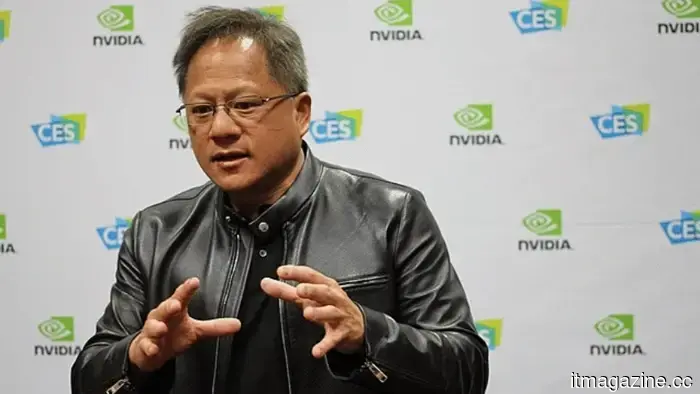 Nvidia's Jensen Huang cautions that DeepSeek operating on Huawei processors would lead to a 'terrible result' for the United States.
Nvidia's CEO Jensen Huang states that DeepSeek's optimization of AI models for Huawei's Ascend chips, rather than American hardware, would be "a terrible consequence for the United States."
Nvidia's Jensen Huang cautions that DeepSeek operating on Huawei processors would lead to a 'terrible result' for the United States.
Nvidia's CEO Jensen Huang states that DeepSeek's optimization of AI models for Huawei's Ascend chips, rather than American hardware, would be "a terrible consequence for the United States."
 Europe's €80 billion investment of public funds in venture capital and scale-ups encounters fundamental growth challenges.
The EIF's €15B ETCI 2 fund aims for €80B in scaleup financing, yet Europe's 80% scaleup shortfall and unprofitable unicorns indicate that merely providing capital will not suffice to bridge the gap with the US.
Europe's €80 billion investment of public funds in venture capital and scale-ups encounters fundamental growth challenges.
The EIF's €15B ETCI 2 fund aims for €80B in scaleup financing, yet Europe's 80% scaleup shortfall and unprofitable unicorns indicate that merely providing capital will not suffice to bridge the gap with the US.
 Palantir, Thales, and a startup are in competition to develop the FAA's predictive AI for air traffic.
The FAA's SMART system can forecast air traffic conflicts two hours in advance. After systemic issues were revealed at LaGuardia, Palantir, Thales, and Air Space Intelligence are vying for the contract.
Palantir, Thales, and a startup are in competition to develop the FAA's predictive AI for air traffic.
The FAA's SMART system can forecast air traffic conflicts two hours in advance. After systemic issues were revealed at LaGuardia, Palantir, Thales, and Air Space Intelligence are vying for the contract.
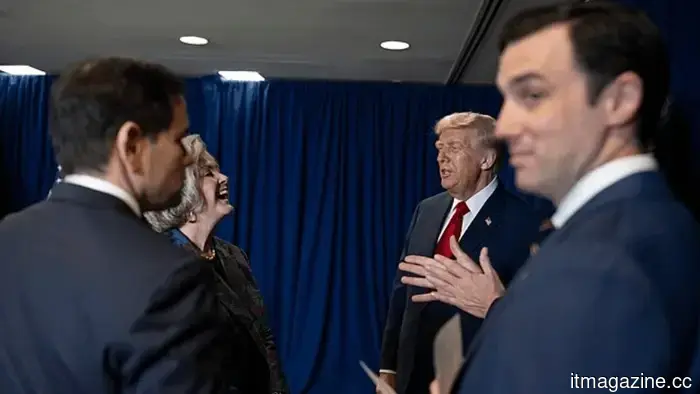 Amodei from Anthropic meets with Wiles and Bessent at the White House to discuss access to Mythos and the standoff with the Pentagon.
Anthropic CEO Amodei had "productive" discussions with Wiles and Bessent at the White House regarding access to Mythos, indicating a possible easing of the Pentagon blacklisting issue.
Amodei from Anthropic meets with Wiles and Bessent at the White House to discuss access to Mythos and the standoff with the Pentagon.
Anthropic CEO Amodei had "productive" discussions with Wiles and Bessent at the White House regarding access to Mythos, indicating a possible easing of the Pentagon blacklisting issue.
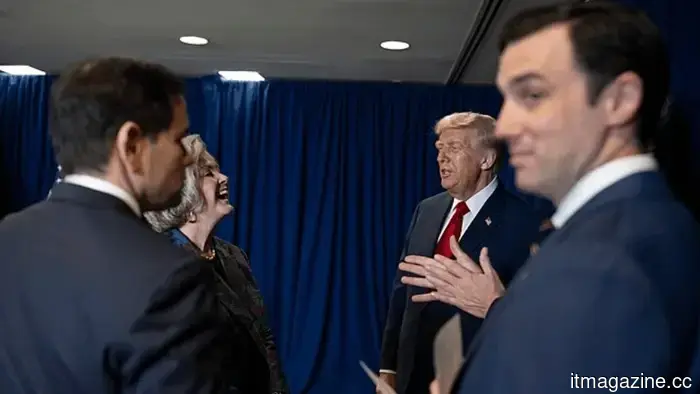 Anthropic's Amodei has a meeting with Wiles and Bessent at the White House regarding access to Mythos and the standoff with the Pentagon.
Anthropic CEO Amodei engaged in "productive" discussions with Wiles and Bessent at the White House regarding access to Mythos, indicating a potential easing of the conflict surrounding the Pentagon's blacklisting.
Anthropic's Amodei has a meeting with Wiles and Bessent at the White House regarding access to Mythos and the standoff with the Pentagon.
Anthropic CEO Amodei engaged in "productive" discussions with Wiles and Bessent at the White House regarding access to Mythos, indicating a potential easing of the conflict surrounding the Pentagon's blacklisting.
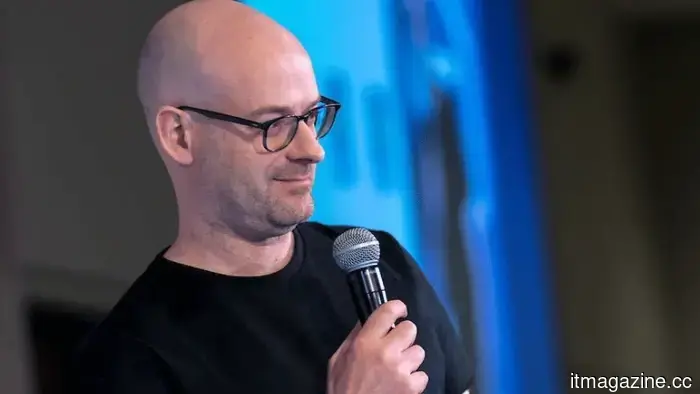 NVIDIA did not invest in Xanadu, yet it still turned its CEO into a billionaire.
Xanadu Quantum's stock skyrocketed nearly five times within six sessions following the validation of photonic quantum computing through NVIDIA's Ising AI models and NVQLink architecture, resulting in CEO Weedbrook becoming a billionaire.
NVIDIA did not invest in Xanadu, yet it still turned its CEO into a billionaire.
Xanadu Quantum's stock skyrocketed nearly five times within six sessions following the validation of photonic quantum computing through NVIDIA's Ising AI models and NVQLink architecture, resulting in CEO Weedbrook becoming a billionaire.
OpenAI experiences a triple exit in one day as the product chief, head of Sora, and enterprise CTO all depart.
Kevin Weil, Bill Peebles, and Srinivas Narayanan are departing from OpenAI as the organization terminates Sora and disbands OpenAI for Science, marking the continuation of a two-year trend of leadership departures.