
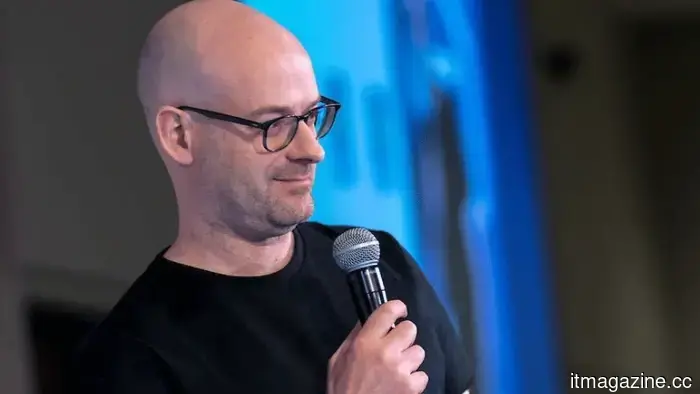
NVIDIA did not invest in Xanadu, yet it still turned its CEO into a billionaire.
Christian Weedbrook, founder and CEO of Toronto's Xanadu Quantum Technologies, reached billionaire status this week without NVIDIA investing any money in his firm. His 46.4 million multiple-voting shares were valued at about $1.5 billion by midday Friday, following a nearly fivefold increase in Xanadu’s stock over six trading days. This surge was triggered not by any actions from Xanadu, but by NVIDIA's announcement of a set of open-source AI models and a new hardware architecture aimed at enhancing quantum computing. This sparked a rally across the entire sector, making Xanadu, the sole publicly traded company specializing in photonic quantum computing, the most significant beneficiary.
Xanadu went public on March 27 through a SPAC merger with Crane Harbor Acquisition Corp., listing on both Nasdaq and TSX. The stock was already trading above its IPO price when NVIDIA started making announcements on April 14. It jumped 17% on Friday, 28% on Monday, 29% on Tuesday, and surged 70% on Wednesday, during which the Canadian Investment Regulatory Organization implemented five trading halts in one session. Overall, the stock has increased about 194% since its listing.
What NVIDIA actually did
NVIDIA did not acquire shares in Xanadu, enter a contract with the company, or designate it as a partner. Instead, it made quantum computing appear more practically viable than ever. The market responded by raising the prices of all quantum stocks simultaneously.
On April 14, NVIDIA introduced Ising, a set of open-source AI models designed to tackle the two main issues that have hindered the practicality of quantum computers: error correction and calibration. The error correction models are up to 2.5 times quicker and three times more precise than current industry benchmarks. The calibration models shorten the setup time for quantum processors from days to hours, addressing challenges that have made quantum hardware costly and hard to scale.
Along with Ising, NVIDIA presented NVQLink, an open architecture for linking its GPUs with quantum processing units, supporting 17 QPU builders, five controller manufacturers, and nine US national labs. Additionally, it announced the NVIDIA Accelerated Quantum Research Center in Boston, aimed at integrating quantum hardware with AI supercomputers. The implication of NVIDIA’s infrastructure advancements was clear: quantum computing is transitioning from an area of research to an engineering challenge, with NVIDIA positioning itself as the connector between classical and quantum systems.
NVIDIA’s investment division, NVentures, has already made direct investments across the quantum sector. It led Quantinuum’s $600 million Series B round at a $10 billion valuation, participated in QuEra Computing’s $230 million financing, and was involved in PsiQuantum’s $1 billion fundraising at a $7 billion valuation. These investments encompass three different approaches to quantum hardware: trapped ions, neutral atoms, and photonics, with Xanadu utilizing photonic technology. Although NVIDIA has not directly invested in Xanadu, its endorsement of photonic quantum computing as a legitimate technology, coupled with the Ising and NVQLink announcements, was sufficient to drive the stock price up significantly.
Xanadu’s fundamentals
Xanadu develops quantum computers that utilize beams of light to encode qubits, a method that proponents believe is inherently more scalable than other technologies since photonic components can be produced using current semiconductor manufacturing processes. The company's Aurora system is a modular photonic quantum computer featuring real-time error correction and has successfully demonstrated 12 logical GKP qubits, a significant milestone in a field where the total number of logical qubits remains low across all hardware styles.
From a financial perspective, the company's position is still in the early stages. Revenue was $4.6 million in 2025, an increase of 188% from $1.6 million the previous year, against a net loss of $70.7 million. The IPO raised approximately $302 million. Xanadu’s clients and research collaborators include Lockheed Martin, AMD, Rolls-Royce, Tower Semiconductor, and Applied Materials, and the company is working on securing up to C$390 million in co-investment from the Canadian federal and Ontario provincial governments. It has established a $10 million advanced photonic packaging facility in Ontario and is partnering with Corning and Applied Materials for large-scale production.
The company has a viable technology roadmap aimed at achieving fault-tolerant quantum systems by 2029 to 2030, but it does not yet have a clear revenue path sufficient to rationalize a multi-billion-dollar market capitalization at this time.
The sector-wide surge
Xanadu wasn't alone in this uptick. IonQ saw a rise of over 50% for the week, reporting Q4 2025 revenue of $61.89 million, a remarkable 429% increase year-over-year, with a full-year 2026 forecast of $225 to $245 million. D-Wave increased more than 50%, with Q4 bookings soaring by 471% sequential
Other articles
 Palantir, Thales, and a startup are in competition to develop the FAA's predictive AI for air traffic.
The FAA's SMART system can forecast air traffic conflicts two hours in advance. After systemic issues were revealed at LaGuardia, Palantir, Thales, and Air Space Intelligence are vying for the contract.
Palantir, Thales, and a startup are in competition to develop the FAA's predictive AI for air traffic.
The FAA's SMART system can forecast air traffic conflicts two hours in advance. After systemic issues were revealed at LaGuardia, Palantir, Thales, and Air Space Intelligence are vying for the contract.
 OpenAI experiences a triple departure in one day, losing its product chief, the head of Sora, and the enterprise CTO.
Kevin Weil, Bill Peebles, and Srinivas Narayanan depart from OpenAI as the organization disbands Sora and disassembles OpenAI for Science, marking the continuation of a leadership exodus that has lasted two years.
OpenAI experiences a triple departure in one day, losing its product chief, the head of Sora, and the enterprise CTO.
Kevin Weil, Bill Peebles, and Srinivas Narayanan depart from OpenAI as the organization disbands Sora and disassembles OpenAI for Science, marking the continuation of a leadership exodus that has lasted two years.
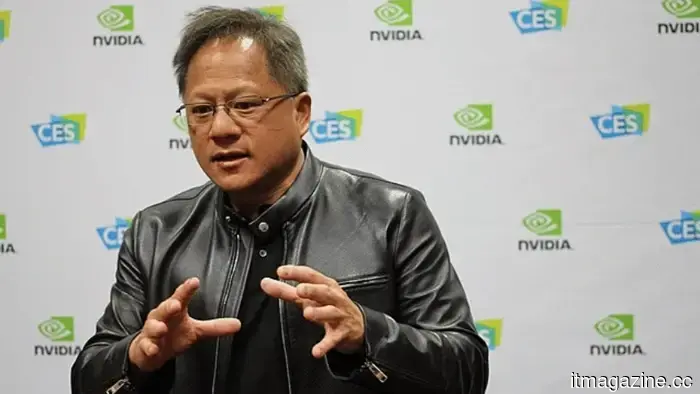 Nvidia's Jensen Huang cautions that DeepSeek operating on Huawei processors would lead to a 'terrible result' for the United States.
Nvidia's CEO Jensen Huang states that DeepSeek's optimization of AI models for Huawei's Ascend chips, rather than American hardware, would be "a terrible consequence for the United States."
Nvidia's Jensen Huang cautions that DeepSeek operating on Huawei processors would lead to a 'terrible result' for the United States.
Nvidia's CEO Jensen Huang states that DeepSeek's optimization of AI models for Huawei's Ascend chips, rather than American hardware, would be "a terrible consequence for the United States."
 Europe's €80 billion investment in public funding for venture capital and scaleups encounters structural growth obstacles.
The EIF's €15 billion ETCI 2 fund aims for €80 billion in scaleup financing; however, Europe's 80% scaleup shortfall and loss-making unicorns indicate that solely providing capital will not bridge the gap with the US.
Europe's €80 billion investment in public funding for venture capital and scaleups encounters structural growth obstacles.
The EIF's €15 billion ETCI 2 fund aims for €80 billion in scaleup financing; however, Europe's 80% scaleup shortfall and loss-making unicorns indicate that solely providing capital will not bridge the gap with the US.
 Cursor is in discussions to secure $2 billion at a valuation of $50 billion after achieving a $2 billion annual recurring revenue (ARR) within three years.
Cursor is aiming to secure $2 billion at a $50 billion valuation from a16z, Thrive, and Nvidia after achieving $2 billion in annual recurring revenue (ARR) within three years, marking the quickest scaling in B2B history, with 70% of the Fortune 1,000 as its clients.
Cursor is in discussions to secure $2 billion at a valuation of $50 billion after achieving a $2 billion annual recurring revenue (ARR) within three years.
Cursor is aiming to secure $2 billion at a $50 billion valuation from a16z, Thrive, and Nvidia after achieving $2 billion in annual recurring revenue (ARR) within three years, marking the quickest scaling in B2B history, with 70% of the Fortune 1,000 as its clients.
 Europe's €80 billion investment in public funding for venture capital and scaleups encounters fundamental growth obstacles.
The EIF's €15 billion ETCI 2 fund aims for €80 billion in scaleup financing, yet the 80% scaleup shortfall in Europe and the presence of unprofitable unicorns indicate that simply providing capital may not be enough to bridge the gap with the US.
Europe's €80 billion investment in public funding for venture capital and scaleups encounters fundamental growth obstacles.
The EIF's €15 billion ETCI 2 fund aims for €80 billion in scaleup financing, yet the 80% scaleup shortfall in Europe and the presence of unprofitable unicorns indicate that simply providing capital may not be enough to bridge the gap with the US.
NVIDIA did not invest in Xanadu, yet it still turned its CEO into a billionaire.
Xanadu Quantum's stock skyrocketed nearly five times within six sessions following the validation of photonic quantum computing through NVIDIA's Ising AI models and NVQLink architecture, resulting in CEO Weedbrook becoming a billionaire.