
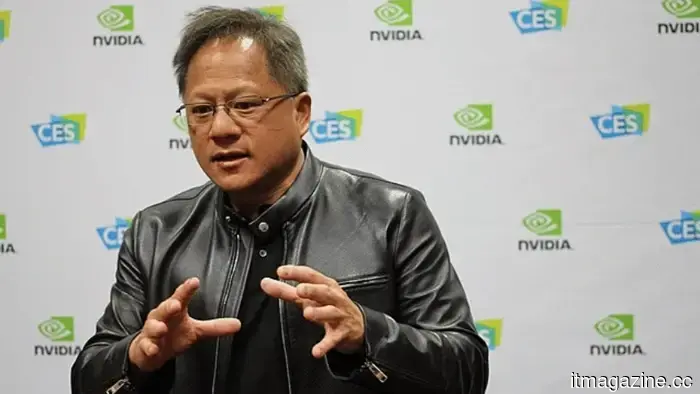
Nvidia's Jensen Huang cautions that DeepSeek operating on Huawei processors would lead to a 'terrible result' for the United States.
In summary, Nvidia CEO Jensen Huang cautioned on the Dwarkesh Podcast that if DeepSeek optimizes its AI models for Huawei’s Ascend chips rather than American hardware, it would represent “a horrible outcome” for the United States. This warning comes as the Chinese AI lab prepares to release its V4 foundation model on Huawei’s Ascend 950PR processor. The shift from Nvidia’s CUDA to Huawei’s CANN framework poses a potential disruption to the software-hardware reliance that has supported American AI dominance, even as US legislators are advocating to place DeepSeek on the entity list for export control.
During the podcast, Huang expressed concern that if future AI models are optimized differently from the American tech stack, and as “AI spreads to the rest of the world” using Chinese standards and technology, China could surpass the US. This remark is significant, given that Nvidia has greatly benefited from the current scenario where nearly every cutting-edge AI model is trained on Nvidia GPUs with the CUDA software framework.
Regarding DeepSeek’s developments, the lab is set to launch V4, a multimodal foundation model, expected later this month. Earlier reports indicated that V4 would operate on Huawei’s latest Ascend 950PR processor. Another report suggested that the model was trained using Nvidia’s Blackwell chips, potentially violating US export controls; however, these claims are not necessarily contradictory since a model can be trained on one type of hardware and utilized for inference on another.
The key aspect of the Huawei integration is the software migration involved. DeepSeek has invested months in rewriting its core code to function with Huawei’s CANN framework, transitioning away from the CUDA ecosystem that Nvidia has cultivated for two decades. CUDA’s dominance has functioned as an additional layer of American influence over AI, beyond just the hardware. Export restrictions can limit the Nvidia hardware that reaches China, but as long as Chinese labs are developing their software for CUDA, they remain reliant on the Nvidia ecosystem even when using different processors. DeepSeek’s shift to CANN eliminates that reliance.
DeepSeek’s V3 model, which was launched in late 2024, was trained on 2,048 Nvidia H800 GPUs, designed specifically for the Chinese market but banned from sale to China in 2023. The company has already demonstrated its capability to create frontier-competitive models with fewer resources than its American counterparts. Its R1 reasoning model showed performance that matched or exceeded that of models requiring significantly larger training costs. V4 aims to extend this methodology by proving the company can succeed entirely without American hardware.
In terms of raw performance, Huawei’s chips currently lag behind Nvidia’s offerings. The Ascend 910C, the previous version to the 950PR, delivers around 60% of the inference performance of Nvidia’s H100, which itself is two generations older than Nvidia's leading chip. Today, American chips exhibit power levels approximately five times greater than those from China, with projections indicating this will expand to a 17-fold difference by 2027. Huawei aims for 750,000 AI chip shipments by 2026, yet its total output accounts for only 3 to 5% of Nvidia’s overall computing power.
However, Huang's concerns do not stem from the existing performance gap. He stated on the podcast that even with inferior chips, China could still catch up in AI development due to its “abundant energy” and “large pool of AI researchers.” This suggests that raw hardware performance is merely one factor, and aspects such as software optimization, researcher talent, and energy access could mitigate silicon disadvantages. If V4 delivers strong performance on Ascend chips, it could validate an alternative AI development pathway that doesn’t rely on Nvidia at any stage of the supply chain.
The scenario also highlights a contradiction within American chip export policy. Nvidia resumed production of the H200, a more powerful chip, for sale in China, as confirmed by Huang in March. Nevertheless, China has been blocking imports of the H200 to protect Huawei’s domestic chip market, and Nvidia’s CFO reported no revenue from H200 sales in China. The restrictions intended to curb China’s AI capabilities appear to be expediting the growth of domestic Chinese alternatives.
DeepSeek’s experience with its R2 model showcases both the potential and limitations of the Huawei route. R2 faced multiple delays due to training failures on Huawei hardware. Although Chinese authorities encouraged DeepSeek to conduct training on indigenous chips, the company faced stability issues, leading them to revert to Nvidia GPUs for training while using Huawei chips solely for inference. This distinction is important, given that training is the most compute-intensive aspect of AI development, and the inability for Huawei chips to support it reliably suggests a genuine hardware discrepancy. However, inference, where models generate user-facing value, appears achievable with Huawei’s chips.
Meanwhile, US lawmakers are intensifying efforts to impose stricter regulations. Recently, lawmakers and experts accused China of acquiring "what they can" and stealing "what they cannot" in the AI sector,
Other articles
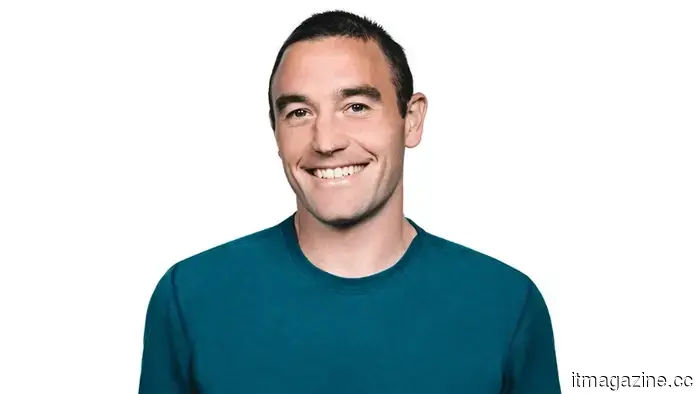 OpenAI experiences a triple exit in one day as the product chief, head of Sora, and enterprise CTO all depart.
Kevin Weil, Bill Peebles, and Srinivas Narayanan are departing from OpenAI as the organization terminates Sora and disbands OpenAI for Science, marking the continuation of a two-year trend of leadership departures.
OpenAI experiences a triple exit in one day as the product chief, head of Sora, and enterprise CTO all depart.
Kevin Weil, Bill Peebles, and Srinivas Narayanan are departing from OpenAI as the organization terminates Sora and disbands OpenAI for Science, marking the continuation of a two-year trend of leadership departures.
 Europe's €80 billion investment of public funds in venture capital and scale-ups encounters fundamental growth challenges.
The EIF's €15B ETCI 2 fund aims for €80B in scaleup financing, yet Europe's 80% scaleup shortfall and unprofitable unicorns indicate that merely providing capital will not suffice to bridge the gap with the US.
Europe's €80 billion investment of public funds in venture capital and scale-ups encounters fundamental growth challenges.
The EIF's €15B ETCI 2 fund aims for €80B in scaleup financing, yet Europe's 80% scaleup shortfall and unprofitable unicorns indicate that merely providing capital will not suffice to bridge the gap with the US.
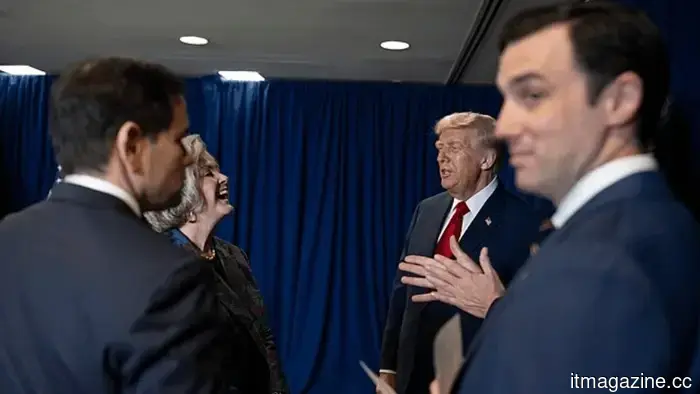 Amodei from Anthropic meets with Wiles and Bessent at the White House to discuss access to Mythos and the standoff with the Pentagon.
Anthropic CEO Amodei had "productive" discussions with Wiles and Bessent at the White House regarding access to Mythos, indicating a possible easing of the Pentagon blacklisting issue.
Amodei from Anthropic meets with Wiles and Bessent at the White House to discuss access to Mythos and the standoff with the Pentagon.
Anthropic CEO Amodei had "productive" discussions with Wiles and Bessent at the White House regarding access to Mythos, indicating a possible easing of the Pentagon blacklisting issue.
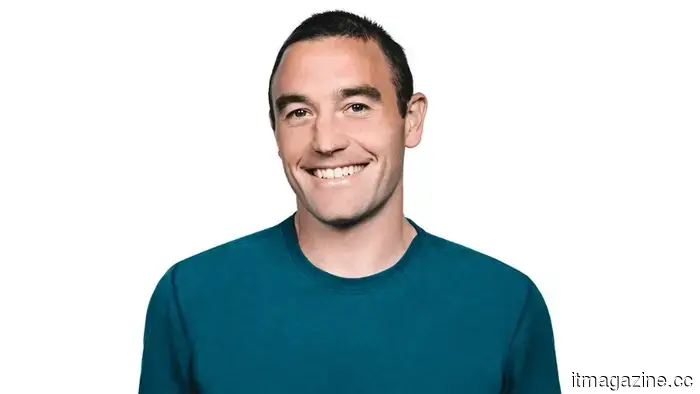 OpenAI experiences a triple departure in one day, losing its product chief, the head of Sora, and the enterprise CTO.
Kevin Weil, Bill Peebles, and Srinivas Narayanan depart from OpenAI as the organization disbands Sora and disassembles OpenAI for Science, marking the continuation of a leadership exodus that has lasted two years.
OpenAI experiences a triple departure in one day, losing its product chief, the head of Sora, and the enterprise CTO.
Kevin Weil, Bill Peebles, and Srinivas Narayanan depart from OpenAI as the organization disbands Sora and disassembles OpenAI for Science, marking the continuation of a leadership exodus that has lasted two years.
 Palantir, Thales, and a startup are vying to develop the FAA's predictive AI for air traffic management.
The FAA's SMART system is designed to forecast air traffic conflicts two hours in advance. Following the identification of systemic issues at LaGuardia, Palantir, Thales, and Air Space Intelligence are vying for the contract.
Palantir, Thales, and a startup are vying to develop the FAA's predictive AI for air traffic management.
The FAA's SMART system is designed to forecast air traffic conflicts two hours in advance. Following the identification of systemic issues at LaGuardia, Palantir, Thales, and Air Space Intelligence are vying for the contract.
 Volvo's parent company has just introduced a $16,000 electric vehicle that appears surprisingly luxurious.
Geely has initiated presales for the Galaxy Starshine 7 in China, an electric sedan priced from approximately $16,000, featuring elegant design and dual-motor capabilities.
Volvo's parent company has just introduced a $16,000 electric vehicle that appears surprisingly luxurious.
Geely has initiated presales for the Galaxy Starshine 7 in China, an electric sedan priced from approximately $16,000, featuring elegant design and dual-motor capabilities.
Nvidia's Jensen Huang cautions that DeepSeek operating on Huawei processors would lead to a 'terrible result' for the United States.
Nvidia's CEO Jensen Huang states that DeepSeek's optimization of AI models for Huawei's Ascend chips, rather than American hardware, would be "a terrible consequence for the United States."