

Europe's €80 billion investment of public funds in venture capital and scale-ups encounters fundamental growth challenges.
The European Investment Fund is in the process of raising a €15 billion fund of funds, known as ETCI 2, which aims to facilitate up to €80 billion in scaleup funding throughout Europe. Germany's WIN initiative is targeting a goal of €12 billion by 2030. France's Tibi programme has committed €7 billion in private capital and identified 92 venture capital and growth funds with a total of €22 billion in assets. The European Commission's Scaleup Europe Fund is allocating €5 billion, with a fund manager anticipated to be chosen this month. Additionally, the European Innovation Council has a €10 billion budget running until 2027, contributing to an unprecedented total of public and mobilised capital flowing into European venture and growth investing.
The pressing issue is whether this influx of funds will effectively address the challenges it's intended to solve, or if it may lead to new complications.
The driving force behind this spending has been the notable gap in European venture capital investment, which hit €66.2 billion in 2025, approximately 22% of the amount invested in the United States. This gap is most pronounced in later stages of funding, with EU growth funding at about 10% of US levels. Although Europe produces more tech startups than the US, it has 80% fewer scaleups and 85% fewer unicorns. The structural reasons behind this disparity are well-understood: European pension and insurance funds comprise only 7% of VC investments, compared to around 20% in the US, and sovereign wealth funds represent less than 1% of European VC fundraising. The continent generates numerous companies, but financing them beyond the early stages to compete globally is challenging.
The EIF has been a key player in addressing this gap, backing roughly 25% of all venture capital in Europe, supporting nearly half of all VC-backed startups each year. Its first-generation fund of funds, ETCI 1, raised €3.9 billion from countries like Spain, Germany, France, Italy, Belgium, and the EIB Group, and supported 14 funds, each with over €1 billion. Its portfolio includes 11 unicorns, such as DeepL, TravelPerk, and Framer. ETCI 2 aims to operate on a much larger scale by supporting around 100 funds ranging from €300 million to over €1 billion, with the potential to invest up to €200 million per company, significantly above the former €60 million limit of ETCI 1.
The Scaleup Europe Fund, which is distinct from the ETCI programme, represents the Commission's intention to funnel capital into strategic technologies. Focus areas for this fund include AI, quantum computing, semiconductors, robotics, autonomous systems, energy, space, biotech, and advanced materials. In March, Bloomberg reported that five managers—EQT, Northzone, Eurazeo, Atomico, and Vitruvian Partners—had made the shortlist for management. The fund combines €1 billion in public capital from the European Innovation Council with €4 billion from private investors, and is anticipated to commence operations in the second quarter of this year.
Germany's WIN initiative, launched in September 2024 and backed by KfW Group and the Federal Ministry of Finance, follows a distinct approach. Rather than creating a single mega fund, it seeks to reform the regulatory landscape to access institutional capital. The initiative aims to increase the pension fund VC quota from 35% to 40%, set a 5% infrastructure quota, and ease pension fund coverage requirements. Notable institutions such as Deutsche Bank, Allianz, and Deutsche Telekom are participating. France's Tibi programme, now in its second phase, has adopted a similar strategy by encouraging 35 institutional investors to commit €7 billion and targeting funds in late-stage, publicly traded tech, and early-stage sectors.
Together, these initiatives indicate that Europe is fundamentally altering its financial regulations to direct capital towards technology at a pace that would have been politically unimaginable just five years ago.
However, the underlying issue is that Europe's scaleup deficit is not chiefly a lack of capital but a structural problem, and these structures have not evolved as quickly as the financial pledges.
Sixty-two percent of European startups report that attracting talent is their greatest scaling challenge. The single market remains sufficiently fragmented that expanding from one European nation to another often involves navigating various regulatory, tax, and employment frameworks, which adds costs and complexity without providing the market scale that American companies can access inherently. The EIC's portfolio underscores this issue: it has backed 740 deep tech companies with a collective portfolio value nearing €70 billion, yet for every euro publicly invested, more than three private euros have followed. However, only six of these companies are valued above €500 million, and the transition from funded startup to globally competitive scaleup remains limited.
The profitability scenario is even more concerning. Of Europe's ten most valuable startups, only two are confirmed profitable. Among the continent's

Other articles
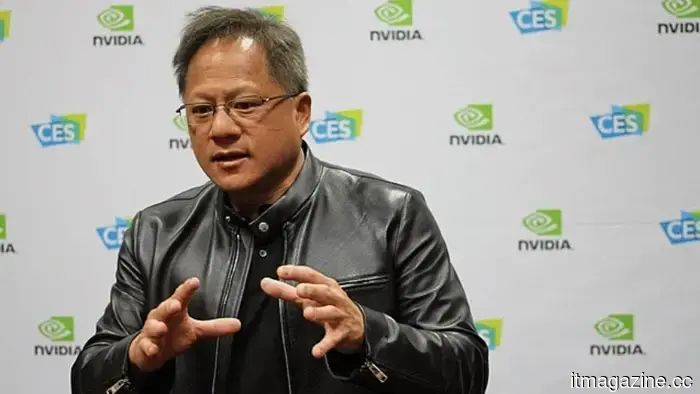 Nvidia's Jensen Huang cautions that DeepSeek operating on Huawei chips would result in a 'terrible consequence' for the United States.
Nvidia CEO Jensen Huang stated that DeepSeek optimizing AI models for Huawei's Ascend chips rather than American hardware would be "a terrible result for the United States."
Nvidia's Jensen Huang cautions that DeepSeek operating on Huawei chips would result in a 'terrible consequence' for the United States.
Nvidia CEO Jensen Huang stated that DeepSeek optimizing AI models for Huawei's Ascend chips rather than American hardware would be "a terrible result for the United States."
 Cursor is in discussions to secure $2 billion at a valuation of $50 billion after achieving a $2 billion annual recurring revenue (ARR) within three years.
Cursor is aiming to secure $2 billion at a $50 billion valuation from a16z, Thrive, and Nvidia after achieving $2 billion in annual recurring revenue (ARR) within three years, marking the quickest scaling in B2B history, with 70% of the Fortune 1,000 as its clients.
Cursor is in discussions to secure $2 billion at a valuation of $50 billion after achieving a $2 billion annual recurring revenue (ARR) within three years.
Cursor is aiming to secure $2 billion at a $50 billion valuation from a16z, Thrive, and Nvidia after achieving $2 billion in annual recurring revenue (ARR) within three years, marking the quickest scaling in B2B history, with 70% of the Fortune 1,000 as its clients.
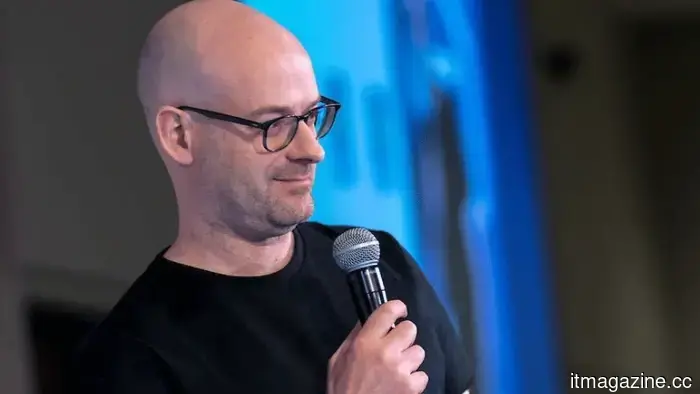 NVIDIA did not invest in Xanadu, yet it still turned its CEO into a billionaire.
Xanadu Quantum's stock skyrocketed nearly five times within six sessions following the validation of photonic quantum computing through NVIDIA's Ising AI models and NVQLink architecture, resulting in CEO Weedbrook becoming a billionaire.
NVIDIA did not invest in Xanadu, yet it still turned its CEO into a billionaire.
Xanadu Quantum's stock skyrocketed nearly five times within six sessions following the validation of photonic quantum computing through NVIDIA's Ising AI models and NVQLink architecture, resulting in CEO Weedbrook becoming a billionaire.
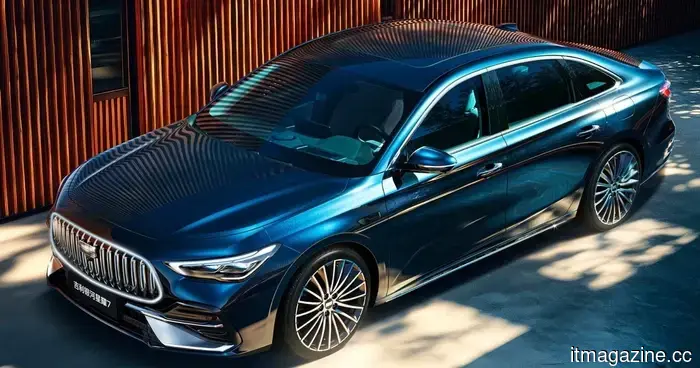 Volvo's parent company has just introduced a $16,000 electric vehicle that appears surprisingly luxurious.
Geely has initiated presales for the Galaxy Starshine 7 in China, an electric sedan priced from approximately $16,000, featuring elegant design and dual-motor capabilities.
Volvo's parent company has just introduced a $16,000 electric vehicle that appears surprisingly luxurious.
Geely has initiated presales for the Galaxy Starshine 7 in China, an electric sedan priced from approximately $16,000, featuring elegant design and dual-motor capabilities.
 Anthropic's Amodei has a meeting with Wiles and Bessent at the White House regarding access to Mythos and the standoff with the Pentagon.
Anthropic CEO Amodei engaged in "productive" discussions with Wiles and Bessent at the White House regarding access to Mythos, indicating a potential easing of the conflict surrounding the Pentagon's blacklisting.
Anthropic's Amodei has a meeting with Wiles and Bessent at the White House regarding access to Mythos and the standoff with the Pentagon.
Anthropic CEO Amodei engaged in "productive" discussions with Wiles and Bessent at the White House regarding access to Mythos, indicating a potential easing of the conflict surrounding the Pentagon's blacklisting.
 Palantir, Thales, and a startup are vying to develop the FAA's predictive AI for air traffic management.
The FAA's SMART system is designed to forecast air traffic conflicts two hours in advance. Following the identification of systemic issues at LaGuardia, Palantir, Thales, and Air Space Intelligence are vying for the contract.
Palantir, Thales, and a startup are vying to develop the FAA's predictive AI for air traffic management.
The FAA's SMART system is designed to forecast air traffic conflicts two hours in advance. Following the identification of systemic issues at LaGuardia, Palantir, Thales, and Air Space Intelligence are vying for the contract.
Europe's €80 billion investment of public funds in venture capital and scale-ups encounters fundamental growth challenges.
The EIF's €15B ETCI 2 fund aims for €80B in scaleup financing, yet Europe's 80% scaleup shortfall and unprofitable unicorns indicate that merely providing capital will not suffice to bridge the gap with the US.