
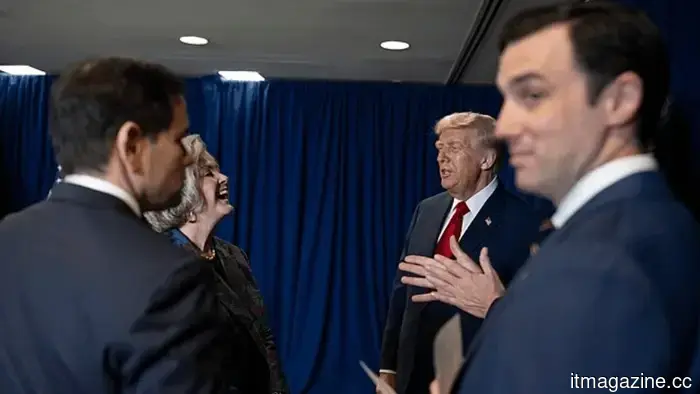
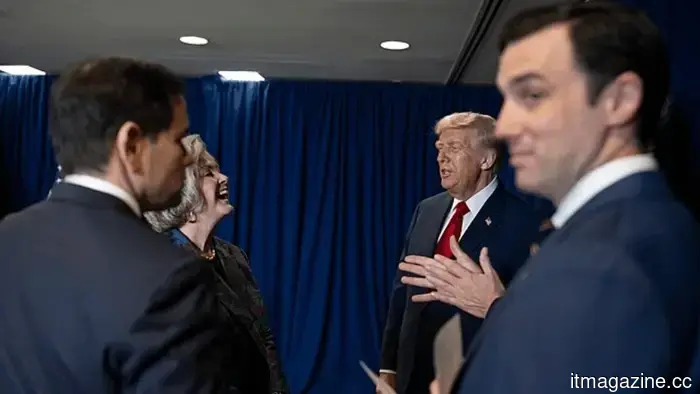
Amodei from Anthropic meets with Wiles and Bessent at the White House to discuss access to Mythos and the standoff with the Pentagon.
In summary, Anthropic CEO Dario Amodei met with White House Chief of Staff Susie Wiles and Treasury Secretary Scott Bessent on Friday for discussions deemed "productive and constructive" by the White House, regarding access to Mythos, an advanced AI model that can identify numerous zero-day vulnerabilities. This meeting indicates a potential easing of the standoff caused by the Pentagon's decision to blacklist Anthropic for not lifting safety protocols, though any agreement is expected to exclude the Defense Department and channel access to Mythos through civilian agencies.
On Friday, Amodei entered the West Wing to hold talks with Wiles and Bessent. The White House characterized the discussion as “introductory, productive, and constructive,” focusing on “collaboration opportunities and shared protocols to tackle scaling technology challenges.” President Trump later claimed he was unaware the meeting had occurred.
This meeting represents a crucial step toward resolving the conflict, which has placed one of the top AI companies on a blacklist imposed by its own government while that government seeks access to its most powerful model. Should a deal be reached, it is anticipated that the Pentagon will not be included, allowing access via civilian agencies not involved in the initial dispute.
Background
The conflict emerged in late February when Defense Secretary Pete Hegseth insisted that Anthropic provide the Pentagon unrestricted access to its AI models for “all lawful purposes,” including for autonomous weapons and domestic surveillance. Amodei declined, stating that Anthropic wishes to collaborate with the military but believes that AI models are not sufficiently reliable for autonomous weaponry and that U.S. law has not evolved to protect citizens in relation to AI's use in mass surveillance. In response, Hegseth classified Anthropic as a national security supply-chain risk, a designation typically reserved for companies linked to foreign adversaries, which effectively blacklisted it from government contracts.
In early March, Anthropic filed two federal lawsuits against the Trump administration for illegal retaliation. Initially, a federal judge blocked the blacklisting, but an appeals court overturned this decision on 8 April. While Anthropic is now barred from Department of Defense contracts, it is still permitted to collaborate with other government entities. After the unfavorable court ruling, Anthropic enlisted Trumpworld consultants to seek a political resolution, with reports indicating that Friday’s meeting was meant to facilitate this.
The paradox leading Amodei to the White House is that Anthropic announced the Mythos model on 7 April, just ten days after losing its appeal, and the capabilities of the model proved too significant for the government to ignore.
Capabilities of Mythos
Mythos is a versatile AI model that, in testing, demonstrated the ability to locate and exploit thousands of previously unknown zero-day vulnerabilities across major operating systems and web browsers. It uncovered flaws that had persisted for decades despite human security audits. When tasked with creating functional exploits, it achieved success on the first attempt over 83% of the time. It is noted as the first AI model to complete a comprehensive 32-step corporate network attack simulation. The UK’s AI Security Institute assessed it as “substantially more capable at cyber offense than any previously evaluated model.” JPMorgan Chase CEO Jamie Dimon cited that it “reveals a lot more vulnerabilities” for cyberattacks. The Council on Foreign Relations labeled it as “an inflection point for AI and global security.”
Anthropic opted not to release Mythos to the public; instead, they established Project Glasswing, a controlled access program that allows around 40 vetted organizations, including Amazon Web Services, Apple, Google, Microsoft, Nvidia, and JPMorgan Chase, to utilize the model for identifying and rectifying vulnerabilities before exploitation occurs. The company pledged up to $100 million in Mythos usage credits, along with $4 million for open-source security organizations. This decision to restrict release rather than make it public stems directly from the safety principles that initially led to conflict with the Pentagon.
Interests of Each Party
The Treasury Department seeks access to Mythos to identify vulnerabilities within its own systems. Some segments of the intelligence community and the Cybersecurity and Infrastructure Security Agency are currently testing it. The White House Office of Management and Budget is establishing safeguards to allow federal agencies to use a controlled version. The presence of Bessent at Friday’s meeting indicates that the urgency for Mythos access from economic and financial security perspectives has reached high levels within the administration.
Anthropic is eager to resolve the blacklisting, not out of necessity for Pentagon revenue; the company’s annualized revenue stands at $30 billion, and it has drawn investor interest at an $800 billion valuation while exploring an IPO. However, the supply-chain risk classification undermines its credibility within the enterprise and creates uncertainty for clients associated with the government. What Amodei seeks is a resolution that restores his company’s reputation without compromising the safety commitments that sparked the contention.
The potential for compromise is apparent. Anthropic could allow access to Mythos for defensive cyber purposes through civilian agencies
Other articles
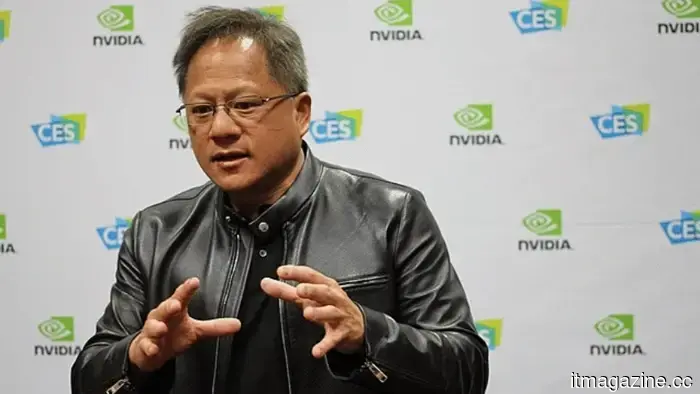 Nvidia's Jensen Huang cautions that DeepSeek operating on Huawei processors would lead to a 'terrible result' for the United States.
Nvidia's CEO Jensen Huang states that DeepSeek's optimization of AI models for Huawei's Ascend chips, rather than American hardware, would be "a terrible consequence for the United States."
Nvidia's Jensen Huang cautions that DeepSeek operating on Huawei processors would lead to a 'terrible result' for the United States.
Nvidia's CEO Jensen Huang states that DeepSeek's optimization of AI models for Huawei's Ascend chips, rather than American hardware, would be "a terrible consequence for the United States."
 Europe's €80 billion investment in public funding for venture capital and scaleups encounters fundamental growth obstacles.
The EIF's €15 billion ETCI 2 fund aims for €80 billion in scaleup financing, yet the 80% scaleup shortfall in Europe and the presence of unprofitable unicorns indicate that simply providing capital may not be enough to bridge the gap with the US.
Europe's €80 billion investment in public funding for venture capital and scaleups encounters fundamental growth obstacles.
The EIF's €15 billion ETCI 2 fund aims for €80 billion in scaleup financing, yet the 80% scaleup shortfall in Europe and the presence of unprofitable unicorns indicate that simply providing capital may not be enough to bridge the gap with the US.
 Cursor is in discussions to secure $2 billion at a valuation of $50 billion after achieving a $2 billion annual recurring revenue (ARR) within three years.
Cursor is aiming to secure $2 billion at a $50 billion valuation from a16z, Thrive, and Nvidia after achieving $2 billion in annual recurring revenue (ARR) within three years, marking the quickest scaling in B2B history, with 70% of the Fortune 1,000 as its clients.
Cursor is in discussions to secure $2 billion at a valuation of $50 billion after achieving a $2 billion annual recurring revenue (ARR) within three years.
Cursor is aiming to secure $2 billion at a $50 billion valuation from a16z, Thrive, and Nvidia after achieving $2 billion in annual recurring revenue (ARR) within three years, marking the quickest scaling in B2B history, with 70% of the Fortune 1,000 as its clients.
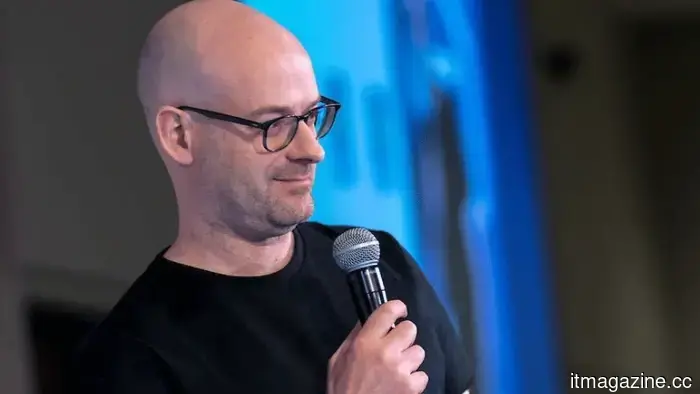 NVIDIA did not invest in Xanadu, yet it still turned its CEO into a billionaire.
Xanadu Quantum's stock skyrocketed nearly five times within six sessions following the validation of photonic quantum computing through NVIDIA's Ising AI models and NVQLink architecture, resulting in CEO Weedbrook becoming a billionaire.
NVIDIA did not invest in Xanadu, yet it still turned its CEO into a billionaire.
Xanadu Quantum's stock skyrocketed nearly five times within six sessions following the validation of photonic quantum computing through NVIDIA's Ising AI models and NVQLink architecture, resulting in CEO Weedbrook becoming a billionaire.
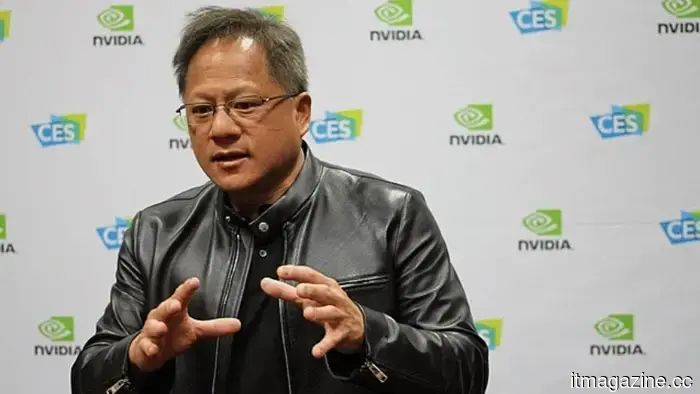 Nvidia's Jensen Huang cautions that DeepSeek operating on Huawei chips would result in a 'terrible consequence' for the United States.
Nvidia CEO Jensen Huang stated that DeepSeek optimizing AI models for Huawei's Ascend chips rather than American hardware would be "a terrible result for the United States."
Nvidia's Jensen Huang cautions that DeepSeek operating on Huawei chips would result in a 'terrible consequence' for the United States.
Nvidia CEO Jensen Huang stated that DeepSeek optimizing AI models for Huawei's Ascend chips rather than American hardware would be "a terrible result for the United States."
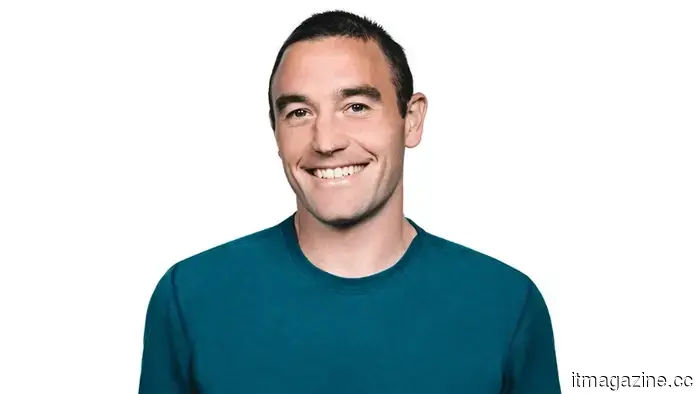 OpenAI experiences a triple exit in one day as the product chief, head of Sora, and enterprise CTO all depart.
Kevin Weil, Bill Peebles, and Srinivas Narayanan are departing from OpenAI as the organization terminates Sora and disbands OpenAI for Science, marking the continuation of a two-year trend of leadership departures.
OpenAI experiences a triple exit in one day as the product chief, head of Sora, and enterprise CTO all depart.
Kevin Weil, Bill Peebles, and Srinivas Narayanan are departing from OpenAI as the organization terminates Sora and disbands OpenAI for Science, marking the continuation of a two-year trend of leadership departures.
Amodei from Anthropic meets with Wiles and Bessent at the White House to discuss access to Mythos and the standoff with the Pentagon.
Anthropic CEO Amodei had "productive" discussions with Wiles and Bessent at the White House regarding access to Mythos, indicating a possible easing of the Pentagon blacklisting issue.