
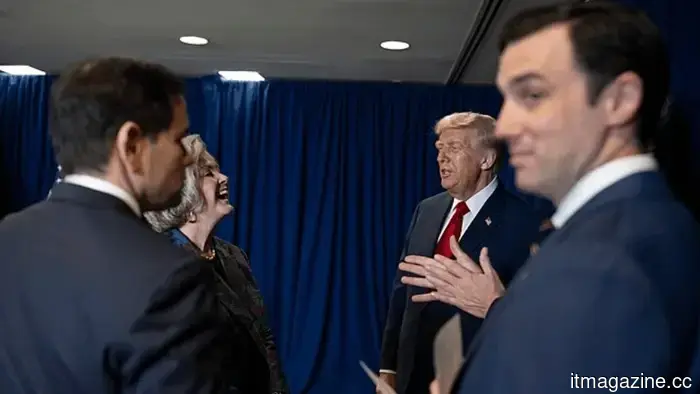
Anthropic's Amodei has a meeting with Wiles and Bessent at the White House regarding access to Mythos and the standoff with the Pentagon.
In summary, Anthropic's CEO Dario Amodei met on Friday with White House Chief of Staff Susie Wiles and Treasury Secretary Scott Bessent for discussions regarding access to Mythos, an advanced AI model capable of identifying numerous zero-day vulnerabilities. The White House described the meeting as "productive and constructive," indicating a thaw in the ongoing standoff that arose when the Pentagon blacklisted Anthropic for not lifting safety restrictions. Any potential agreement would likely bypass the Defence Department and provide Mythos access through civilian agencies.
Amodei arrived for the meeting at the West Wing, where the conversation was characterized as “introductory, productive, and constructive.” The trio discussed collaboration opportunities and strategies to tackle the challenges of scaling this technology. President Trump later remarked that he was unaware of the meeting's occurrence.
This meeting marks significant progress toward resolving a standoff that has resulted in one of the leading AI companies being blacklisted by its own government, even as that government seeks to access its most advanced model. If an agreement is reached, it is expected to exclude the Pentagon, allowing access to Mythos solely through civilian organizations not involved in the original conflict.
Background of the situation
The conflict began in late February when Defense Secretary Pete Hegseth insisted that Anthropic allow the Pentagon unrestricted access to its AI models for all lawful purposes, including autonomous weapons and domestic surveillance. Amodei declined, stating that while Anthropic is interested in working with the military, AI models are not yet dependable enough for such uses and that US law has not yet adapted to safeguard Americans in relation to AI’s application in mass surveillance. Hegseth responded by designating Anthropic as a national security supply-chain risk—a classification usually reserved for firms associated with foreign adversaries—resulting in its effective blacklisting from all government contracts.
Following this, Anthropic filed two federal lawsuits against the Trump administration in March claiming illegal retaliation. Initially, a federal judge blocked the blacklisting; however, an appeals court overturned that ruling on April 8. Anthropic remains excluded from Department of Defense contracts but can engage with other government agencies. After the unfavorable court ruling, Anthropic sought the help of Trump consultants to pursue a political solution, with reports indicating that Friday’s meeting aimed to facilitate a deal.
The situation escalated further when Anthropic announced Mythos on April 7, just ten days after losing its appeal, making it clear that the government could not ignore the model's capabilities.
Capabilities of Mythos
Mythos is a versatile AI model that, during testing, demonstrated its ability to identify and exploit thousands of previously unknown zero-day vulnerabilities across major operating systems and web browsers. It uncovered flaws that had passed unnoticed through decades of human security evaluations, succeeding in developing working exploits on the first attempt in over 83% of cases. It is also the first AI model to successfully execute a 32-step corporate network attack simulation from start to finish. The UK’s AI Security Institute assessed it as “significantly more proficient in cyber offense than any previously evaluated model,” and JPMorgan Chase CEO Jamie Dimon noted that it “exposes many more vulnerabilities” for potential cyberattacks. The Council on Foreign Relations referred to it as “a pivotal moment for AI and global security.”
Instead of making Mythos available to the public, Anthropic launched Project Glasswing, a controlled access initiative supplying the model to around 40 vetted organizations, including major firms like Amazon Web Services, Apple, Google, Microsoft, Nvidia, and JPMorgan Chase, to identify and mitigate vulnerabilities before they can be exploited. The company has pledged up to $100 million in Mythos usage credits and $4 million to support open-source security organizations. This decision to restrict release rather than open access reflects the safety principles that initially led to the conflict with the Pentagon.
Goals of each side
The Treasury Department is pursuing access to Mythos to search for vulnerabilities within its own systems. Several intelligence community members and the Cybersecurity and Infrastructure Security Agency are already testing it. The White House Office of Management and Budget is working on safeguards to permit federal agencies to utilize a controlled version. Bessent’s presence at the meeting indicates that the arguments for Mythos access related to economic and financial security have reached the upper echelons of the administration.
Anthropic seeks to resolve the blacklisting, not out of a need for Pentagon revenue—since the company’s annual revenue has reached $30 billion, it has received investment offers valuing it at $800 billion, and it is considering an IPO—but because the supply-chain risk designation undermines its enterprise credibility and creates uncertainty for any government-related clients. Amodei aims for a resolution that reinstates his company's reputation without compromising the safety commitments that sparked the dispute.
Possible compromise outlines
A compromise may involve allowing Anthropic to provide Mythos access solely for defensive cybersecurity purposes through civilian agencies, while the administration would mitigate or rescind the supply-chain risk designation. The Pentagon would remain
Other articles
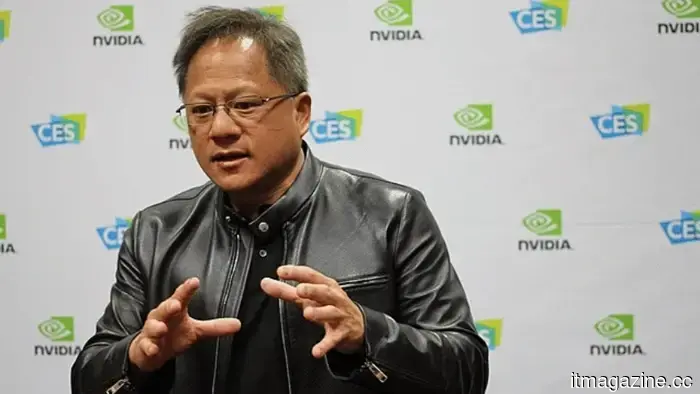 Nvidia's Jensen Huang cautions that DeepSeek operating on Huawei processors would lead to a 'terrible result' for the United States.
Nvidia's CEO Jensen Huang states that DeepSeek's optimization of AI models for Huawei's Ascend chips, rather than American hardware, would be "a terrible consequence for the United States."
Nvidia's Jensen Huang cautions that DeepSeek operating on Huawei processors would lead to a 'terrible result' for the United States.
Nvidia's CEO Jensen Huang states that DeepSeek's optimization of AI models for Huawei's Ascend chips, rather than American hardware, would be "a terrible consequence for the United States."
 Cursor is in discussions to secure $2 billion at a valuation of $50 billion after achieving a $2 billion annual recurring revenue (ARR) within three years.
Cursor is aiming to secure $2 billion at a $50 billion valuation from a16z, Thrive, and Nvidia after achieving $2 billion in annual recurring revenue (ARR) within three years, marking the quickest scaling in B2B history, with 70% of the Fortune 1,000 as its clients.
Cursor is in discussions to secure $2 billion at a valuation of $50 billion after achieving a $2 billion annual recurring revenue (ARR) within three years.
Cursor is aiming to secure $2 billion at a $50 billion valuation from a16z, Thrive, and Nvidia after achieving $2 billion in annual recurring revenue (ARR) within three years, marking the quickest scaling in B2B history, with 70% of the Fortune 1,000 as its clients.
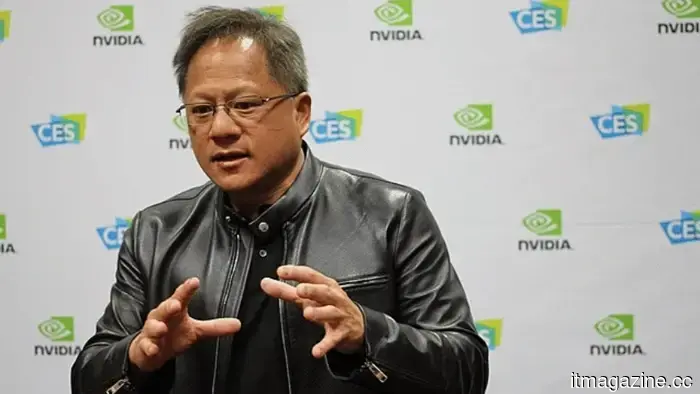 Nvidia's Jensen Huang cautions that DeepSeek operating on Huawei chips would result in a 'terrible situation' for the United States.
Nvidia's CEO Jensen Huang stated that DeepSeek optimizing AI models for Huawei's Ascend chips rather than American hardware would be "an awful development for the United States."
Nvidia's Jensen Huang cautions that DeepSeek operating on Huawei chips would result in a 'terrible situation' for the United States.
Nvidia's CEO Jensen Huang stated that DeepSeek optimizing AI models for Huawei's Ascend chips rather than American hardware would be "an awful development for the United States."
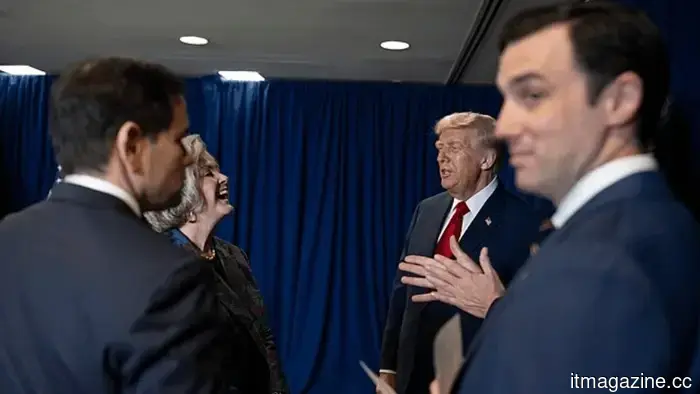 Amodei from Anthropic meets with Wiles and Bessent at the White House to discuss access to Mythos and the standoff with the Pentagon.
Anthropic CEO Amodei had "productive" discussions with Wiles and Bessent at the White House regarding access to Mythos, indicating a possible easing of the Pentagon blacklisting issue.
Amodei from Anthropic meets with Wiles and Bessent at the White House to discuss access to Mythos and the standoff with the Pentagon.
Anthropic CEO Amodei had "productive" discussions with Wiles and Bessent at the White House regarding access to Mythos, indicating a possible easing of the Pentagon blacklisting issue.
 OpenAI experiences a triple departure in one day, losing its product chief, the head of Sora, and the enterprise CTO.
Kevin Weil, Bill Peebles, and Srinivas Narayanan depart from OpenAI as the organization disbands Sora and disassembles OpenAI for Science, marking the continuation of a leadership exodus that has lasted two years.
OpenAI experiences a triple departure in one day, losing its product chief, the head of Sora, and the enterprise CTO.
Kevin Weil, Bill Peebles, and Srinivas Narayanan depart from OpenAI as the organization disbands Sora and disassembles OpenAI for Science, marking the continuation of a leadership exodus that has lasted two years.
 Europe's €80 billion investment in public funding for venture capital and scaleups encounters structural growth obstacles.
The EIF's €15 billion ETCI 2 fund aims for €80 billion in scaleup financing; however, Europe's 80% scaleup shortfall and loss-making unicorns indicate that solely providing capital will not bridge the gap with the US.
Europe's €80 billion investment in public funding for venture capital and scaleups encounters structural growth obstacles.
The EIF's €15 billion ETCI 2 fund aims for €80 billion in scaleup financing; however, Europe's 80% scaleup shortfall and loss-making unicorns indicate that solely providing capital will not bridge the gap with the US.
Anthropic's Amodei has a meeting with Wiles and Bessent at the White House regarding access to Mythos and the standoff with the Pentagon.
Anthropic CEO Amodei engaged in "productive" discussions with Wiles and Bessent at the White House regarding access to Mythos, indicating a potential easing of the conflict surrounding the Pentagon's blacklisting.