
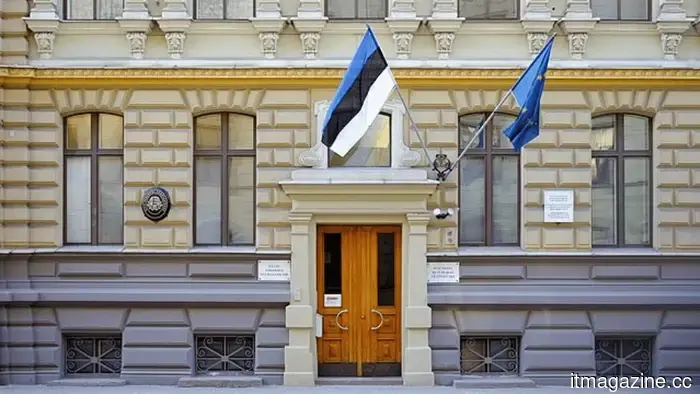
Estonia is an unusual EU nation that is against prohibiting children's use of social media.
In summary, Estonia and Belgium are the only EU member states that have rejected the Jutland Declaration, a pan-European commitment set for October 2025 aiming to limit children's access to social media. Estonian officials contend that age-based restrictions are unenforceable, that children will circumvent these measures, and advocate for enforcing GDPR regulations against the platforms themselves instead of limiting youth participation in the digital realm.
The declaration received support from most EU nations
On October 10, 2025, digital ministers from 25 of the EU's 27 member states signed the Jutland Declaration during an informal meeting in Horsens, Denmark, with Norway and Iceland also participating. This declaration represents a non-legally binding political commitment to implement age verification for privacy protection on social media platforms, safeguard minors against addictive design elements and deceptive practices, and strive for what is termed a “digital legal age” for online service access. Estonia and Belgium were the two EU members that opted out. Belgium’s refusal came after Flemish Media Minister Cieltje Van Achter vetoed it, labeling the age verification mandates as excessive and objecting to necessitating children to employ national identity systems like Itsme for accessing platforms such as YouTube or Instagram. Estonia’s opposition was primarily based on principle rather than procedure, stemming from a broader discourse about the direction of Europe's regulatory efforts. Significant political momentum is reflected in the declaration. The shift regarding social media age in Europe gained steam through 2025 and into 2026, with Australia introducing a ban on under-16s in December 2025, France enacting a law in January 2026 to bar under-15s, Spain establishing limits for under-16s in February 2026, and Austria looking to restrict access for those under 14. Greece announced it would prohibit under-15s from social media beginning in 2027, joined by a six-country EU group including Denmark, France, Austria, Portugal, and Spain. On November 20, 2025, the European Parliament supported a non-binding resolution advocating for a minimum digital age of 16 across the EU, passing with 483 votes in favor and 92 against, with 86 abstentions, urging the European Commission to include this measure in the upcoming Digital Fairness Act.
Reasons behind Estonia's rejection
Estonia's opposition is conveyed by two ministers who have approached the issue from different yet complementary perspectives. Kristina Kallas, Minister of Education and Research, has been the more vocal critic of the ban consensus. At a forum hosted by Politico in Barcelona, Kallas argued that age restrictions misplace responsibility. “The way to approach this, to me, is not to make kids responsible for that harm and start self-regulating,” she asserted. She emphasized that the responsibility should lie with the platforms. “Europe pretends to be weak in the face of large American and international corporations,” she challenged, calling on the EU to “actually take this power and start regulating the big American corporations.” She also pointed out the practical limitations of ban-centric strategies: “kids will quickly find ways around and still use social media.” This argument aligns with Europe’s broader initiative to exert regulatory influence over American tech companies, a project that has gained significant traction since 2025, although it has not yet been forcefully applied to social media content governance. Liisa-Ly Pakosta, Minister of Justice and Digital Affairs, has made a positive case for Estonia’s preferred approach, stating, “Estonia believes in an information society and including young people in the information society,” highlighting the value of digital inclusion rather than exclusion. Pakosta has referenced the General Data Protection Regulation as the existing enforcement tool available, noting that the GDPR prohibits platforms from processing children's personal data without proper consent and imposes fines of up to 4% of global annual revenue for non-compliance. Essentially, Estonia argues that Europe has not fully utilized its current tools before resorting to a new and untested one.
The enforcement issue highlighted by Estonia
Estonia's critique of the ban model has a real-world context. On December 10, 2025, Australia became the first country to enforce a social media ban for minors, preventing anyone under 16 from maintaining accounts on platforms like Instagram, TikTok, YouTube, Snapchat, X, and Facebook. Non-compliance could result in fines for platforms of up to approximately A$50 million for failing to take adequate steps to curb underage access. Following the implementation of the ban, the eSafety Commissioner discovered that Meta, TikTok, and YouTube did not adhere to the restrictions, leading to court actions against these platforms. The compliance landscape was disappointing: seven out of ten children with social media accounts prior to the ban still held active accounts afterward. Methods to bypass the ban, like using VPNs, false birth dates, and transferring accounts to adult relatives, proved to be simple and widely utilized. Whether Australia’s experience represents a definitive conclusion on the
Other articles
 AI health technology is experiencing rapid growth, but effective treatments are lacking.
No AI-developed medication has received approval. Each day, 40 million individuals turn to ChatGPT for health-related guidance. It's time to evaluate the true capabilities of AI in the field of medicine.
AI health technology is experiencing rapid growth, but effective treatments are lacking.
No AI-developed medication has received approval. Each day, 40 million individuals turn to ChatGPT for health-related guidance. It's time to evaluate the true capabilities of AI in the field of medicine.
 Estonia is one of the few EU countries that is against prohibiting children's use of social media.
Estonia rejected the EU's Jutland Declaration, claiming that age restrictions are impractical and that Europe should focus on enforcing GDPR against platforms rather than imposing limitations on children.
Estonia is one of the few EU countries that is against prohibiting children's use of social media.
Estonia rejected the EU's Jutland Declaration, claiming that age restrictions are impractical and that Europe should focus on enforcing GDPR against platforms rather than imposing limitations on children.
 Estonia is one of the few EU countries that is against prohibiting children's use of social media.
Estonia rejected the EU's Jutland Declaration, claiming that age restrictions are impractical to enforce and suggesting that Europe should implement the GDPR on platforms rather than limit access for children.
Estonia is one of the few EU countries that is against prohibiting children's use of social media.
Estonia rejected the EU's Jutland Declaration, claiming that age restrictions are impractical to enforce and suggesting that Europe should implement the GDPR on platforms rather than limit access for children.
 SaaS on the Beach is making a comeback in Barcelona.
SaaS on the Beach makes its comeback to Barcelona this May, featuring 60 SaaS founders, organized discussions, and a no-pitch format designed for peer-to-peer exchange.
SaaS on the Beach is making a comeback in Barcelona.
SaaS on the Beach makes its comeback to Barcelona this May, featuring 60 SaaS founders, organized discussions, and a no-pitch format designed for peer-to-peer exchange.
 Estonia is one of the few EU countries that is against prohibiting social media use among children.
Estonia rejected the EU's Jutland Declaration, claiming that age restrictions are impractical and that Europe should focus on implementing GDPR on platforms rather than limiting access for children.
Estonia is one of the few EU countries that is against prohibiting social media use among children.
Estonia rejected the EU's Jutland Declaration, claiming that age restrictions are impractical and that Europe should focus on implementing GDPR on platforms rather than limiting access for children.
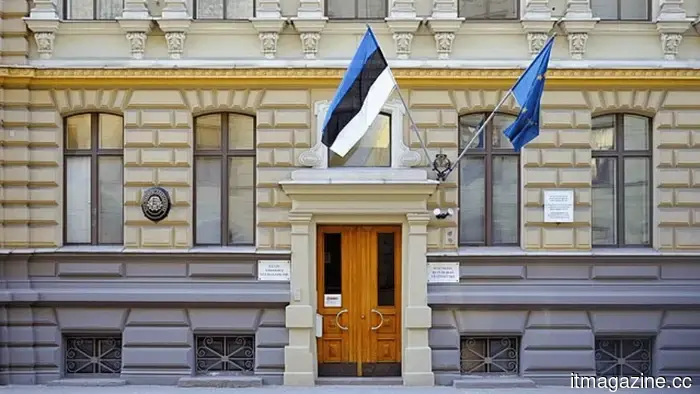 Estonia is one of the few EU countries that is against imposing restrictions on children's use of social media.
Estonia rejected the EU's Jutland Declaration, stating that age restrictions are impractical to enforce and that Europe should focus on implementing GDPR against platforms rather than limiting access for children.
Estonia is one of the few EU countries that is against imposing restrictions on children's use of social media.
Estonia rejected the EU's Jutland Declaration, stating that age restrictions are impractical to enforce and that Europe should focus on implementing GDPR against platforms rather than limiting access for children.
Estonia is an unusual EU nation that is against prohibiting children's use of social media.
Estonia rejected the EU's Jutland Declaration, contending that age restrictions are impractical and that Europe should focus on enforcing GDPR against platforms rather than imposing limitations on children.