

AI health technology is experiencing rapid growth, but effective treatments are lacking.
The revolution in drug discovery is genuine yet greatly exaggerated; the health chatbots pose an acknowledged risk, and the most critical diseases remain frustratingly unresolved.
At Novartis, around late 2025, a research team focused on Huntington’s disease utilized generative AI to computationally create 15 million potential compounds for a type of molecule known as a molecular glue degrader, which could penetrate the blood-brain barrier and target a protein linked to the disease.
From those 15 million options, the team synthesized approximately 60 in their lab, ultimately identifying a promising scaffold that is now proceeding towards further optimization. Reducing 15 million possibilities to 60 is, by any honest standard, an exceptional feat of computational selection. However, it is also, by any honest assessment, not a solution for Huntington’s disease.
This discrepancy between the capabilities of AI in laboratories and its actual benefits to patients represents the main tension in health technology as of 2026. The industry talks of a revolution, while the evidence indicates a pattern of slow, uncertain, and often disappointing growth.
Amidst this, over 40 million individuals are daily inputting their symptoms into ChatGPT, while patient safety organizations caution that this could pose the greatest hazard associated with the technology.
The allure of AI in drug discovery is appealing, and in its limited sense, accurate. Conventional drug development can take between 10 to 15 years and costs about $2.5 billion for each successful compound, with roughly 90 percent of potential candidates failing during clinical trials.
AI has the potential to shorten early discovery timelines by 30 to 40 percent and reduce preclinical candidate development from three to four years down to as little as 13 to 18 months. For instance, Insilico Medicine advanced an AI-discovered drug for idiopathic pulmonary fibrosis from target identification to Phase II trials in under 30 months, while traditionally this process lasts six to eight years.
As of January 2024, Boston Consulting Group reported that at least 75 drugs or vaccines from AI-focused biotech firms had begun clinical trials.
These represent actual achievements, yet they fall notably short of the finish line. By December 2025, not one AI-discovered drug had received FDA approval. The pharmaceutical industry's failure rate in clinical trials, which stands at 90 percent, has not significantly changed.
Scientific commentary has indicated that AI-discovered compounds seem to exhibit progression rates akin to those found in traditionally discovered ones, suggesting that while technology may speed up entry to the starting gate, it has not enhanced our chances of success.
Dr. Raminderpal Singh, writing in Drug Target Review in February 2026, stressed that an essential question for this year should focus not on AI's ability to hasten preclinical timelines (which it can) but rather on its capacity to improve clinical success rates. Until Phase III results and regulatory approvals can address that question, Singh asserts that the pharmaceutical industry's cautious approach to AI investment is "entirely justified."
One unnamed CEO expressed the sentiment more bluntly: “AI has profoundly disappointed us over the last decade in drug discovery, resulting in a series of failures.”
The reality is that no amount of computational power has been able to cure Alzheimer’s, pancreatic cancer, ALS, or Huntington’s, or any other diseases that continue to claim lives while AI companies raise billions. The issue is not a deficiency in processing power, but rather the inherent complexity of human biology. Diseases with poorly understood mechanisms do not become clearer simply through faster screening of millions of compounds.
The bottleneck has never been the speed of molecular screening; it has always been our fundamental lack of understanding regarding these diseases at the cellular level, the shortcomings of animal models in predicting human outcomes, and the long duration of clinical trials needed to ascertain a compound's safety and effectiveness in a living organism.
AI cannot circumvent the complexities of biology, nor can it reduce a five-year clinical trial to five months. It cannot manipulate a patient's immune system to behave like a predictive model. Novartis recognized this directly at the World Economic Forum in January 2026: the complexity of human biology persists, translating research into clinical studies is time-consuming, and many diseases still require lengthy and thorough trials. The company noted that AI is not a magical solution but a tool for intelligently navigating complexity.
This is a defensible position, yet it contrasts sharply with the narrative presented by Sam Altman, who suggested that one day we might simply ask ChatGPT to cure cancer.
If the narrative around AI's efficacy in drug discovery reflects genuine but overstated advancements, its role as a health assistant resembles more of a cautionary tale.
In January 2026, patient safety organization ECRI identified the misuse of AI chatbots in healthcare as the top health technology risk of the year. ECRI pointed out that these tools are neither regulated as medical devices nor validated for clinical use, despite growing reliance on them by patients, clinicians,

Other articles
 UK startup Altilium secures £18.5 million to establish the first commercial EV battery refinery in Britain.
Altilium has obtained £18.5 million in grants from the UK government to construct ACT3, a refinery in Plymouth that will extract essential minerals from 24,000 electric vehicle batteries annually.
UK startup Altilium secures £18.5 million to establish the first commercial EV battery refinery in Britain.
Altilium has obtained £18.5 million in grants from the UK government to construct ACT3, a refinery in Plymouth that will extract essential minerals from 24,000 electric vehicle batteries annually.
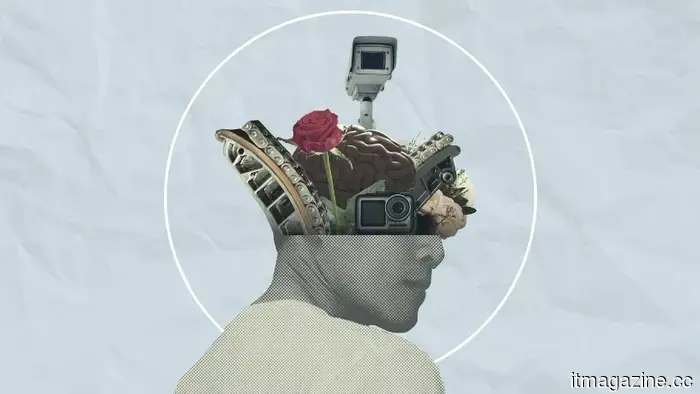 AI is enhancing our speed and productivity, but it is diminishing our critical thinking skills.
AI is ubiquitous, yet the proof of its worth is scant, the fatigue is palpable, and the term “intelligence” is serving more as a marketing tool than a scientific concept.
AI is enhancing our speed and productivity, but it is diminishing our critical thinking skills.
AI is ubiquitous, yet the proof of its worth is scant, the fatigue is palpable, and the term “intelligence” is serving more as a marketing tool than a scientific concept.
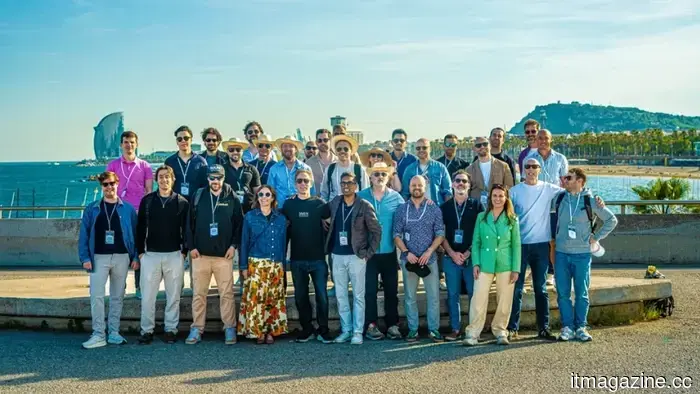 SaaS on the Beach is back in Barcelona.
SaaS on the Beach is set to return to Barcelona this May, featuring 60 SaaS founders, carefully curated discussions, and a no-pitch format designed for peer-to-peer exchange.
SaaS on the Beach is back in Barcelona.
SaaS on the Beach is set to return to Barcelona this May, featuring 60 SaaS founders, carefully curated discussions, and a no-pitch format designed for peer-to-peer exchange.
 Estonia is one of the few EU countries that is against prohibiting children's use of social media.
Estonia rejected the EU's Jutland Declaration, claiming that age restrictions are impractical and that Europe should focus on enforcing GDPR against platforms rather than imposing limitations on children.
Estonia is one of the few EU countries that is against prohibiting children's use of social media.
Estonia rejected the EU's Jutland Declaration, claiming that age restrictions are impractical and that Europe should focus on enforcing GDPR against platforms rather than imposing limitations on children.
 Estonia is one of the few EU countries that is against prohibiting social media use among children.
Estonia rejected the EU's Jutland Declaration, claiming that age restrictions are impractical and that Europe should focus on implementing GDPR on platforms rather than limiting access for children.
Estonia is one of the few EU countries that is against prohibiting social media use among children.
Estonia rejected the EU's Jutland Declaration, claiming that age restrictions are impractical and that Europe should focus on implementing GDPR on platforms rather than limiting access for children.
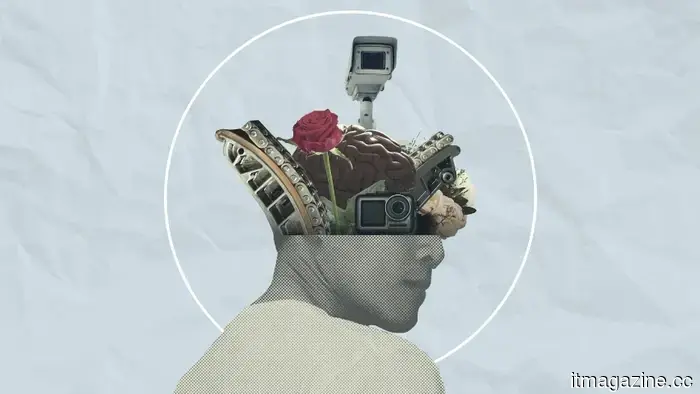 AI is enhancing our speed and productivity but also diminishing our critical thinking skills.
AI is omnipresent, yet the proof of its worth is scarce, the fatigue is genuine, and the term “intelligence” serves more as a marketing tool than a scientific concept.
AI is enhancing our speed and productivity but also diminishing our critical thinking skills.
AI is omnipresent, yet the proof of its worth is scarce, the fatigue is genuine, and the term “intelligence” serves more as a marketing tool than a scientific concept.
AI health technology is experiencing rapid growth, but effective treatments are lacking.
No AI-developed medication has received approval. Each day, 40 million individuals turn to ChatGPT for health-related guidance. It's time to evaluate the true capabilities of AI in the field of medicine.