
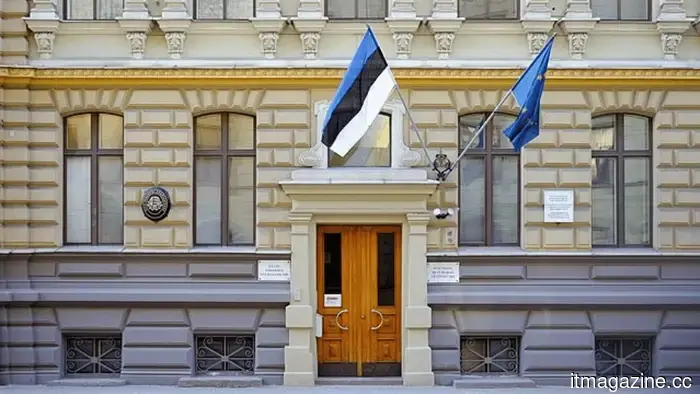
Estonia is one of the few EU countries that is against prohibiting children's use of social media.
In brief: Estonia and Belgium are the only two EU member countries that have refused to sign the Jutland Declaration, a commitment made in October 2025 to limit children's access to social media across Europe. Ministers from Estonia argue that age-based restrictions are impractical, as children will find ways to bypass them, and that a better approach would be to enforce the GDPR against the platforms themselves and to invest in digital literacy rather than curtailing young people's participation in the digital world.
The declaration that most EU countries agreed to
On 10 October 2025, digital ministers from 25 out of 27 EU member states signed the Jutland Declaration during an informal meeting in Horsens, Denmark. Norway and Iceland also signed. This declaration represents a non-binding political commitment to implement age verification that respects privacy on social media, to shield minors from addictive designs and misleading features, and to work towards establishing a “digital legal age” for online services. Estonia and Belgium chose not to sign. Belgium's refusal was due to a veto by Flemish Media Minister Cieltje Van Achter, who criticized the age verification stipulations as excessive and opposed the requirement for children to use national identity systems like Itsme to access platforms such as YouTube or Instagram. Estonia's stance was fundamentally different, based on principled beliefs rather than procedural objections, and it centered around a broader discussion on the direction of Europe’s regulatory efforts. The political momentum behind the declaration is substantial, reflecting an accelerated shift in Europe's approach to social media age restrictions throughout 2025 and into 2026, with various countries implementing their own restrictions on minors. For instance, Australia will implement a ban on under-16s starting December 2025, France will prohibit under-15s starting January 2026, Spain will enact a restriction for under-16s by February 2026, and Austria is moving forward with regulations for those under 14. Additionally, Greece plans to ban those under 15 from social media in 2027, as part of a collaborative effort among six EU countries that includes Denmark, France, Austria, Portugal, and Spain. On 20 November 2025, the European Parliament endorsed a non-binding resolution advocating for a digital minimum age of 16 across the EU, with a vote of 483 in favor, 92 against, and 86 abstentions, urging the European Commission to include this measure in the forthcoming Digital Fairness Act.
Reasons behind Estonia's refusal
Estonia's opposition is articulated by two ministers who address the issue from different but complementary perspectives. Kristina Kallas, the Minister of Education and Research, is a more vocal critic of the consensus on bans. At a Politico forum in Barcelona, Kallas contended that age restrictions erroneously place responsibility on the wrong party. “The approach should not put the burden on kids for that harm and start self-regulating,” she remarked. She argues that responsibility should be placed on the platforms instead. “Europe appears weak when it comes to large American and international corporations,” she stated, urging the EU to genuinely exercise its regulatory power over these companies. She also expressed skepticism about the effectiveness of ban-based strategies: “children will quickly find ways around these restrictions and continue using social media.” This viewpoint aligns with Europe's broader ambition to assert regulatory authority over American tech firms, an initiative that has gained substantial traction since 2025 but has not yet been aggressively applied to the governance of social media content. Liisa-Ly Pakosta, the Minister of Justice and Digital Affairs, has presented a more affirmative argument for Estonia’s preferred approach. “Estonia believes in an information society that includes young people,” she stated, advocating for digital participation rather than exclusion. Pakosta has highlighted the General Data Protection Regulation as the readily available enforcement tool, which prohibits platforms from processing children's personal data without appropriate consent and imposes fines of up to 4% of global annual turnover for violations. Essentially, Estonia's argument emphasizes that Europe should fully utilize its existing tools before resorting to a new and untested approach.
Concerns regarding enforcement raised by Estonia
Estonia's critique of the ban model is backed by a relevant case. Australia was the first country to implement a social media ban for minors on 10 December 2025, prohibiting under-16s from having accounts on platforms such as Instagram, TikTok, YouTube, Snapchat, X, and Facebook. Platforms can be fined up to approximately A$50 million if they fail to adequately prevent underage access. Following the ban's implementation, the eSafety Commissioner found that Meta, TikTok, and YouTube were not complying with the regulations, leading to court action against these platforms. The compliance situation was dire, with seven out of ten children who previously held social media accounts still maintaining active accounts after the ban was enacted. Workarounds, like using VPNs, providing false birthdates, and transferring accounts to adult relatives, were simple to execute and widely
Other articles
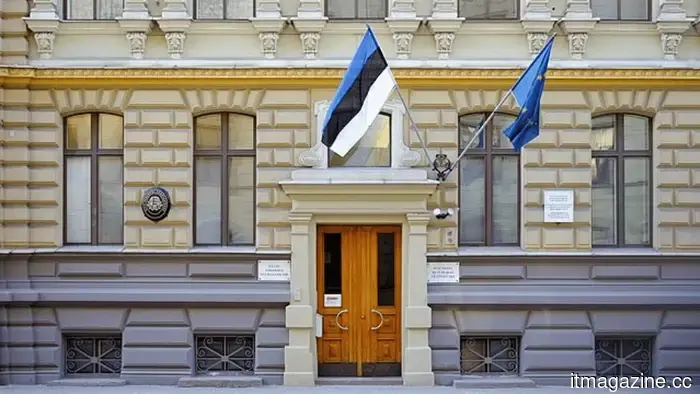 Estonia is an unusual EU nation that is against prohibiting children's use of social media.
Estonia rejected the EU's Jutland Declaration, contending that age restrictions are impractical and that Europe should focus on enforcing GDPR against platforms rather than imposing limitations on children.
Estonia is an unusual EU nation that is against prohibiting children's use of social media.
Estonia rejected the EU's Jutland Declaration, contending that age restrictions are impractical and that Europe should focus on enforcing GDPR against platforms rather than imposing limitations on children.
 UK startup Altilium secures £18.5 million to establish the country's first commercial EV battery recycling facility.
Altilium has obtained £18.5 million in grants from the UK government to establish ACT3, a refinery in Plymouth that will extract essential minerals from 24,000 electric vehicle batteries annually.
UK startup Altilium secures £18.5 million to establish the country's first commercial EV battery recycling facility.
Altilium has obtained £18.5 million in grants from the UK government to establish ACT3, a refinery in Plymouth that will extract essential minerals from 24,000 electric vehicle batteries annually.
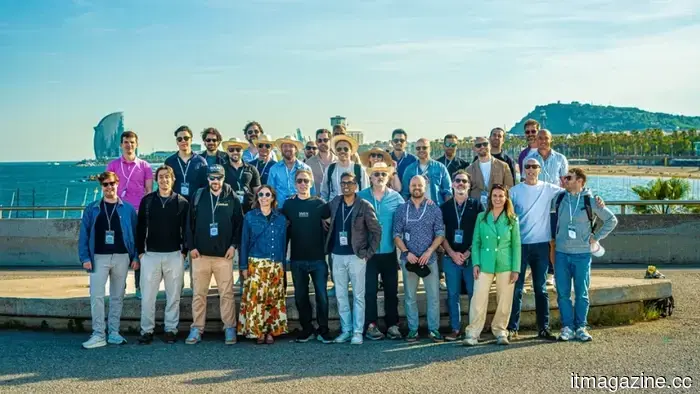 SaaS on the Beach is making a comeback in Barcelona.
SaaS on the Beach makes its comeback to Barcelona this May, featuring 60 SaaS founders, organized discussions, and a no-pitch format designed for peer-to-peer exchange.
SaaS on the Beach is making a comeback in Barcelona.
SaaS on the Beach makes its comeback to Barcelona this May, featuring 60 SaaS founders, organized discussions, and a no-pitch format designed for peer-to-peer exchange.
 AI is enhancing our speed and productivity, but is also diminishing our critical thinking abilities.
AI is ubiquitous, yet the proof of its worth is scarce, fatigue is palpable, and the term “intelligence” is serving more as a marketing tool than a scientific concept.
AI is enhancing our speed and productivity, but is also diminishing our critical thinking abilities.
AI is ubiquitous, yet the proof of its worth is scarce, fatigue is palpable, and the term “intelligence” is serving more as a marketing tool than a scientific concept.
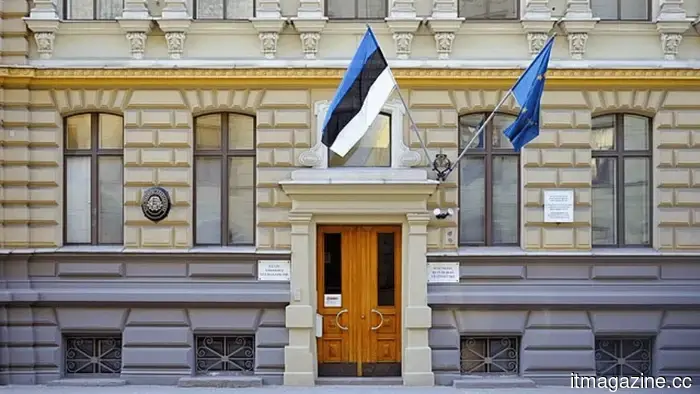 Estonia is an unusual EU nation that is against prohibiting children's use of social media.
Estonia rejected the EU's Jutland Declaration, contending that age restrictions are impractical and that Europe should implement GDPR regulations on platforms rather than impose limitations on children.
Estonia is an unusual EU nation that is against prohibiting children's use of social media.
Estonia rejected the EU's Jutland Declaration, contending that age restrictions are impractical and that Europe should implement GDPR regulations on platforms rather than impose limitations on children.
 AI is enhancing our speed and productivity but also diminishing our critical thinking skills.
AI is omnipresent, yet the proof of its worth is scarce, the fatigue is genuine, and the term “intelligence” serves more as a marketing tool than a scientific concept.
AI is enhancing our speed and productivity but also diminishing our critical thinking skills.
AI is omnipresent, yet the proof of its worth is scarce, the fatigue is genuine, and the term “intelligence” serves more as a marketing tool than a scientific concept.
Estonia is one of the few EU countries that is against prohibiting children's use of social media.
Estonia rejected the EU's Jutland Declaration, claiming that age restrictions are impractical to enforce and suggesting that Europe should implement the GDPR on platforms rather than limit access for children.