
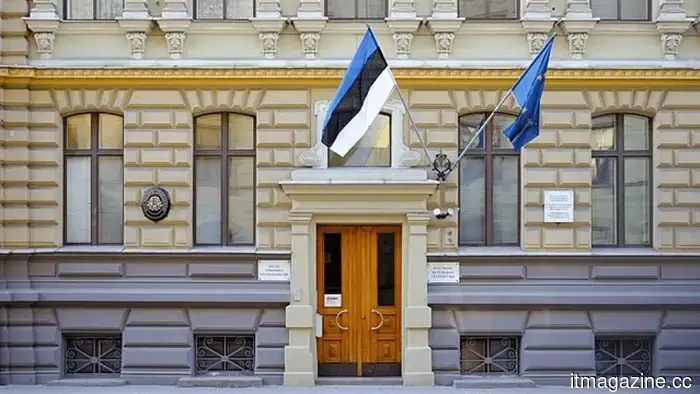
Estonia is one of the few EU countries that is against prohibiting social media use among children.
In summary, Estonia and Belgium are the only two EU member states that have rejected the Jutland Declaration, an October 2025 initiative aimed at limiting children's access to social media across Europe. Officials in Estonia argue that age-based restrictions are not enforceable, believing that children will find ways to bypass them. They contend that the focus should instead be on enforcing the GDPR against the platforms and enhancing digital literacy, rather than limiting young people's engagement in the digital world.
The declaration was signed by digital ministers from 25 of the EU's 27 member states, along with Norway and Iceland, at a gathering in Horsens, Denmark, on 10 October 2025. This non-binding political agreement aims to implement privacy-protecting age verification on social media, safeguard minors from addictive design elements, and work towards a "digital legal age" for online service access. Estonia and Belgium opted out, with Belgium's objection stemming from Flemish Media Minister Cieltje Van Achter's view that the age verification criteria were excessive and unjustly required children to use national ID systems like Itsme for access to platforms such as YouTube and Instagram. Estonia's withdrawal was based on principled grounds, arguing that Europe should concentrate regulatory efforts differently.
The overall political momentum illustrated by the declaration is substantial, as the shift in how European countries address social media age restrictions progressed rapidly through 2025 and into 2026. Australia implemented a ban on minors under 16 starting December 2025, followed by France, Spain, and Austria introducing similar measures. Greece announced plans to ban under-15s from social media beginning in 2027, joining a coalition of six EU nations. Furthermore, on 20 November 2025, the European Parliament supported a resolution advocating for a European digital minimum age of 16, with the European Commission charged with integrating this into the upcoming Digital Fairness Act.
Estonia's dissent is voiced by two ministers with differing but complementary perspectives. Kristina Kallas, the Minister of Education and Research, has been a vocal critic of the ban mindset, arguing that it improperly places responsibility on children for potential harms. She claims that the burden of responsibility should lie with the platforms, urging Europe to exert regulatory power over major American corporations. Kallas also emphasized the practical shortcomings of bans, stating that children will quickly find ways to circumvent restrictions. This logic ties into Europe's broader efforts to bolster regulatory oversight of American tech firms, which have gained traction since 2025 but have yet to be enforced rigorously concerning social media content management. Liisa-Ly Pakosta, the Minister of Justice and Digital Affairs, supports Estonia's approach, advocating for the inclusion of young people in an information society and emphasizing digital participation over exclusion. She cites the existing General Data Protection Regulation (GDPR) as a viable enforcement tool against platforms that mishandle children's personal data and suggests that Europe should utilize its current means before resorting to new measures.
Estonia's critique of the ban model has a tangible reference: Australia became the first nation to impose a social media prohibition on minors on 10 December 2025, preventing those under 16 from creating accounts on platforms like Instagram and TikTok. The penalties for noncompliance can reach approximately A$50 million. Following the ban's implementation, the eSafety Commissioner discovered that platforms like Meta and TikTok were not adhering to the rules, leading to legal actions against them. Unfortunately, compliance rates were disappointing, with 70% of children who previously had accounts still active after the ban. Tactics such as using VPNs, false birthdates, and transferring accounts to adults were commonly used to bypass restrictions. The question remains as to whether Australia's experience signals a definitive failure of the ban model or whether initial challenges could be addressed through stricter enforcement. Nonetheless, it is widely accepted that this pioneering age ban led to significant non-compliance shortly after its introduction, a situation predicted by critics who believed that children would seek creative ways to evade restrictions rather than genuinely be restricted.
Looking ahead in Brussels, the core battleground for the debate between Estonia's approach and the majority favoring bans lies in the upcoming Digital Fairness Act, which targets addictive design and manipulative practices in digital services. The recent vote by the European Parliament explicitly calls for the incorporation of a 16-plus minimum digital age in the DFA, along with restrictions on engagement-driven algorithms for minors and limitations on loot boxes, among other measures. The European Commission is expected to present the DFA proposal in the last quarter of 2026, giving Estonia a chance to advocate for a framework that holds platforms accountable, either in addition to or instead of an age access restriction. The two strategies are not inherently conflicting; however, they reflect fundamentally different views on where regulatory influence should be applied: against the commercial platforms generating profits from these systems or against young users who have come to view social media as a standard part of their environment. With 2025 marking the rise of AI as the decade's defining
Other articles
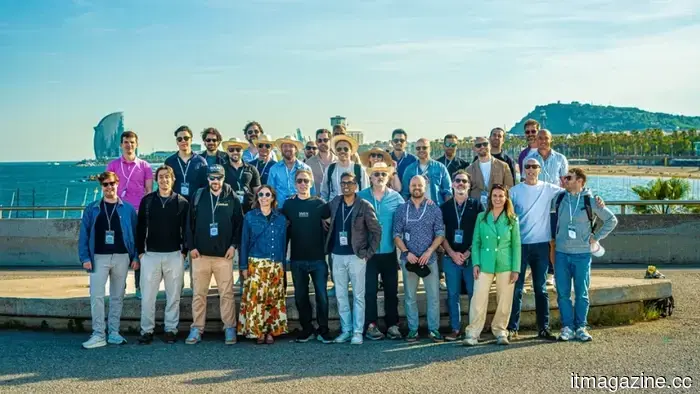 SaaS on the Beach is making a comeback in Barcelona.
SaaS on the Beach makes its comeback to Barcelona this May, featuring 60 SaaS founders, organized discussions, and a no-pitch format designed for peer-to-peer exchange.
SaaS on the Beach is making a comeback in Barcelona.
SaaS on the Beach makes its comeback to Barcelona this May, featuring 60 SaaS founders, organized discussions, and a no-pitch format designed for peer-to-peer exchange.
 AI is enhancing our speed and productivity, but it is diminishing our critical thinking skills.
AI is ubiquitous, yet the proof of its worth is scant, the fatigue is palpable, and the term “intelligence” is serving more as a marketing tool than a scientific concept.
AI is enhancing our speed and productivity, but it is diminishing our critical thinking skills.
AI is ubiquitous, yet the proof of its worth is scant, the fatigue is palpable, and the term “intelligence” is serving more as a marketing tool than a scientific concept.
 UK startup Altilium secures £18.5 million to establish the first commercial EV battery refinery in Britain.
Altilium has obtained £18.5 million in grants from the UK government to construct ACT3, a refinery in Plymouth that will extract essential minerals from 24,000 electric vehicle batteries annually.
UK startup Altilium secures £18.5 million to establish the first commercial EV battery refinery in Britain.
Altilium has obtained £18.5 million in grants from the UK government to construct ACT3, a refinery in Plymouth that will extract essential minerals from 24,000 electric vehicle batteries annually.
 AI is enhancing our speed and productivity, but is also diminishing our critical thinking abilities.
AI is ubiquitous, yet the proof of its worth is scarce, fatigue is palpable, and the term “intelligence” is serving more as a marketing tool than a scientific concept.
AI is enhancing our speed and productivity, but is also diminishing our critical thinking abilities.
AI is ubiquitous, yet the proof of its worth is scarce, fatigue is palpable, and the term “intelligence” is serving more as a marketing tool than a scientific concept.
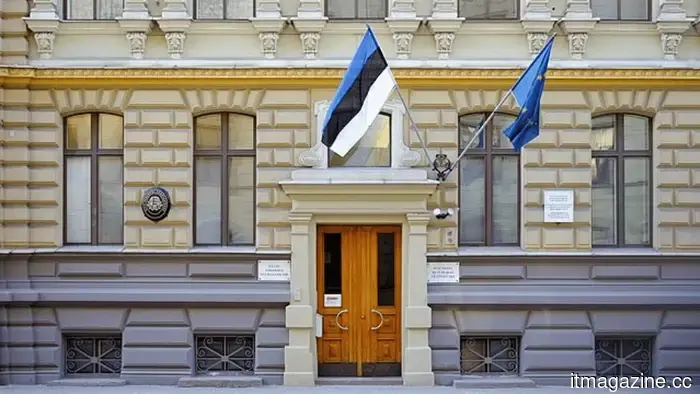 Estonia is an unusual EU nation that is against prohibiting children's use of social media.
Estonia rejected the EU's Jutland Declaration, contending that age restrictions are impractical and that Europe should focus on enforcing GDPR against platforms rather than imposing limitations on children.
Estonia is an unusual EU nation that is against prohibiting children's use of social media.
Estonia rejected the EU's Jutland Declaration, contending that age restrictions are impractical and that Europe should focus on enforcing GDPR against platforms rather than imposing limitations on children.
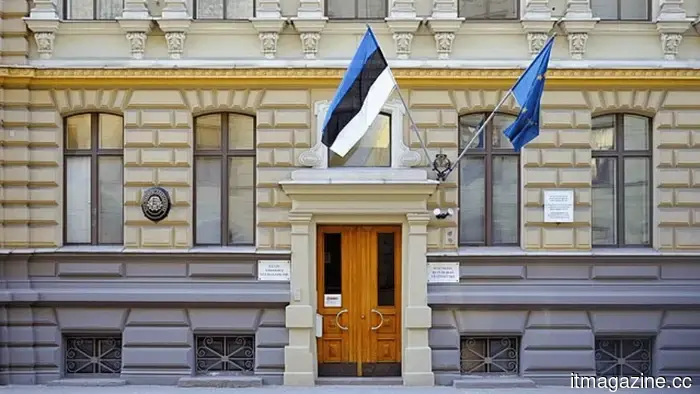 Estonia is one of the few EU countries that is against imposing restrictions on children's use of social media.
Estonia rejected the EU's Jutland Declaration, stating that age restrictions are impractical to enforce and that Europe should focus on implementing GDPR against platforms rather than limiting access for children.
Estonia is one of the few EU countries that is against imposing restrictions on children's use of social media.
Estonia rejected the EU's Jutland Declaration, stating that age restrictions are impractical to enforce and that Europe should focus on implementing GDPR against platforms rather than limiting access for children.
Estonia is one of the few EU countries that is against prohibiting social media use among children.
Estonia rejected the EU's Jutland Declaration, claiming that age restrictions are impractical and that Europe should focus on implementing GDPR on platforms rather than limiting access for children.