
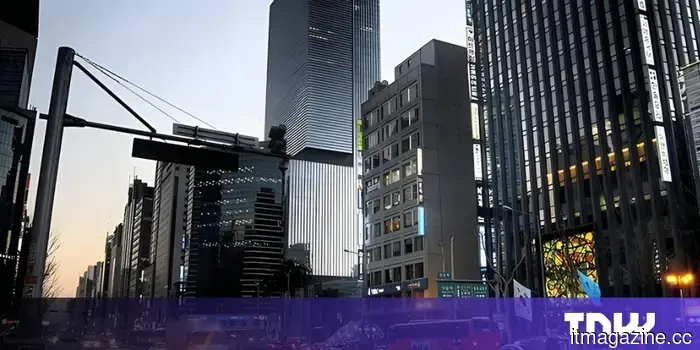
South Korea is relying on Russian naphtha as the semiconductor supply chain confronts a crisis in the Middle East.
When Iran effectively sealed off the Strait of Hormuz in late February, disrupting the passage through which a fifth of the world’s oil and gas is transported, the immediate fallout was predictable: crude prices surged, energy markets experienced turmoil, and geopolitical analysts resorted to their most alarming descriptors. However, fewer anticipated how rapidly the crisis would escalate through the petrochemical supply chain and significantly impact Asia’s semiconductor sector.
South Korea, housing Samsung and SK Hynix—the two companies that together account for about 70 percent of the global DRAM market and 80 percent of high-bandwidth memory production—finds itself at the forefront of this disruption. The nation imports roughly 45 percent of its naphtha, a vital petrochemical feedstock, with around 77 percent of those imports typically coming from the Middle East. This supply line is now effectively cut off.
On Monday, South Korea’s Ministry of Trade, Industry and Resource reported the importation of 27,000 tonnes of Russian naphtha, marking the country’s first such transaction since the onset of the US-Israel conflict with Iran. The purchaser was LG Chem, South Korea’s largest chemical producer, which directed the shipment to the Daesan industrial complex in South Chungcheong Province. This deal was enabled by a temporary US sanctions waiver allowing Russian cargoes in transit to complete their sales and offloading between March 12 and April 11, with Washington confirming that non-dollar payments would not result in secondary sanctions.
This purchase represents more of an emergency measure than a strategic shift. LG Chem had already been compelled to shut down its No. 2 naphtha cracker at the Yeosu complex, an 800,000 tonne-per-year facility, due to insufficient feedstock. It is not alone in this situation; Yeochun NCC has declared force majeure on its contracts, and both Lotte Chemical and LG Chem have warned customers about the potential for further declarations. Industry insiders report that inventories across South Korea’s petrochemical sector have dipped to around two weeks' worth.
The crisis has prompted Seoul to undertake its most aggressive supply-side intervention in years. Since Friday, South Korea has imposed a ban on naphtha exports, requiring refiners to redirect approximately 11 percent of domestically produced naphtha that was previously shipped abroad. The government has also taken measures to enforce production and allocation of naphtha under emergency protocols.
Naphtha’s significance in chip manufacturing is less apparent than in plastics but equally important. Its derivatives—olefins and aromatics—are refined into the high-purity chemicals, solvents, and plastics essential for chip fabrication, including photoresist coatings for circuit patterning and cleaning agents critical for wafer processing. Ethylene, produced from naphtha cracking, is often referred to as the "rice of industry" in South Korea due to its widespread use across manufacturing sectors.
However, naphtha is just one component in a larger web of disruption. South Korea’s industry ministry has identified 14 items in semiconductor supply chains that are significantly vulnerable due to the Middle East conflict. Among the most crucial is helium, which is used to cool silicon wafers during fabrication and is generally acknowledged to lack viable alternatives. Qatar, responsible for over a third of global helium production, ceased output at its 77 million tonne-per-annum facility on March 2 after Iranian drone strikes knocked the Ras Laffan complex offline. In 2025, South Korea sourced nearly 65 percent of its helium from Qatar.
Bromine, another vital ingredient used in circuit creation and chip inspection equipment, also poses similar concentrated risks. About two-thirds of the world’s bromine is produced in Israel and Jordan, with South Korea currently obtaining 90 percent of its supply from Israel.
This vulnerability is not exclusive to South Korea, although the nation’s exposure is particularly severe. Japan derives roughly 42 percent of its naphtha from the Middle East, and several Japanese petrochemical companies have announced production reductions. Taiwan, which produces about 90 percent of the world’s most advanced semiconductors through TSMC, imports around 97 percent of its energy requirements, with approximately one-third of its liquefied natural gas tied to Middle Eastern suppliers.
For now, major chip manufacturers are adopting a cautiously reassuring stance. SK Hynix has stated it has diversified its helium supply and maintains adequate inventory. TSMC has acknowledged that it is monitoring the situation but does not currently foresee a significant impact from the halt in Qatari production. GlobalFoundries has indicated that it has mitigation plans in place.
These reassurances may be warranted if the conflict proves to be brief. Nonetheless, the naphtha crisis arrives at a time when the semiconductor industry can least afford supply interruptions. Samsung and SK Hynix reported record performances in 2025, propelled by unprecedented demand for AI memory chips, and both companies had planned aggressive production expansions for 2026 to satisfy the incessant need of AI infrastructure developments
Other articles
 Opera's newest update transforms it into an independent browsing agent for ChatGPT and Claude.
Opera's latest MCP Connector transforms Neon into an independent browsing agent, enabling AI tools such as ChatGPT and Claude to directly manage your browser and accomplish tasks on various websites.
Opera's newest update transforms it into an independent browsing agent for ChatGPT and Claude.
Opera's latest MCP Connector transforms Neon into an independent browsing agent, enabling AI tools such as ChatGPT and Claude to directly manage your browser and accomplish tasks on various websites.
 Get a $500 discount on the Dell Plus Copilot+ PC: equipped with a Core Ultra 9, 32GB RAM, and a 2.5K Mini-LED touchscreen for less than $1,100.
The Dell Plus Copilot+ PC is now available for $1,099.99 at Best Buy, marking a savings of $500 from its regular price of $1,599.99. This represents a significant discount on a 16-inch 2-in-1 device that combines an Intel Core Ultra 9 processor with 32GB of LPDDR5X RAM, a 2.5K Mini-LED touchscreen, and Microsoft’s Copilot+ AI features. For a convertible laptop at […]
Get a $500 discount on the Dell Plus Copilot+ PC: equipped with a Core Ultra 9, 32GB RAM, and a 2.5K Mini-LED touchscreen for less than $1,100.
The Dell Plus Copilot+ PC is now available for $1,099.99 at Best Buy, marking a savings of $500 from its regular price of $1,599.99. This represents a significant discount on a 16-inch 2-in-1 device that combines an Intel Core Ultra 9 processor with 32GB of LPDDR5X RAM, a 2.5K Mini-LED touchscreen, and Microsoft’s Copilot+ AI features. For a convertible laptop at […]
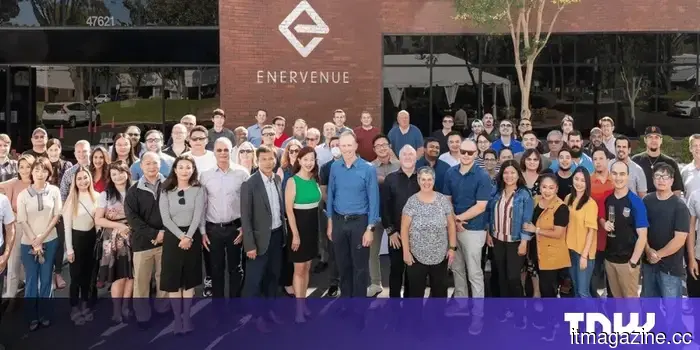 EnerVenue secures $300 million to expand the use of metal-hydrogen batteries, validated by NASA, for grid storage solutions.
California-based startup EnerVenue has secured $300 million in funding, with Full Vision Capital leading the investment, to expand its nickel-hydrogen battery technology from space applications to large-scale energy storage solutions.
EnerVenue secures $300 million to expand the use of metal-hydrogen batteries, validated by NASA, for grid storage solutions.
California-based startup EnerVenue has secured $300 million in funding, with Full Vision Capital leading the investment, to expand its nickel-hydrogen battery technology from space applications to large-scale energy storage solutions.
 OnePlus' upcoming Nord smartphone has an unusual focus on being durable in all situations — even against washing machines.
The upcoming OnePlus Nord 6 has been teased, showcasing its camera specifications, durable construction, and flagship-level AI features.
OnePlus' upcoming Nord smartphone has an unusual focus on being durable in all situations — even against washing machines.
The upcoming OnePlus Nord 6 has been teased, showcasing its camera specifications, durable construction, and flagship-level AI features.
 ByteDance implements watermarking and IP protection measures for Seedance 2.0 prior to its global launch.
After facing backlash from Hollywood, ByteDance has reintroduced Seedance 2.0, featuring C2PA watermarking, face-blocking, and copyright filters. This update will be available through CapCut across seven markets.
ByteDance implements watermarking and IP protection measures for Seedance 2.0 prior to its global launch.
After facing backlash from Hollywood, ByteDance has reintroduced Seedance 2.0, featuring C2PA watermarking, face-blocking, and copyright filters. This update will be available through CapCut across seven markets.
 Decentraland debuts on the Epic Games Store and Android as the metaverse becomes available on multiple platforms.
Decentraland has launched on the Epic Games Store and Google Play, hoping that distribution via popular storefronts will achieve success where Meta's $70 billion metaverse investment did not.
Decentraland debuts on the Epic Games Store and Android as the metaverse becomes available on multiple platforms.
Decentraland has launched on the Epic Games Store and Google Play, hoping that distribution via popular storefronts will achieve success where Meta's $70 billion metaverse investment did not.
South Korea is relying on Russian naphtha as the semiconductor supply chain confronts a crisis in the Middle East.
South Korea is bringing in 27,000 tonnes of Russian naphtha due to the closure of the Strait of Hormuz, which is affecting the essential petrochemical supplies needed for semiconductor production throughout Asia.