

Opera's newest update transforms it into an independent browsing agent for ChatGPT and Claude.
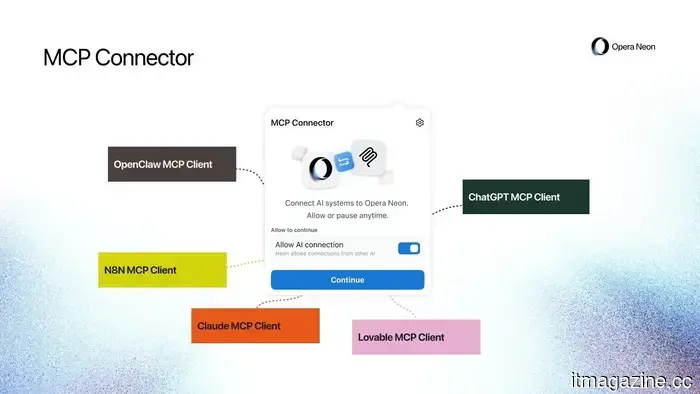
Opera is making significant progress towards AI-driven browsing by allowing other AI assistants to connect. The company has rolled out an MCP Connector for Opera Neon, enabling third-party AI agents such as ChatGPT, Claude, n8n, Lovable, and OpenClaw to link directly with the browser.
This feature means your AI can now access your screen and perform actions, transforming Neon into an independent browsing agent. It is currently available for paid Neon users, with plans to introduce a simplified version for other Opera browsers in the future.
What exactly does MCP allow AI to do with your browser?
To grasp this change, it's essential to understand what MCP is. Model Context Protocol is an open standard established by Anthropic. This protocol allows AI tools to connect with apps and services without needing separate integrations for each one.
With an MCP server set up, any compatible AI can quickly interact with supported platforms. In the case of Opera Neon, that platform is your browser. It provides AI with visibility into your screen and the capability to engage with it in real-time.
Neon was initially designed for agentic browsing, where its built-in AI could perform tasks on your behalf. Now, this functionality extends beyond Opera’s own AI, allowing any MCP-supporting AI to connect and utilize the browser in the same manner.
What functionalities does the new upgrade provide in Opera Neon?
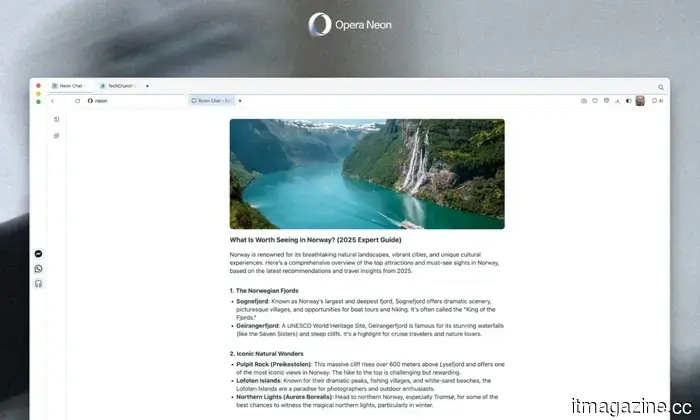
Once connected, you can request AI tools to execute actual browsing tasks rather than just proposing steps. You can search for information, open web pages, navigate websites, and carry out actions across different tabs.
The AI can understand your current context and react accordingly, facilitating smoother multi-step tasks. It can switch between pages, engage with elements, and manage workflows while you concentrate on the final outcome.
At present, this capability is exclusive to Neon, but Opera's intention to broaden MCP support suggests that it may soon be a standard feature in various browsers.
From AI in your browser to AI managing your browser
The AI landscape is evolving rapidly. It began with simple chatbots that responded to queries and has progressed to a competition for creating more sophisticated models. Shortly after, browser companies entered the fray, initially adding minor AI features and then developing entire browsers centered around AI.
This progression has led to the emergence of AI-first browsers like Perplexity’s Comet and OpenAI’s Atlas. Opera was among the pioneers to fully embrace this concept with Neon, its agentic browser designed to complete tasks for users.
Now, the focus is shifting again. It's no longer just about incorporating AI into browsers; AI is beginning to take command of them. With the introduction of the MCP Connector, Opera is advancing this new phase, where external AI tools can actively operate your browser for you.
Other articles
 Multi-Hop Transactions in Cryptocurrency: The Compliance Risks Associated with Indirect Exposure
Multi-hop blockchain transactions complicate the detection of indirect cryptocurrency exposure, creating significant compliance, sanctions, and regulatory challenges.
Multi-Hop Transactions in Cryptocurrency: The Compliance Risks Associated with Indirect Exposure
Multi-hop blockchain transactions complicate the detection of indirect cryptocurrency exposure, creating significant compliance, sanctions, and regulatory challenges.
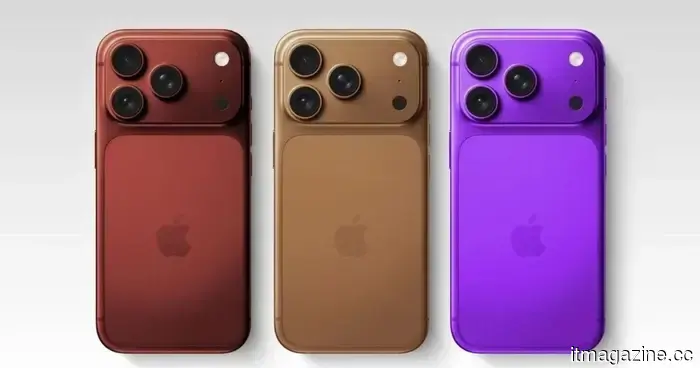 Apple is finally allowing iPhones to embrace a variety of colors.
The iPhone 17 Pro series introduced a significant design change, and it appears that Apple is continuing along that path. The iPhone 18 Pro lineup is anticipated to adopt a similar design aesthetic. However, there may be alterations in Apple's approach to color. Speculations indicate that the 18 Pro series […]
Apple is finally allowing iPhones to embrace a variety of colors.
The iPhone 17 Pro series introduced a significant design change, and it appears that Apple is continuing along that path. The iPhone 18 Pro lineup is anticipated to adopt a similar design aesthetic. However, there may be alterations in Apple's approach to color. Speculations indicate that the 18 Pro series […]
 Multi-Hop Transactions in Cryptocurrency: The Compliance Risks Associated with Indirect Exposure
Multi-hop blockchain transactions complicate the detection of indirect cryptocurrency exposure, leading to significant challenges in compliance, sanctions, and regulations.
Multi-Hop Transactions in Cryptocurrency: The Compliance Risks Associated with Indirect Exposure
Multi-hop blockchain transactions complicate the detection of indirect cryptocurrency exposure, leading to significant challenges in compliance, sanctions, and regulations.
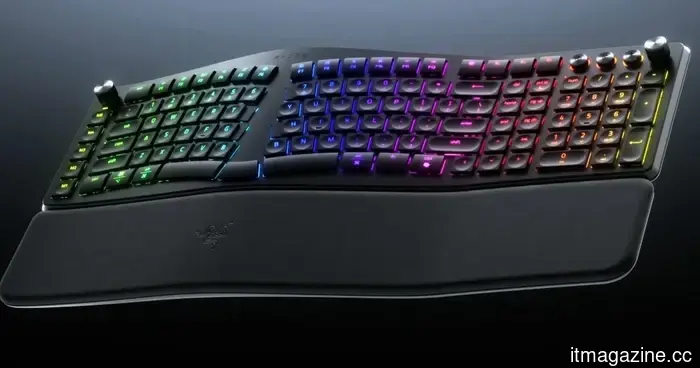 Razer has created a split ergonomic keyboard that features a dedicated AI button, which is quite unusual.
Razer has finally created a keyboard that cares for your wrists and has managed to incorporate a dedicated AI button. Here’s what the Pro Type Ergo offers for your workspace.
Razer has created a split ergonomic keyboard that features a dedicated AI button, which is quite unusual.
Razer has finally created a keyboard that cares for your wrists and has managed to incorporate a dedicated AI button. Here’s what the Pro Type Ergo offers for your workspace.
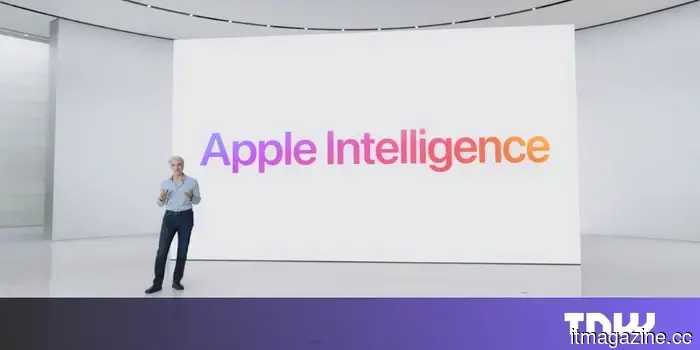 Apple Intelligence unintentionally launches in China prior to receiving regulatory approval.
Apple Intelligence was briefly accessible on Chinese iPhones before being removed, potentially facing penalties under China's regulations concerning AI security evaluations and algorithm filing.
Apple Intelligence unintentionally launches in China prior to receiving regulatory approval.
Apple Intelligence was briefly accessible on Chinese iPhones before being removed, potentially facing penalties under China's regulations concerning AI security evaluations and algorithm filing.
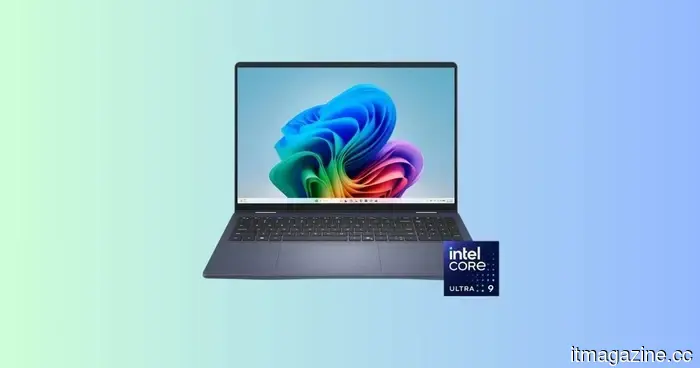 Save $500 on the Dell Plus Copilot+ PC, featuring a Core Ultra 9, 32GB RAM, and a 2.5K Mini-LED touchscreen, priced below $1,100.
The Dell Plus Copilot+ PC is now available for $1,099.99 at Best Buy, providing a savings of $500 from its original price of $1,599.99. This is a significant discount on a 16-inch 2-in-1 device that combines an Intel Core Ultra 9 processor with 32GB of LPDDR5X RAM, a 2.5K Mini-LED touchscreen, and includes Microsoft’s Copilot+ AI functionalities. For a convertible laptop at […]
Save $500 on the Dell Plus Copilot+ PC, featuring a Core Ultra 9, 32GB RAM, and a 2.5K Mini-LED touchscreen, priced below $1,100.
The Dell Plus Copilot+ PC is now available for $1,099.99 at Best Buy, providing a savings of $500 from its original price of $1,599.99. This is a significant discount on a 16-inch 2-in-1 device that combines an Intel Core Ultra 9 processor with 32GB of LPDDR5X RAM, a 2.5K Mini-LED touchscreen, and includes Microsoft’s Copilot+ AI functionalities. For a convertible laptop at […]
Opera's newest update transforms it into an independent browsing agent for ChatGPT and Claude.
Opera's latest MCP Connector transforms Neon into an independent browsing agent, enabling AI tools such as ChatGPT and Claude to directly manage your browser and accomplish tasks on various websites.