
ByteDance implements watermarking and IP protection measures for Seedance 2.0 prior to its global launch.
Six weeks ago, a video featuring Tom Cruise fighting Brad Pitt on a rooftop became widely popular online. This, however, was not an actual event but rather a creation of Seedance 2.0, ByteDance’s AI video model. Its release sparked significant backlash, leading to cease-and-desist notices from six major Hollywood studios, a formal condemnation from the Motion Picture Association, and a stern criticism from SAG-AFTRA regarding the unauthorized use of its members’ likenesses. Rhett Reese, the screenwriter behind the Deadpool films, viewed the clip and offered a candid evaluation of what this technology could mean for his field.
Now, ByteDance is trying a careful approach: reintroducing the very tool that caused the controversy, but with enough protections to show it has listened to the feedback. On Wednesday, the parent company of TikTok announced that its global safety and intellectual property teams collaborated with a third-party red-teaming partner to enhance Seedance 2.0 before its international launch via CapCut, ByteDance’s video editing platform, which boasts over 400 million monthly active users.
The new protections appear significant, at least theoretically. Seedance 2.0 now prevents video generation from images or videos featuring real faces, which is a direct response to the deepfake issues that affected the model in February. Additionally, CapCut will prohibit the unauthorized creation of copyrighted characters, tackling the plethora of AI-generated figures like Shrek, SpongeBob, Darth Vader, and Deadpool mentioned in the MPA's complaint.
In terms of transparency, all outputs will carry visible watermarks and embedded C2PA Content Credentials, the industry-standard method for identifying AI-generated content across various platforms. ByteDance is also introducing what it describes as "advanced invisible watermarking" technology intended to identify content created with the model, even after it has been shared or modified elsewhere, and the company has committed to proactive monitoring for intellectual property violations.
The rollout itself shows a measured approach. CapCut will first offer Seedance 2.0 to paid users in Brazil, Indonesia, Malaysia, Mexico, the Philippines, Thailand, and Vietnam. Notably absent from this list are the United States and India, which are ByteDance's two most complicated regulatory markets. The company anticipates expansion to Europe, Africa, South America, and Southeast Asia but has not provided a specific timeline for the US.
The timing of this relaunch is significant. Just days prior, OpenAI announced the closure of Sora, its own AI video generation tool, after downloads plummeted by 45 percent by January and a licensing agreement with Disney fell through. While OpenAI is stepping back, ByteDance is pushing forward, entering a market that is now hyper-aware of the regulatory issues associated with AI-generated content.
The EU AI Act's transparency requirements, set to take effect in August 2026, will require providers of generative AI systems to label their output in machine-readable formats and disclose the artificial nature of deepfakes. ByteDance’s implementation of C2PA watermarking and invisible markings seems to anticipate these requirements, but whether its measures will meet the approval of European regulators remains uncertain.
Red-teaming assessments indicate that the safeguards are not foolproof. Reports from industry observers suggest that creative prompting can still circumvent the filters to create “likeness-adjacent” characters, which evoke real individuals or copyrighted figures without directly reproducing them. This challenge reflects a common issue in AI governance: the gap between what a policy prohibits and what a model can be incentivized to generate.
ByteDance’s vertical integration affords it a unique advantage in this arena. It develops the AI model, owns the editing platform where it is used, and manages TikTok, the leading short-form video distribution platform. This control theoretically allows it to enforce IP protections throughout the entire pipeline from creation to distribution. However, whether it will do so rigorously enough to appease Hollywood and its legal representatives remains to be seen.
The AI boom of 2025 resulted in a range of tools capable of generating text, images, and code on a large scale. Video has always been regarded as the next challenging frontier to navigate and regulate. ByteDance is betting that it can be the company to globally commercialize AI video generation without becoming overwhelmed by legal challenges. The safeguards it has implemented for Seedance 2.0 are a vital initial step, but whether they are adequate will be a topic of discussion for Hollywood, regulators, and policymakers across various regions in the coming months.
Other articles
 Opera's newest update transforms it into an independent browsing agent for ChatGPT and Claude.
Opera's latest MCP Connector transforms Neon into an independent browsing agent, enabling AI tools such as ChatGPT and Claude to directly manage your browser and accomplish tasks on various websites.
Opera's newest update transforms it into an independent browsing agent for ChatGPT and Claude.
Opera's latest MCP Connector transforms Neon into an independent browsing agent, enabling AI tools such as ChatGPT and Claude to directly manage your browser and accomplish tasks on various websites.
 Apple is finally allowing iPhones to play with some colors.
The iPhone 17 Pro series introduced a significant design change, and it appears that Apple plans to continue in that direction. The design aesthetic is anticipated to be carried over to the iPhone 18 Pro lineup too. However, there may be alterations in how Apple utilizes color. Speculations indicate that the 18 Pro series [...]
Apple is finally allowing iPhones to play with some colors.
The iPhone 17 Pro series introduced a significant design change, and it appears that Apple plans to continue in that direction. The design aesthetic is anticipated to be carried over to the iPhone 18 Pro lineup too. However, there may be alterations in how Apple utilizes color. Speculations indicate that the 18 Pro series [...]
 Decentraland debuts on the Epic Games Store and Android as the metaverse expands to multiple platforms.
Decentraland is now available on the Epic Games Store and Google Play, hoping that distribution via popular platforms can achieve success where Meta's $70 billion metaverse initiative did not.
Decentraland debuts on the Epic Games Store and Android as the metaverse expands to multiple platforms.
Decentraland is now available on the Epic Games Store and Google Play, hoping that distribution via popular platforms can achieve success where Meta's $70 billion metaverse initiative did not.
 Alexa+ can now place your food orders through Grubhub and Uber Eats with a human touch.
Alexa, you know the routine. Give me something to eat.
Alexa+ can now place your food orders through Grubhub and Uber Eats with a human touch.
Alexa, you know the routine. Give me something to eat.
 ByteDance implements watermarking and IP protection measures for Seedance 2.0 prior to its global launch.
After facing backlash from Hollywood, ByteDance has reintroduced Seedance 2.0, featuring C2PA watermarking, face-blocking, and copyright filters. This update will be available through CapCut across seven markets.
ByteDance implements watermarking and IP protection measures for Seedance 2.0 prior to its global launch.
After facing backlash from Hollywood, ByteDance has reintroduced Seedance 2.0, featuring C2PA watermarking, face-blocking, and copyright filters. This update will be available through CapCut across seven markets.
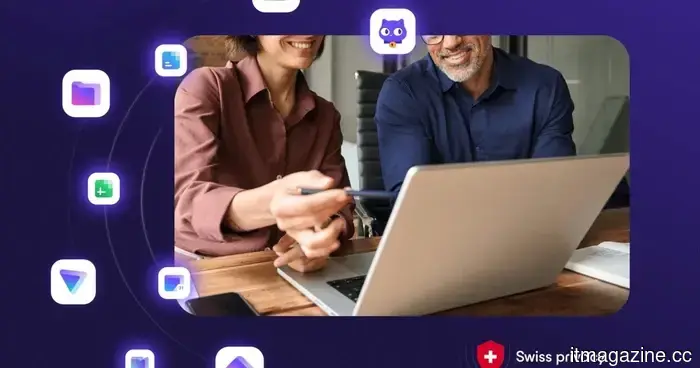 Proton has recently introduced a privacy-centered alternative to Google Workspace and Microsoft 365.
Fed up with productivity tools that use your data as a form of profit? Proton Workspace offers a comprehensive package including encrypted email and video calls, all protected by Swiss privacy regulations, and it's more affordable than you might think.
Proton has recently introduced a privacy-centered alternative to Google Workspace and Microsoft 365.
Fed up with productivity tools that use your data as a form of profit? Proton Workspace offers a comprehensive package including encrypted email and video calls, all protected by Swiss privacy regulations, and it's more affordable than you might think.
ByteDance implements watermarking and IP protection measures for Seedance 2.0 prior to its global launch.
ByteDance has reintroduced Seedance 2.0, featuring C2PA watermarking, face-blocking, and copyright filters in response to the backlash from Hollywood. This update is being launched via CapCut in seven different markets.