
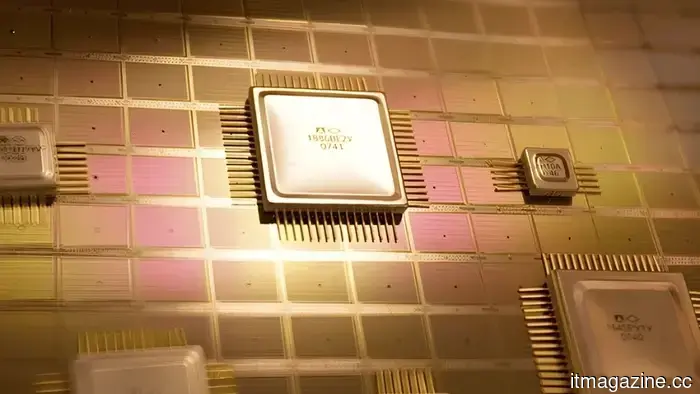
Nexchip from China has submitted an application for a Hong Kong stock listing as it speeds up its $5 billion chip expansion.
Nexchip Semiconductor submitted its application for a listing on the Hong Kong Stock Exchange on Tuesday, becoming part of a wave of Chinese chip firms seeking to access the city's financial markets as Beijing invests heavily in developing a domestic semiconductor supply chain capable of withstanding U.S. export restrictions. Based in Hefei, Nexchip is China’s third-largest foundry, following SMIC and Hua Hong Semiconductor, and aims for a dual listing alongside its existing shares in Shanghai to attract international capital for what is essentially a large-scale industrial expansion.
The filing comes shortly after Nexchip announced the completion of the full-process development of its 28nm logic platform on March 11, a significant achievement that marks the company's entry into higher-value chip production. Previously, Nexchip mostly operated within the 55nm to 150nm range, which includes mature process nodes typically used in display drivers, power management chips, and image sensors. The 28nm milestone, while still trailing the leading-edge 3nm and 5nm processes from TSMC and Samsung, represents a significant advancement for the company, positioning it to meet growing demand for AI-enabled smartphones, smart vehicles, and OLED display panels.
The necessity for capital, which underscores the Hong Kong listing, is highlighted by Nexchip's ongoing investments. In January, the company commenced construction on its Phase IV project in Hefei’s Xinzhan High-Tech Zone, representing a substantial 35.5 billion yuan ($5.1 billion) investment aimed at adding a new 12-inch wafer production line, designed to reach a monthly output capacity of 55,000 wafers at 40nm and 28nm nodes. Equipment is expected to be installed by the fourth quarter of this year, with initial production to commence thereafter and full capacity anticipated by the second quarter of 2028. This investment will complement Nexchip’s existing N3 fab, which is ramping up to produce 100,000 wafers per month at 55nm and 40nm, focusing primarily on high-end CMOS image sensors.
The financial statistics illustrate a rapidly growing company that requires funding to maintain its growth trajectory. In 2025, Nexchip reported revenues of 10.89 billion yuan (around $1.58 billion), reflecting a 17.7 percent increase year-over-year, with net profits rising by 32 percent. An analysis by TrendForce from early 2025 predicted that Nexchip would surpass Taiwanese foundries VIS and PSMC, climbing from tenth to eighth in global foundry rankings. This trend highlights both genuine commercial growth and the structural benefits of operating within China’s heavily subsidized semiconductor landscape.
The origins of Nexchip are telling. The company was established in 2015 as a joint venture involving Hefei City Construction Investment Holding, a state-owned enterprise, and Taiwan’s Powerchip Technology Corporation, which provided the technical expertise while Hefei supplied land, funding, and political backing. Less than a decade later, Nexchip has evolved from primarily a technology-transfer entity into a competitor closely watched with concern by its Taiwanese partner. The Hefei state entity remains the key controlling shareholder, owning approximately 39.7 percent of shares as of September 2025.
Nexchip’s Hong Kong application reflects a broader trend among Chinese semiconductor companies reshaping the exchange landscape. Deloitte estimates around 160 new listings in Hong Kong by 2026, raising a minimum of HK$300 billion, driven primarily by AI and semiconductor firms. Earlier this year, Biren Technology, a Chinese AI chip designer, saw its stock soar nearly 120 percent upon debut after raising HK$5.58 billion. Meanwhile, Baidu's chip unit Kunlunxin has filed confidentially, and GigaDevice Semiconductor aims to raise HK$4.68 billion. This influx is part of a strategic approach: as access to advanced chips becomes increasingly restricted by export controls, Chinese companies require capital to establish domestic alternatives, and Hong Kong serves as a conduit to international investors that mainland exchanges cannot provide.
Nexchip operates within the mature-node market, which aligns coherently with China’s semiconductor strategy and carries significant implications. With U.S. sanctions preventing the manufacture of chips below 14nm due to restrictions on advanced lithography equipment, Chinese foundries are focusing their investments on processes that are essential for the majority of global electronics: 28nm and above, used in vehicles, industrial machinery, consumer devices, and IoT applications. Industry estimates suggest that by the mid-2020s, more than half of all new global capacity additions at mature nodes will be situated in China, projecting that by the end of 2025, Chinese foundries will represent over 25 percent of the global top-10 mature-node capacity.
The pricing trends support the effectiveness of this strategy. On March 12, Nexchip announced a 10 percent increase in foundry fees effective from June, following similar adjustments from SMIC and Hua Hong, citing geopolitical risks, supply chain uncertainties,
Other articles
 Australia claims that Meta, TikTok, and YouTube are not adhering to the ban on social media for children.
Australia's eSafety Commissioner has issued a warning of potential legal action against five platforms for not preventing users under 16 years old from creating accounts, three months following the implementation of the world's inaugural ban.
Australia claims that Meta, TikTok, and YouTube are not adhering to the ban on social media for children.
Australia's eSafety Commissioner has issued a warning of potential legal action against five platforms for not preventing users under 16 years old from creating accounts, three months following the implementation of the world's inaugural ban.
 Slack is adding so many features that you can count them on both hands and feet.
Your entire process is now fully automated (at last).
Slack is adding so many features that you can count them on both hands and feet.
Your entire process is now fully automated (at last).
 Corti's latest Symphony AI surpasses OpenAI and Anthropic in medical coding.
Corti has introduced Symphony for Medical Coding, an autonomous AI system developed based on EMNLP 2025 research, which approaches coding as a method of reasoning.
Corti's latest Symphony AI surpasses OpenAI and Anthropic in medical coding.
Corti has introduced Symphony for Medical Coding, an autonomous AI system developed based on EMNLP 2025 research, which approaches coding as a method of reasoning.
 March Madness Took Over My AI Experiment
(NOTE: This article is a part of an ongoing series that chronicles an experiment utilizing AI to complete NCAA brackets and evaluate its performance against years of human expertise. The original article is as follows.) This marks the concluding entry in my series on employing AI for participating in March Madness pools. Like with many narratives, I had anticipated […]
March Madness Took Over My AI Experiment
(NOTE: This article is a part of an ongoing series that chronicles an experiment utilizing AI to complete NCAA brackets and evaluate its performance against years of human expertise. The original article is as follows.) This marks the concluding entry in my series on employing AI for participating in March Madness pools. Like with many narratives, I had anticipated […]
 As if doomscrolling on TikTok wasn't already concerning, it now offers an emoji game in direct messages.
TikTok has launched a hidden emoji game in direct messages worldwide, allowing users to challenge their friends without needing to exit the app.
As if doomscrolling on TikTok wasn't already concerning, it now offers an emoji game in direct messages.
TikTok has launched a hidden emoji game in direct messages worldwide, allowing users to challenge their friends without needing to exit the app.
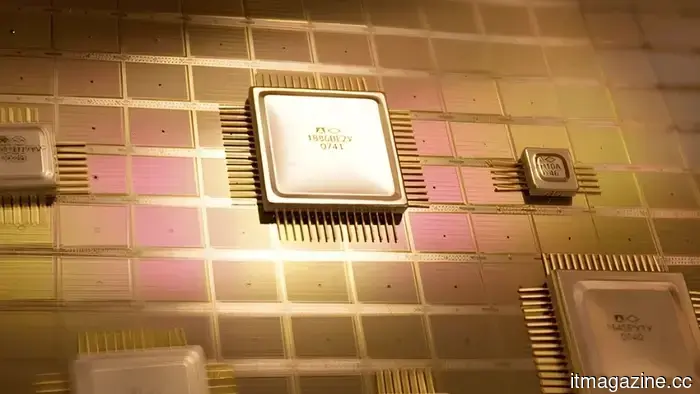 Nexchip from China submits application for a Hong Kong listing as it speeds up its $5 billion chip expansion.
Nexchip Semiconductor, the third-largest foundry in China, has submitted an application for a dual listing in Hong Kong to finance a $5.1 billion expansion of its fabrication facilities due to the increasing demand for mature-node chips.
Nexchip from China submits application for a Hong Kong listing as it speeds up its $5 billion chip expansion.
Nexchip Semiconductor, the third-largest foundry in China, has submitted an application for a dual listing in Hong Kong to finance a $5.1 billion expansion of its fabrication facilities due to the increasing demand for mature-node chips.
Nexchip from China has submitted an application for a Hong Kong stock listing as it speeds up its $5 billion chip expansion.
Nexchip Semiconductor, the third-largest foundry in China, has submitted an application for a dual listing in Hong Kong to raise funds for a $5.1 billion expansion of its fabrication facilities, driven by a rise in demand for mature-node chips.