

Australia claims that Meta, TikTok, and YouTube are not adhering to the ban on social media for children.
Three months after Australia became the first nation to prohibit children under 16 from having social media accounts, the country's online safety regulator has stated that the platforms are not doing enough to enforce this ban. eSafety Commissioner Julie Inman Grant published her first compliance report on Tuesday, claiming that Facebook, Instagram, Snapchat, TikTok, and YouTube have not taken the “reasonable steps” required by law to keep young Australians off their services.
The data reveals a mixed picture of limited progress and significant shortcomings. Since the Online Safety Amendment (Social Media Minimum Age) Act came into effect on December 10, around five million Australian accounts belonging to users under 16 have been deactivated. However, the compliance report, which surveyed 898 parents at the end of January, found that about seven out of ten children who had previously used social media still maintained accounts on Facebook, Instagram, Snapchat, or TikTok post-ban. Children are keeping existing accounts, creating new ones, and circumventing age verification systems that seem incapable of preventing their access.
Inman Grant expressed “significant concerns about compliance” among half of the ten platforms covered by the legislation. The five platforms currently under investigation—Facebook, Instagram, Snapchat, TikTok, and YouTube—could potentially face court action, with a decision from eSafety expected by mid-year. Courts could impose fines of up to 49.5 million Australian dollars ($33 million) for systemic non-compliance. The remaining five platforms—Reddit, X, Kick, Threads, and Twitch—are not under investigation at this time.
The eSafety report pointed out what it referred to as “poor practices” among the platforms. Some of them allow unlimited attempts for users to pass age verification checks, while others prompt underage users to retry even after they have indicated their age. Neither of these approaches indicates a commitment to keeping children off their platforms; instead, they suggest a focus on retaining users.
Communications Minister Anika Wells was more direct in her critique. She claimed that the five criticized platforms are intentionally not complying with Australian law, opting to do “the absolute bare minimum” to ensure the laws do not succeed. Her argument is strategic: since Australia’s ban is the first of its kind, and several other nations have shown interest in similar laws since December, if Australia’s law falters, it could weaken global momentum for such measures. For instance, France's National Assembly approved a bill in January banning social media for those under 15, Denmark imposed restrictions for under-15s, Malaysia set a 2026 implementation date for an under-16 ban, and Indonesia plans to limit access to platforms like YouTube, TikTok, and Facebook for children across its digital ecosystem.
The response from the platforms has varied in its engagement. Meta, which owns Facebook and Instagram, informed the Associated Press that it is committed to compliance but acknowledged that “accurately determining age online is a challenge for the entire industry.” Snap, the parent company of Snapchat, stated it has locked 450,000 accounts and remains “fully committed to implementing reasonable steps.” TikTok did not provide a comment, and Alphabet, which owns YouTube and Google, has not responded to requests for comment.
The compliance challenge is significant, not just a convenient excuse. The law does not specify age-verification technologies or require government ID checks, biometric scans, or any particular tools. Instead, it places the responsibility on platforms to take “reasonable steps,” a vague standard that allows courts to determine what is adequate. Some platforms are using behavioral inference to analyze activity patterns to estimate a user’s age, while others are employing AI tools to guess age based on photos. None of these methods are foolproof, and the eSafety Commissioner has acknowledged that achieving reliable age assurance may take days or weeks.
Lisa Given, an information sciences expert at RMIT University in Melbourne, articulated the legal question clearly. If a platform has implemented age assurance and taken multiple measures to exclude young users, is that considered reasonable, even if the underlying technology is not flawless? “Should they be held accountable for technology that is not 100 percent foolproof and likely won’t be in the near future?” she queried. This question is expected to reach the courts.
Additionally, it may coincide with a constitutional challenge. Reddit has initiated a case in the Australian High Court, arguing that the ban infringes on Australia’s implied freedom of political communication. A second challenge has been launched by the Digital Freedom Project, a human rights group based in Sydney. The High Court has instructed that both cases proceed together, with a preliminary hearing scheduled for May 21 to determine a date for oral arguments. The constitutional concern—whether prohibiting minors from platforms that host political discussions and civic discourse aligns with democratic liberties—will challenge the limits of government regulation of digital access.
The law itself was enacted by Parliament on November 29, 2024, with bipartisan support, reflecting a political consensus that the mental health risks of social media
Other articles
 Slack is adding so many features that you can count them on both hands and feet.
Your entire process is now fully automated (at last).
Slack is adding so many features that you can count them on both hands and feet.
Your entire process is now fully automated (at last).
 Australia claims that Meta, TikTok, and YouTube are not adhering to the ban on social media for children.
Australia's eSafety Commissioner has issued a warning of potential legal action against five platforms for not preventing users under the age of 16 from having accounts, just three months after the implementation of the world's first ban.
Australia claims that Meta, TikTok, and YouTube are not adhering to the ban on social media for children.
Australia's eSafety Commissioner has issued a warning of potential legal action against five platforms for not preventing users under the age of 16 from having accounts, just three months after the implementation of the world's first ban.
 Australia alleges that Meta, TikTok, and YouTube are failing to adhere to the ban on social media access for children.
Australia's eSafety Commissioner has issued a warning of legal action against five platforms for not preventing users under the age of 16 from creating accounts, three months after implementing the first ban of its kind in the world.
Australia alleges that Meta, TikTok, and YouTube are failing to adhere to the ban on social media access for children.
Australia's eSafety Commissioner has issued a warning of legal action against five platforms for not preventing users under the age of 16 from creating accounts, three months after implementing the first ban of its kind in the world.
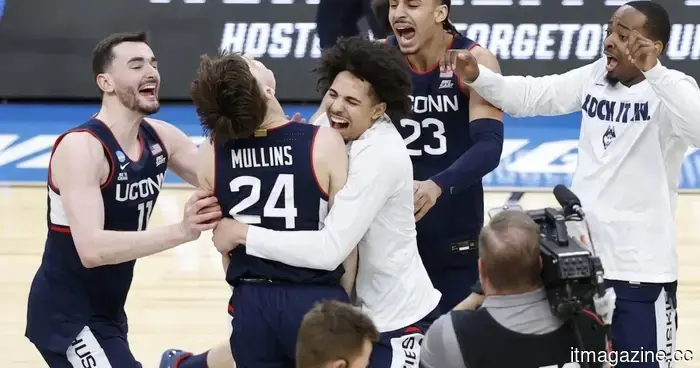 March Madness Took Over My AI Experiment
(NOTE: This article is a continuation of a series exploring the use of AI to complete the NCAA brackets and evaluate its performance against years of human expertise. The original article reads as follows.) This marks the last installment in my series about leveraging AI for March Madness pools. Like many narratives, I had anticipated […]
March Madness Took Over My AI Experiment
(NOTE: This article is a continuation of a series exploring the use of AI to complete the NCAA brackets and evaluate its performance against years of human expertise. The original article reads as follows.) This marks the last installment in my series about leveraging AI for March Madness pools. Like many narratives, I had anticipated […]
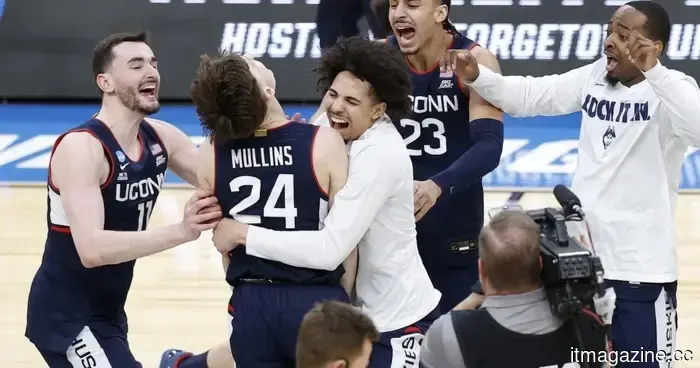 March Madness Took Over My AI Experiment
(NOTE: This article is a part of an ongoing series that chronicles an experiment utilizing AI to complete NCAA brackets and evaluate its performance against years of human expertise. The original article is as follows.) This marks the concluding entry in my series on employing AI for participating in March Madness pools. Like with many narratives, I had anticipated […]
March Madness Took Over My AI Experiment
(NOTE: This article is a part of an ongoing series that chronicles an experiment utilizing AI to complete NCAA brackets and evaluate its performance against years of human expertise. The original article is as follows.) This marks the concluding entry in my series on employing AI for participating in March Madness pools. Like with many narratives, I had anticipated […]
 Nexchip from China has submitted an application for a Hong Kong stock listing as it speeds up its $5 billion chip expansion.
Nexchip Semiconductor, the third-largest foundry in China, has submitted an application for a dual listing in Hong Kong to raise funds for a $5.1 billion expansion of its fabrication facilities, driven by a rise in demand for mature-node chips.
Nexchip from China has submitted an application for a Hong Kong stock listing as it speeds up its $5 billion chip expansion.
Nexchip Semiconductor, the third-largest foundry in China, has submitted an application for a dual listing in Hong Kong to raise funds for a $5.1 billion expansion of its fabrication facilities, driven by a rise in demand for mature-node chips.
Australia claims that Meta, TikTok, and YouTube are not adhering to the ban on social media for children.
Australia's eSafety Commissioner has issued a warning of potential legal action against five platforms for not preventing users under 16 years old from creating accounts, three months following the implementation of the world's inaugural ban.