
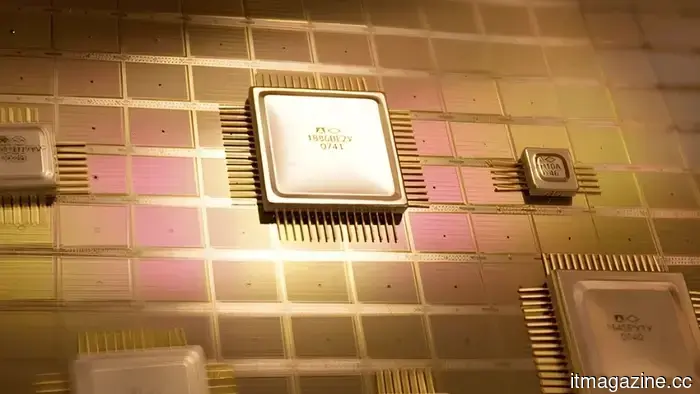
Nexchip from China submits application for a Hong Kong listing as it speeds up its $5 billion chip expansion.
Nexchip Semiconductor submitted its application for a listing on the Hong Kong Stock Exchange on Tuesday, joining a surge of Chinese chip firms seeking access to the city’s financial markets as Beijing invests heavily in establishing a domestic semiconductor supply chain capable of withstanding American export restrictions. Based in Hefei, Nexchip is the third largest foundry in China, following SMIC and Hua Hong Semiconductor, and is pursuing a dual listing along with its existing Shanghai shares to attract international investment for a significant industrial expansion.
This filing comes just weeks after Nexchip achieved full-process development of its 28nm logic platform, a milestone revealed on March 11 that signifies the company's advancement into higher-value chip production. Until recently, Nexchip operated mainly at the 55nm to 150nm range, primarily producing mature process nodes used in display drivers, power management chips, and image sensors. The new 28nm technology, while still trailing behind the leading 3nm and 5nm processes from TSMC and Samsung, marks a crucial advancement within the mature-node hierarchy and positions Nexchip to meet the demand for AI-enabled smartphones, smart cars, and OLED display panels.
The funds Nexchip aims to raise clarify the reason for the Hong Kong listing. In January, the company commenced its Phase IV project in Hefei’s Xinzhan High-Tech Zone, representing a 35.5 billion yuan ($5.1 billion) investment that is set to introduce a new 12-inch wafer production line with a targeted monthly capacity of 55,000 wafers at 40nm and 28nm nodes. Equipment installations are expected to begin in the fourth quarter of this year, with initial production soon after, and full capacity anticipated by the second quarter of 2028. This expansion is in addition to Nexchip’s existing N3 fab, which is ramping up to 100,000 wafers per month at 55nm and 40nm, focusing mainly on high-end CMOS image sensors.
The figures illustrate a rapidly growing company that requires capital to maintain its growth trajectory. Nexchip reported 2025 revenue of 10.89 billion yuan (about $1.58 billion), reflecting a 17.7 percent increase year-on-year, along with a 32 percent rise in net profit. Analysis from TrendForce in early 2025 projected that the company would surpass Taiwanese foundries VIS and PSMC, moving from tenth to eighth in global foundry rankings. This trajectory indicates both genuine commercial progress and the structural benefits of operating within China’s heavily supported semiconductor ecosystem.
Nexchip’s history is noteworthy. Established in 2015 as a joint venture between Hefei City Construction Investment Holding, a state-owned enterprise, and Taiwan’s Powerchip Technology Corporation, Powerchip provided the technical backbone while Hefei contributed land, capital, and political support. In less than a decade, Nexchip has evolved from a technology-transfer entity into a competitor that its Taiwanese partner now views with some concern. The primary controlling shareholder remains the Hefei state entity, which held about 39.7 percent of shares as of September 2025.
The Hong Kong listing places Nexchip within a larger trend of Chinese semiconductor listings that are reshaping the market. Deloitte anticipates around 160 new listings in Hong Kong during 2026, expected to raise at least HK$300 billion, driven largely by AI and semiconductor companies. Earlier this year, Chinese AI chip designer Biren Technology saw its shares surge nearly 120 percent on its Hong Kong debut after raising HK$5.58 billion. Baidu’s chip unit, Kunlunxin, has made a confidential filing while GigaDevice Semiconductor aims for HK$4.68 billion. This pipeline reflects a strategic decision: as access to advanced chips becomes increasingly curtailed by export controls, Chinese companies require funding to develop domestic alternatives, and Hong Kong provides a pathway to international investors that mainland exchanges do not.
The mature-node market that Nexchip occupies represents where China’s semiconductor strategy is both most coherent and impactful. Blocked from producing chips below 14nm due to US sanctions on advanced lithography equipment, Chinese foundries have focused their investments on nodes that are vital for the majority of the world's electronics: the 28nm and above processes used in automobiles, industrial machinery, consumer products, and the internet of things. Industry estimates indicate that over half of all new global capacity additions at mature nodes through the mid-2020s will be based in China. By the close of 2025, Chinese foundries were projected to command more than 25 percent of the global top-10 mature-node capacity.
The pricing dynamics affirm the effectiveness of this strategy. On March 12, Nexchip announced a 10 percent increase in foundry fees, effective from June, following similar adjustments by SMIC and Hua Hong. The company cited factors such as geopolitical instability, supply chain fluctuations, and rising raw material costs. It also revealed plans to shut down its Fab
Other articles
 Credibur reaches €2 billion in debt facility volume on its private credit infrastructure platform.
Credibur has attained a debt facility volume of €2 billion merely six months following its $2.2 million pre-seed funding. The fintech focuses on ongoing monitoring of private credit portfolios.
Credibur reaches €2 billion in debt facility volume on its private credit infrastructure platform.
Credibur has attained a debt facility volume of €2 billion merely six months following its $2.2 million pre-seed funding. The fintech focuses on ongoing monitoring of private credit portfolios.
 March Madness Took Over My AI Experiment
(NOTE: This article is a part of an ongoing series that chronicles an experiment utilizing AI to complete NCAA brackets and evaluate its performance against years of human expertise. The original article is as follows.) This marks the concluding entry in my series on employing AI for participating in March Madness pools. Like with many narratives, I had anticipated […]
March Madness Took Over My AI Experiment
(NOTE: This article is a part of an ongoing series that chronicles an experiment utilizing AI to complete NCAA brackets and evaluate its performance against years of human expertise. The original article is as follows.) This marks the concluding entry in my series on employing AI for participating in March Madness pools. Like with many narratives, I had anticipated […]
 Australia alleges that Meta, TikTok, and YouTube are failing to adhere to the ban on social media access for children.
Australia's eSafety Commissioner has issued a warning of legal action against five platforms for not preventing users under the age of 16 from creating accounts, three months after implementing the first ban of its kind in the world.
Australia alleges that Meta, TikTok, and YouTube are failing to adhere to the ban on social media access for children.
Australia's eSafety Commissioner has issued a warning of legal action against five platforms for not preventing users under the age of 16 from creating accounts, three months after implementing the first ban of its kind in the world.
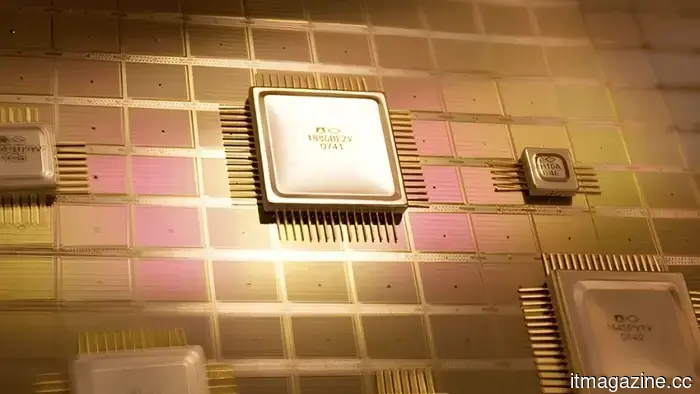 China's Nexchip applies for a listing in Hong Kong as it speeds up its $5 billion chip expansion.
Nexchip Semiconductor, the third-largest foundry in China, has submitted an application for a dual listing in Hong Kong to finance a $5.1 billion expansion of its fabrication facility, driven by a surge in demand for mature-node chips.
China's Nexchip applies for a listing in Hong Kong as it speeds up its $5 billion chip expansion.
Nexchip Semiconductor, the third-largest foundry in China, has submitted an application for a dual listing in Hong Kong to finance a $5.1 billion expansion of its fabrication facility, driven by a surge in demand for mature-node chips.
 Australia claims that Meta, TikTok, and YouTube are not adhering to the ban on social media for children.
Australia's eSafety Commissioner has issued a warning of potential legal action against five platforms for not preventing users under 16 years old from creating accounts, three months following the implementation of the world's inaugural ban.
Australia claims that Meta, TikTok, and YouTube are not adhering to the ban on social media for children.
Australia's eSafety Commissioner has issued a warning of potential legal action against five platforms for not preventing users under 16 years old from creating accounts, three months following the implementation of the world's inaugural ban.
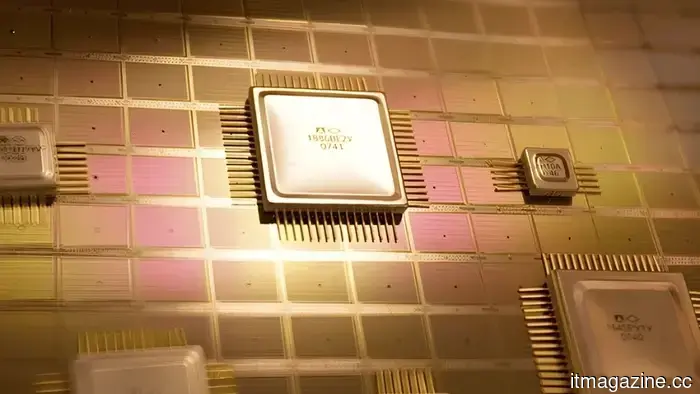 Nexchip from China has submitted an application for a Hong Kong stock listing as it speeds up its $5 billion chip expansion.
Nexchip Semiconductor, the third-largest foundry in China, has submitted an application for a dual listing in Hong Kong to raise funds for a $5.1 billion expansion of its fabrication facilities, driven by a rise in demand for mature-node chips.
Nexchip from China has submitted an application for a Hong Kong stock listing as it speeds up its $5 billion chip expansion.
Nexchip Semiconductor, the third-largest foundry in China, has submitted an application for a dual listing in Hong Kong to raise funds for a $5.1 billion expansion of its fabrication facilities, driven by a rise in demand for mature-node chips.
Nexchip from China submits application for a Hong Kong listing as it speeds up its $5 billion chip expansion.
Nexchip Semiconductor, the third-largest foundry in China, has submitted an application for a dual listing in Hong Kong to finance a $5.1 billion expansion of its fabrication facilities due to the increasing demand for mature-node chips.