

Corti's latest Symphony AI surpasses OpenAI and Anthropic in medical coding.
The health AI company based in Copenhagen developed Symphony using peer-reviewed research from the largest medical coding study ever conducted, which treats coding as a reasoning task rather than merely a labelling issue. It is now available via API.
Medical coding, which involves converting clinical notes, diagnoses, and procedures into standardized alphanumeric codes for billing, reporting, and public health data, is one of the most error-prone areas in healthcare administration. The American coding system, ICD-10-CM, has 70,000 diagnosis codes, and errors are common, costly, and often undetectable.
Corti, a clinical AI company in Copenhagen, has created a product aimed at solving this problem: Symphony for Medical Coding, which the company claims outperforms models from OpenAI, Anthropic, Amazon, Oracle, and Microsoft by up to 25% in clinical accuracy benchmarks. The system is available via API starting today.
Corti's claimed performance advantage is based on a methodological difference. Most AI systems treat medical coding as a classification issue—predicting the most likely code from a clinical note based on training data. However, changing coding guidelines make historically trained models dangerously inadequate. Corti’s method, developed through a peer-reviewed framework called Code Like Humans and accepted at EMNLP 2025—one of the leading machine learning conferences—views coding as a reasoning task.
“Most AI systems struggle with medical coding because they see it as mere labelling, not a reasoning activity. Correct coding requires evidence, context, hierarchy, and interpretation of guidelines. We developed Symphony for Medical Coding to replicate the decision-making process used by expert coders, which is why our performance gap is significant,” stated Lars Maaløe, PhD, CTO and co-founder of Corti.
The system operates using four sequential agents: an evidence extractor to isolate conditions in a clinical note, an index navigator to search the ICD alphabetical index for potential codes, a tabular validator that checks candidates against guidelines, and a code reconciler that sequences and validates the final output. Each step reflects the actions of a trained human coder.
The research was founded on 1.8 million patient encounters, making it the largest peer-reviewed study of its type. The financial implications of conventional under-coding are not the only concern. Corti references a peer-reviewed examination of Danish patient data that revealed its system identified three times as many suicide attempts as were officially coded—cases documented in clinical notes and medication records but overlooked by time-pressured coders.
“Medical coding has been viewed as a back-office expense for decades. This perspective is misguided; it is the data backbone of healthcare. Getting it right transforms what health systems can perceive, decide, and achieve,” remarked Andreas Cleve, CEO and co-founder of Corti.
When such cases are unrecorded, health systems are unable to track trends, allocate resources, or develop effective interventions. The coding layer is essential; it shapes how health systems understand themselves.
Symphony for Medical Coding is the first system Corti has developed to function across both US coding environments—ICD-10-CM for diagnoses and ICD-10-PCS and CPT for procedures—as well as European coding settings without requiring local retraining. WHO-maintained ICD-10 coverage for Europe is currently in beta as the company extends into the UK, Germany, France, and Denmark. The system generates auditable outputs, linking each assigned code to the supporting clinical evidence, with ambiguities flagged for human assessment.
It is accessible through the Corti Console, integrates with the Corti Agentic Framework, and adheres to both A2A and MCP standards. Options for enterprise and sovereign cloud deployments are also available.
Corti, established in Copenhagen, also has offices in New York and London. The company has raised a total of $100 million and serves over 100 million patients annually across various health systems, including the NHS. The launch of Symphony is the commercial product based on the Code Like Humans research, following Corti’s approach of validating concepts in peer-reviewed environments prior to building them into production-grade infrastructure.
Other articles
 What will the NASA Artemis II moon astronauts have to eat?
NASA’s Reid Wiseman, Victor Glover, and Christina Koch, along with the Canadian Space Agency’s Jeremy Hansen, are set to launch to the moon in under 24 hours. The Artemis II mission is scheduled to launch from the Kennedy Space Center on Wednesday, April 1. After NASA’s robust SLS rocket carries the crew...
What will the NASA Artemis II moon astronauts have to eat?
NASA’s Reid Wiseman, Victor Glover, and Christina Koch, along with the Canadian Space Agency’s Jeremy Hansen, are set to launch to the moon in under 24 hours. The Artemis II mission is scheduled to launch from the Kennedy Space Center on Wednesday, April 1. After NASA’s robust SLS rocket carries the crew...
 The latest Supergirl trailer resembles a blend of John Wick with a Guardians of the Galaxy film.
Supergirl's newest trailer blends cosmic turmoil with a John Wick-style quest to rescue Krypto, all set in a world reminiscent of the Guardians that feels thrilling yet somewhat too recognizable.
The latest Supergirl trailer resembles a blend of John Wick with a Guardians of the Galaxy film.
Supergirl's newest trailer blends cosmic turmoil with a John Wick-style quest to rescue Krypto, all set in a world reminiscent of the Guardians that feels thrilling yet somewhat too recognizable.
-integrate-with-3rd-party-apps?.jpg) Does Intuit Enterprise Suite (IES) support integration with third-party applications?
Intuit Enterprise Suite (IES) connects with third-party applications via APIs and the wider QuickBooks ecosystem. These integrations enable businesses to merge accounting with tools like project management, payroll, payment solutions, and marketing platforms. By connecting these systems, IES helps minimize manual data input, enhance data consistency, and assists teams in managing financial information more effectively across […]
Does Intuit Enterprise Suite (IES) support integration with third-party applications?
Intuit Enterprise Suite (IES) connects with third-party applications via APIs and the wider QuickBooks ecosystem. These integrations enable businesses to merge accounting with tools like project management, payroll, payment solutions, and marketing platforms. By connecting these systems, IES helps minimize manual data input, enhance data consistency, and assists teams in managing financial information more effectively across […]
 China's Nexchip applies for a listing in Hong Kong as it speeds up its $5 billion chip expansion.
Nexchip Semiconductor, the third-largest foundry in China, has submitted an application for a dual listing in Hong Kong to finance a $5.1 billion expansion of its fabrication facility, driven by a surge in demand for mature-node chips.
China's Nexchip applies for a listing in Hong Kong as it speeds up its $5 billion chip expansion.
Nexchip Semiconductor, the third-largest foundry in China, has submitted an application for a dual listing in Hong Kong to finance a $5.1 billion expansion of its fabrication facility, driven by a surge in demand for mature-node chips.
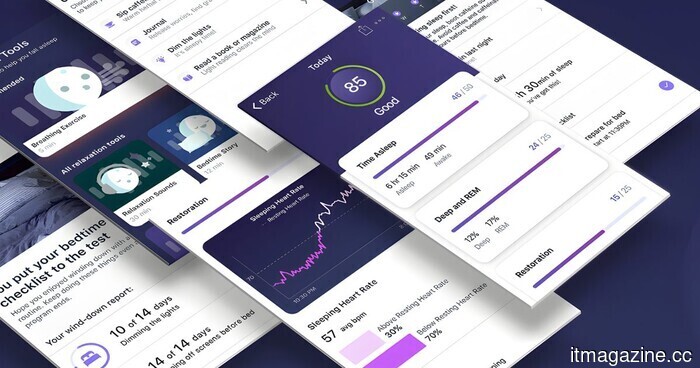 The Fitbit app has undergone a significant redesign, and you don't need a Premium subscription to experience it.
The redesign of Fitbit's app is now available without a waitlist; free users can now utilize the new four-tab layout along with updated features such as calorie tracking, mood logging, and an improved stress score.
The Fitbit app has undergone a significant redesign, and you don't need a Premium subscription to experience it.
The redesign of Fitbit's app is now available without a waitlist; free users can now utilize the new four-tab layout along with updated features such as calorie tracking, mood logging, and an improved stress score.
 The new Supergirl trailer resembles a crossover between John Wick and a Guardians of the Galaxy film.
The newest trailer for Supergirl combines cosmic mayhem with a John Wick-inspired quest to rescue Krypto, set against a Guardians-like backdrop that is both thrilling and somewhat reminiscent.
The new Supergirl trailer resembles a crossover between John Wick and a Guardians of the Galaxy film.
The newest trailer for Supergirl combines cosmic mayhem with a John Wick-inspired quest to rescue Krypto, set against a Guardians-like backdrop that is both thrilling and somewhat reminiscent.
Corti's latest Symphony AI surpasses OpenAI and Anthropic in medical coding.
Corti has introduced Symphony for Medical Coding, an autonomous AI system developed based on EMNLP 2025 research, which approaches coding as a method of reasoning.