
March Madness Took Over My AI Experiment
(NOTE: This article is part of an ongoing series documenting an experiment utilizing AI to fill the NCAA brackets and evaluate its performance against years of human expertise. The original article is as follows.)
This is the concluding piece in my series about employing AI to participate in March Madness pools. Like many narratives, I wished for a joyful outcome. Unfortunately, my trial with ChatGPT in completing my NCAA tournament brackets can be best described as nearly successful, but ultimately unfulfilling.
Nevertheless, I still consider the experiment a success.
This perspective may seem strange coming from someone who didn’t win. However, a key takeaway from this experience is that AI enhanced my approach more significantly than it assured victory. It improved my thought process, despite being unable to eliminate the unpredictability of the tournament.
Last week, I was excited to have predicted 13 of the Sweet 16 teams correctly. My brackets were performing well within the standings, and I began to think I might actually succeed. Then, the familiar chaos of March unfolded.
NCAA
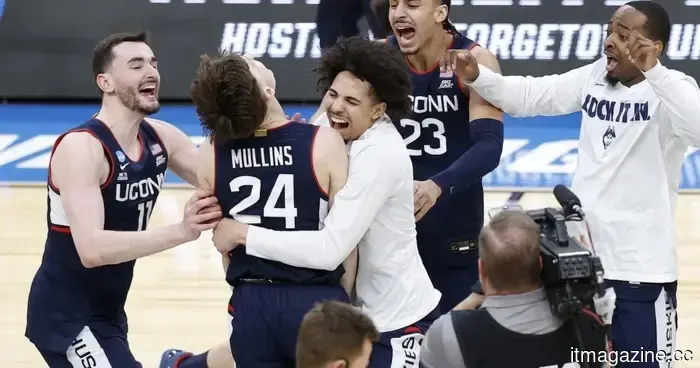
In a pool with 65 brackets, I remain competitive — tied for second in one and tied for sixth in another — which isn’t disastrous. I accurately forecasted Arizona and Michigan advancing on one side of the bracket, but completely missed the other side. I had anticipated Duke and Florida clashing in the semifinals, with Duke ultimately taking home the title. There was a certain sense of poetic justice in Duke facing a Laettner-style Hail Mary, but it also dashed my chances of winning.
Nonetheless, heading into the Elite Eight, my brackets were in the 98th percentile out of 26 million submissions on ESPN. I cannot honestly claim I would have reached that point without the assistance of AI. More importantly, I gained insights that I'll apply next year — because, yes, I intend to do this again.
Improved process, same chaos
The core takeaway is straightforward.
AI did not perform miracles, but it did enhance my approach.
Instead of completing a bracket based on vague instincts, recent highlights, or whichever team appeared invincible on a Saturday, I had a more organized method to assess the field. AI enabled me to organize my decision-making, compare probable outcomes with higher-risk contrarian options, and highlight the variables that are most significant in tournament play.
This framework was effective. It accurately identified many top-performing teams, helped me avoid typical careless blunders, and encouraged a more disciplined and less emotional approach.
NCAA
However, it did not negate the realities of single-elimination basketball.
This distinction is crucial and holds true beyond sports. AI can enhance judgment but cannot remove volatility.
Emphasize late-season momentum
One of the clearest lessons from this tournament is that I did not adequately acknowledge teams that were heating up at the right moments.
What about Illinois and Iowa?
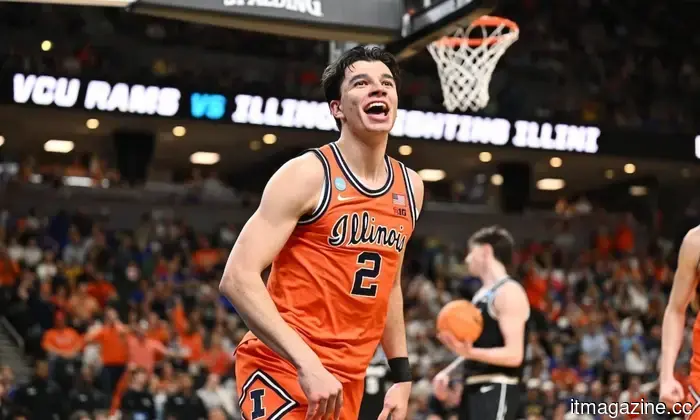
Indeed, both were solid teams competing in what was undoubtedly this year’s strongest conference. However, I did not foresee them defeating a No. 1 seed in Florida and a No. 2 seed in Houston. They were peaking as the season closed, and I failed to give that due consideration.
Next year, I will pay closer attention to which teams are truly playing their best basketball in March, rather than relying too heavily on season-long statistics. Although an entire season's performance matters, in a tournament setting, current form can be almost as significant as overall quality.
NCAA
In business terms, it's akin to assessing a company based on twelve months of results versus recognizing a significant change in the last six weeks.
Value coaching over just players
I also came to understand that I undervalued coaching.
While players are the ones competing, coaches play a critical role in March, especially in a one-and-done format where preparation, adjustment, substitutions, and calmness can influence an entire season.
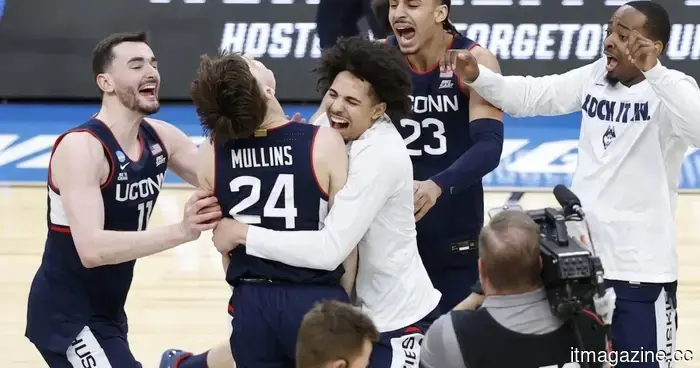
Dan Hurley once again demonstrated why he is such a formidable presence in this environment. John Scheyer? Not so much.
Next year, I will invest more time analyzing which coaches have consistently shown the ability to navigate the chaos of tournament basketball. Talent remains fundamental, but coaching can often amplify that talent.
Acknowledge the limits of forecasting
NCAA
This may be the most significant lesson of all.
Even with AI assistance, forecasting excels at identifying broad patterns but is much less dependable at predicting what a specific player or team will do on a given day.
A college basketball team consists of just five teenagers on the court at any given time. While undeniably talented, they are still adolescents. Anyone who has spent time with young people knows they can experience ups and downs, mood swings, and moments when everything unexpectedly goes awry. Sometimes these fluctuations occur during a tournament game.
If these matchups were best-of-five or best-of-seven series, there would be fewer upsets. However, in a one-and-done format, it's easier for an underdog to pull off an upset.
This isn't a failure of AI; it's simply



Other articles
 China's Nexchip applies for a listing in Hong Kong as it speeds up its $5 billion chip expansion.
Nexchip Semiconductor, the third-largest foundry in China, has submitted an application for a dual listing in Hong Kong to finance a $5.1 billion expansion of its fabrication facility, driven by a surge in demand for mature-node chips.
China's Nexchip applies for a listing in Hong Kong as it speeds up its $5 billion chip expansion.
Nexchip Semiconductor, the third-largest foundry in China, has submitted an application for a dual listing in Hong Kong to finance a $5.1 billion expansion of its fabrication facility, driven by a surge in demand for mature-node chips.
 Nexchip from China has submitted an application for a Hong Kong stock listing as it speeds up its $5 billion chip expansion.
Nexchip Semiconductor, the third-largest foundry in China, has submitted an application for a dual listing in Hong Kong to raise funds for a $5.1 billion expansion of its fabrication facilities, driven by a rise in demand for mature-node chips.
Nexchip from China has submitted an application for a Hong Kong stock listing as it speeds up its $5 billion chip expansion.
Nexchip Semiconductor, the third-largest foundry in China, has submitted an application for a dual listing in Hong Kong to raise funds for a $5.1 billion expansion of its fabrication facilities, driven by a rise in demand for mature-node chips.
 As if doomscrolling on TikTok wasn't already concerning, it now offers an emoji game in direct messages.
TikTok has launched a hidden emoji game in direct messages worldwide, allowing users to challenge their friends without needing to exit the app.
As if doomscrolling on TikTok wasn't already concerning, it now offers an emoji game in direct messages.
TikTok has launched a hidden emoji game in direct messages worldwide, allowing users to challenge their friends without needing to exit the app.
 Nexchip from China submits application for a Hong Kong listing as it speeds up its $5 billion chip expansion.
Nexchip Semiconductor, the third-largest foundry in China, has submitted an application for a dual listing in Hong Kong to finance a $5.1 billion expansion of its fabrication facilities due to the increasing demand for mature-node chips.
Nexchip from China submits application for a Hong Kong listing as it speeds up its $5 billion chip expansion.
Nexchip Semiconductor, the third-largest foundry in China, has submitted an application for a dual listing in Hong Kong to finance a $5.1 billion expansion of its fabrication facilities due to the increasing demand for mature-node chips.
 March Madness Took Over My AI Experiment
(NOTE: This article is a continuation of a series exploring the use of AI to complete the NCAA brackets and evaluate its performance against years of human expertise. The original article reads as follows.) This marks the last installment in my series about leveraging AI for March Madness pools. Like many narratives, I had anticipated […]
March Madness Took Over My AI Experiment
(NOTE: This article is a continuation of a series exploring the use of AI to complete the NCAA brackets and evaluate its performance against years of human expertise. The original article reads as follows.) This marks the last installment in my series about leveraging AI for March Madness pools. Like many narratives, I had anticipated […]
 Slack is adding so many features that you can count them on both hands and feet.
Your entire process is now fully automated (at last).
Slack is adding so many features that you can count them on both hands and feet.
Your entire process is now fully automated (at last).
March Madness Took Over My AI Experiment
(NOTE: This article is a part of an ongoing series that chronicles an experiment utilizing AI to complete NCAA brackets and evaluate its performance against years of human expertise. The original article is as follows.) This marks the concluding entry in my series on employing AI for participating in March Madness pools. Like with many narratives, I had anticipated […]