
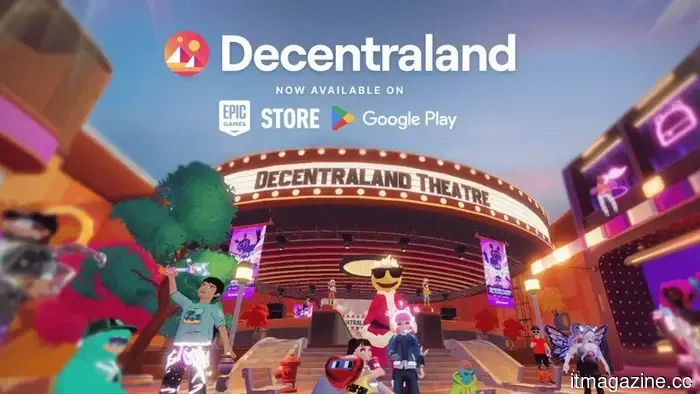
Decentraland debuts on the Epic Games Store and Android as the metaverse expands to multiple platforms.
The metaverse was envisioned as a standalone destination, where wearing a headset would transport you into a virtual realm without needing to consider the platform that facilitated your entry. At least, that was the original selling point. However, Decentraland, one of the earliest and most enduring attempts at decentralized virtual worlds, seems to have drawn a different conclusion. On Monday, the project debuted on the Epic Games Store and launched an Android application on Google Play, with an iOS version on the way. The clear message is that if people aren’t flocking to the metaverse, then the metaverse will go to where the people already are.
The listing on the Epic Games Store is the more strategically important of the two developments. According to the company’s annual review, Epic’s platform had reached 317 million registered PC users by 2025 and set a record with 78 million monthly active users in December of that year. Spending on third-party games in the store rose by 57 percent year on year to over $400 million. For Decentraland, which has long battled the perception and, at times, the actual reality of its virtual world being sparsely populated, aligning itself with Fortnite and other major titles on such a busy storefront represents an effort to address a distribution challenge that no amount of blockchain technology could resolve by itself.
Yemel Jardi, executive director of Decentraland, described the launch in terms of distribution rather than technological considerations. He noted that Epic Games has become a key channel for discovering desktop experiences, and being present on this platform enhances how users find and access Decentraland. He characterized it as part of a larger strategy to engage audiences where they already are, with intentions to expand to other storefronts in the future.
The mobile launch follows a similar rationale. Decentraland’s Android app is now available on Google Play, with an iOS version anticipated shortly. The project points to data from Mordor Intelligence indicating that mobile devices hold 71.55 percent of the social gaming market, along with DataReportal statistics showing that the average internet user spends nearly four hours daily on their phones. Data from the Consumer Technology Association suggests that cross-platform engagement is at 61 percent among gamers. Gino Cingolani, executive director of DCL Regenesis Labs, stated that the mobile experience aims to lower barriers to entry, enabling users to join via their phones rather than having to arrange a desktop session.
The timing of these developments is noteworthy. Meta, which integrated the metaverse into its corporate identity in 2021 and invested about $70 billion in Reality Labs before reversing its direction, announced in March it would discontinue Horizon Worlds on VR headsets (a decision it partially retracted following backlash, although the platform’s future remains tenuous). Meta slashed 1,500 Reality Labs jobs in January 2026, shut down three internal game studios, and reduced its metaverse budget by 30 percent. The company that did the most to popularize the term "metaverse" has effectively shifted focus away from this concept in favor of AI infrastructure and wearable technology.
Decentraland’s strategy suggests that this retreat presents an opportunity. While Meta developed a proprietary virtual world controlled by a single entity, Decentraland functions as a community-governed platform supported by a non-profit organization. Users own their virtual land parcels and avatars as tokens on the Ethereum blockchain. The governance structure is decentralized, with decisions made through transparent community voting. No single company can shut it down, which highlights the vulnerability that Horizon Worlds users encountered when Meta reassessed its economic viability.
The lingering question is whether Decentraland’s own economic model is sustainable. The MANA token, which is integral to the project, trades around $0.08, a steep decline from its peak above $5 during the cryptocurrency boom in 2021. Accurately measuring active users has proven to be a contentious issue. A widely referenced 2022 report from DappRadar claimed the platform had as few as 38 daily active wallet users, although Decentraland contested the methodology, asserting that it only reflected on-chain transactions instead of total visitors. The project’s figures for late 2025 report approximately 847,000 monthly unique visitors to its web client, with daily unique visitors increasing by 23 percent since mid-2025, following the launch of a more efficient desktop client. In January 2026, the platform claims to have hosted 312 community events with an average attendance of 127 unique visitors each.
Though these numbers are modest compared to mainstream gaming, they are more significant for a platform that has endured the metaverse winter with relative resilience. Secondary market sales of Decentraland LAND parcels hit $4.2 million in the fourth quarter of 2025, marking a 31 percent increase quarter over quarter. Founded in 2015 by Argentine developers Ari Meilich and Esteban Ordano, the project raised $26 million during its initial coin offering in
Other articles
 Decentraland debuts on the Epic Games Store and Android as the metaverse expands to multiple platforms.
Decentraland is making its debut on the Epic Games Store and Google Play, betting that exposure through popular platforms can achieve success where Meta’s $70 billion metaverse initiative fell short.
Decentraland debuts on the Epic Games Store and Android as the metaverse expands to multiple platforms.
Decentraland is making its debut on the Epic Games Store and Google Play, betting that exposure through popular platforms can achieve success where Meta’s $70 billion metaverse initiative fell short.
 Opera's newest update transforms it into an independent browsing agent for ChatGPT and Claude.
Opera's latest MCP Connector transforms Neon into an independent browsing agent, enabling AI tools such as ChatGPT and Claude to directly manage your browser and accomplish tasks on various websites.
Opera's newest update transforms it into an independent browsing agent for ChatGPT and Claude.
Opera's latest MCP Connector transforms Neon into an independent browsing agent, enabling AI tools such as ChatGPT and Claude to directly manage your browser and accomplish tasks on various websites.
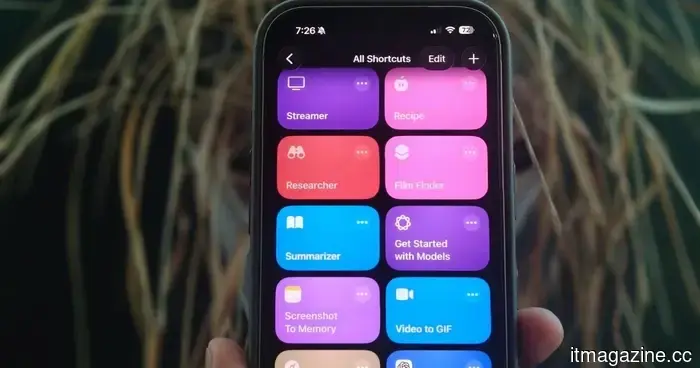 iOS 27 and AI might resolve the iPhone's biggest frustration, the ineffective shortcuts app.
It seems that my prayers have finally paid off.
iOS 27 and AI might resolve the iPhone's biggest frustration, the ineffective shortcuts app.
It seems that my prayers have finally paid off.
 Meta introduces AI glasses that are ready for prescriptions to integrate wearables into daily life.
Meta has introduced smart glasses powered by AI that offer prescription support, enhancing the practicality and accessibility of wearable technology for everyday use.
Meta introduces AI glasses that are ready for prescriptions to integrate wearables into daily life.
Meta has introduced smart glasses powered by AI that offer prescription support, enhancing the practicality and accessibility of wearable technology for everyday use.
 Iran's IRGC has identified 18 American technology companies, including Apple, Microsoft, and Nvidia, as military targets.
Iran's Revolutionary Guards have named 18 American tech firms as "legitimate targets," claiming that their AI and cloud services facilitated the killings of high-ranking Iranian leaders.
Iran's IRGC has identified 18 American technology companies, including Apple, Microsoft, and Nvidia, as military targets.
Iran's Revolutionary Guards have named 18 American tech firms as "legitimate targets," claiming that their AI and cloud services facilitated the killings of high-ranking Iranian leaders.
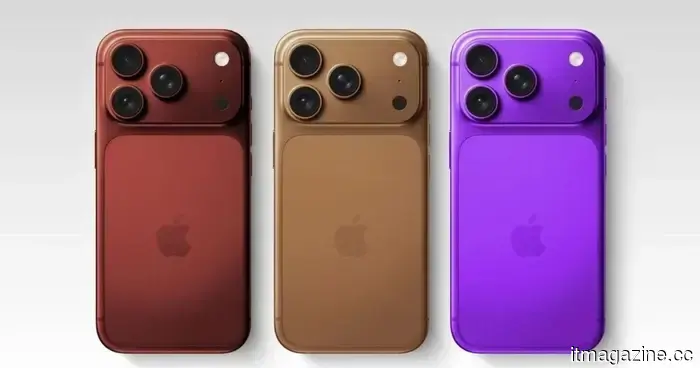 Apple is finally allowing iPhones to embrace a variety of colors.
The iPhone 17 Pro series introduced a significant design change, and it appears that Apple is continuing along that path. The iPhone 18 Pro lineup is anticipated to adopt a similar design aesthetic. However, there may be alterations in Apple's approach to color. Speculations indicate that the 18 Pro series […]
Apple is finally allowing iPhones to embrace a variety of colors.
The iPhone 17 Pro series introduced a significant design change, and it appears that Apple is continuing along that path. The iPhone 18 Pro lineup is anticipated to adopt a similar design aesthetic. However, there may be alterations in Apple's approach to color. Speculations indicate that the 18 Pro series […]
Decentraland debuts on the Epic Games Store and Android as the metaverse expands to multiple platforms.
Decentraland is now available on the Epic Games Store and Google Play, hoping that distribution via popular platforms can achieve success where Meta's $70 billion metaverse initiative did not.