
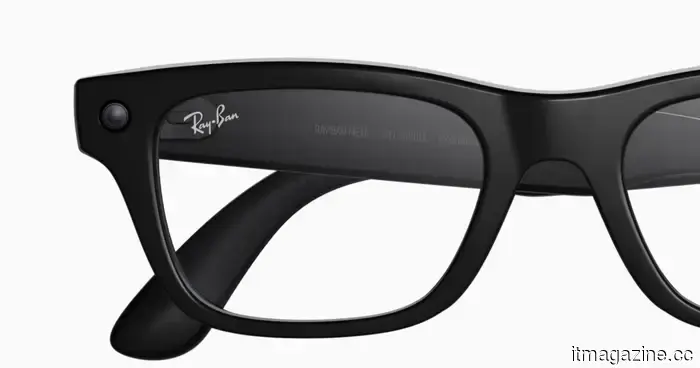
Meta introduces AI glasses that are ready for prescriptions to integrate wearables into daily life.
Meta has unveiled a new generation of AI-powered smart glasses tailored specifically for prescription wearers, representing a significant step forward in making wearable technology more practical for everyday use. Developed in collaboration with eyewear leader EssilorLuxottica, these new models aim to merge traditional eyewear with AI-enhanced features.
Crafted for vision and intelligence
The newly launched smart glasses – part of Meta’s Ray-Ban collection – are entirely designed to accommodate prescription lenses for a wide array of vision requirements. Unlike previous models with restricted compatibility, these new iterations are specifically optimized for individuals who need glasses throughout their daily activities.
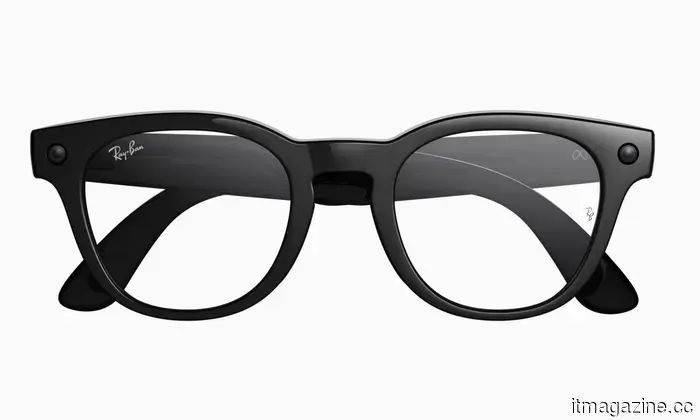
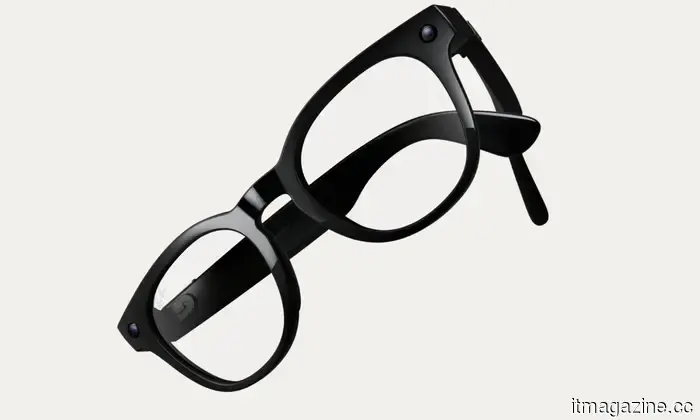
Available in various styles such as rectangular and rounded frames, these glasses feature adjustable temple tips, interchangeable nose pads, and flexible hinges to provide a customized and comfortable fit.
With prices starting at $499, the devices will be accessible via Meta’s online store as well as conventional optical retailers, with availability commencing in the United States before extending to other locations.
A move toward mainstream wearable AI
Meta’s recent initiative signifies a distinct shift in strategy: transforming smart glasses into essential everyday items instead of niche gadgets. By incorporating prescription support into the design, the company is tackling one of the main obstacles to widespread adoption.
Meta
Globally, billions of people need vision correction, and until now, many had to choose between their prescription glasses and smart eyewear. Meta’s innovative approach resolves that dilemma, making AI glasses more viable for regular use.
The glasses also further develop Meta’s AI ecosystem, providing features such as voice-controlled assistance, messaging, navigation, and content capture. New enhancements include tools for hands-free nutrition tracking, message summaries, and enhanced navigation functions, indicating a deeper integration of AI in daily interactions.
What’s inside the glasses?
In addition to their new design, the Ray-Ban Meta Blayzer Optics (Gen 2) and Ray-Ban Scriber Optics (Gen 2) smart glasses share the same technical framework as the regular Ray-Ban Meta (Gen 2) models. Starting with their social capabilities, they can capture 3K Ultra HD videos thanks to the built-in 12-megapixel wide-angle camera.
Meta claims that the glasses offer eight hours of usage per charge, with the case providing an extra 48 hours of battery life. The audio system consists of six microphones, while media storage relies on a 32GB storage unit. A notable addition is the extra 10 degrees of flexibility with the extended hinge. Furthermore, the nose pads can be changed out, and the temples are also more adjustable to ensure a secure fit.
Why this matters for the industry
The introduction of prescription-ready AI glasses is significant not just for Meta, but for the tech industry as a whole. It demonstrates a growing consensus that smart glasses could eventually replace, or at least complement, smartphones as primary computing devices.
By emphasizing usability and comfort, Meta is positioning itself ahead of rivals such as Google and Snap, as well as new entrants in the wearable AI sector. The company already leads the smart glasses market and is now focused on enhancing accessibility to broaden its user base.
What this means for consumers
For users, the primary benefit is convenience. These glasses allow individuals to merge vision correction with AI-enhanced features in one device, eliminating the need to switch between different products.
Meta
The improved design indicates that Meta is targeting all-day wearability, making the glasses suitable for work, travel, and everyday use. However, some limitations persist, such as prescription range restrictions for online purchases, which may necessitate users visiting optical stores for complete customization.
What lies ahead
Meta is anticipated to continue expanding its smart glasses ecosystem with enhanced AI features, wider global distribution, and deeper app integrations. Future updates may deliver more personalized experiences, improved on-device processing, and stronger connections to Meta’s platforms.
As competition in the wearable technology space escalates, Meta’s prescription-centric approach signals a clear trajectory for the industry: smart glasses are transitioning from experimental technology to functional, everyday tools.
With this launch, Meta is not just enhancing its product; it is transforming how AI can seamlessly integrate into daily life.
Other articles
 OpenAI completes a $122 billion funding round, achieving an $852 billion valuation and allowing retail investors to participate.
OpenAI has completed its substantial $122 billion funding round, achieving an $852 billion valuation, which includes $3 billion from retail investors, indicating preparations for a possible IPO.
OpenAI completes a $122 billion funding round, achieving an $852 billion valuation and allowing retail investors to participate.
OpenAI has completed its substantial $122 billion funding round, achieving an $852 billion valuation, which includes $3 billion from retail investors, indicating preparations for a possible IPO.
 Apple is finally allowing iPhones to embrace a variety of colors.
The iPhone 17 Pro series introduced a significant design change, and it appears that Apple is continuing along that path. The iPhone 18 Pro lineup is anticipated to adopt a similar design aesthetic. However, there may be alterations in Apple's approach to color. Speculations indicate that the 18 Pro series […]
Apple is finally allowing iPhones to embrace a variety of colors.
The iPhone 17 Pro series introduced a significant design change, and it appears that Apple is continuing along that path. The iPhone 18 Pro lineup is anticipated to adopt a similar design aesthetic. However, there may be alterations in Apple's approach to color. Speculations indicate that the 18 Pro series […]
 How to update your old Gmail username?
Thank you, Google, for finally introducing this feature.
How to update your old Gmail username?
Thank you, Google, for finally introducing this feature.
 ALSO secures $200 million in Series C funding at a valuation of $1 billion.
The Rivian spinoff ALSO reaches a $1 billion valuation following a $200 million Series C round led by Greenoaks, along with a commercial partnership with DoorDash.
ALSO secures $200 million in Series C funding at a valuation of $1 billion.
The Rivian spinoff ALSO reaches a $1 billion valuation following a $200 million Series C round led by Greenoaks, along with a commercial partnership with DoorDash.
 Razer has created a split ergonomic keyboard that features a dedicated AI button, which is quite unusual.
Razer has finally created a keyboard that cares for your wrists and has managed to incorporate a dedicated AI button. Here’s what the Pro Type Ergo offers for your workspace.
Razer has created a split ergonomic keyboard that features a dedicated AI button, which is quite unusual.
Razer has finally created a keyboard that cares for your wrists and has managed to incorporate a dedicated AI button. Here’s what the Pro Type Ergo offers for your workspace.
 Multi-Hop Transactions in Cryptocurrency: The Compliance Risks Associated with Indirect Exposure
Multi-hop blockchain transactions complicate the detection of indirect crypto exposure, leading to significant challenges in compliance, sanctions, and regulation.
Multi-Hop Transactions in Cryptocurrency: The Compliance Risks Associated with Indirect Exposure
Multi-hop blockchain transactions complicate the detection of indirect crypto exposure, leading to significant challenges in compliance, sanctions, and regulation.
Meta introduces AI glasses that are ready for prescriptions to integrate wearables into daily life.
Meta has introduced smart glasses powered by AI that offer prescription support, enhancing the practicality and accessibility of wearable technology for everyday use.