
Lace secures $40 million to substitute chip-manufacturing lights with helium atoms.
Lace Lithography, established by a physicist from the University of Bergen, employs a beam the size of a single hydrogen atom to etch chip features that are up to ten times smaller than those achievable with current extreme ultraviolet lithography. The Series A funding round was led by Atomico, with participation from Microsoft’s M12.
The most valuable piece of equipment in the chip industry is a machine that is largely unfamiliar to the general public. ASML’s extreme ultraviolet lithography system, which is employed to etch the world’s most advanced chips, utilizes light with a wavelength of 13.5 nanometres to create the circuits foundational to modern AI hardware.
A single unit of this machine costs more than $350 million. There are no significant alternatives available, and ASML maintains a near-monopoly on the most advanced systems. Meanwhile, a Norwegian startup named Lace is seeking to raise $40 million based on the belief that it has developed an alternative.
Founded in July 2023 in Bergen by physicist Bodil Holst and her former PhD student Adria Salvador Palau, Lace employs a helium atom beam instead of light to engrave chip patterns. This beam measures approximately 0.1 nanometres in width, comparable to that of a single hydrogen atom, and is about 135 times smaller than ASML’s EUV light. If the technology can be scaled for manufacturing, it could enable chip features that are up to ten times smaller than those permitted by current lithography techniques, achieving what Holst refers to as “ultimately atomic resolution.”
The $40 million Series A funding was spearheaded by Atomico, a European venture firm, with contributions from Microsoft’s venture division M12, Linse Capital, Nysnø (a Norwegian state climate investment firm), and the Spanish Society for Technological Transformation. The company has already produced prototype systems and plans to develop a test tool in a pilot chip fabrication plant, or fab, by around 2029. They presented their research findings at a scientific lithography summit in February 2026.
Bodil Holst’s background is atypical for a startup founder in this field. She is a Danish-Norwegian physicist who joined the University of Bergen in 2007 and focused her research on nanoscale imaging, molecular-beam lithography, and 2D materials. While serving as CEO, she also holds an affiliated professorship there. Lace’s CTO, Adria Salvador Palau, who completed his PhD at Bergen, now operates from Barcelona. Prior to the Series A funding, early investors included the European Innovation Council and Innovasjon Norge, Norway’s national innovation agency.
The timing of Lace's entry into the market is as intentional as the technology itself. Governments and investors are increasingly funding semiconductor supply chain diversification, motivated by geopolitical concerns and rising AI demand.
Lace is entering a market where ASML's position is structurally dominant but politically charged: the Netherlands’ export restrictions on EUV machines to China have made chip lithography a contentious issue in the broader technological competition between the United States and China. A viable alternative to EUV, even if it takes a decade to reach commercial deployment, holds strategic significance that goes beyond its immediate revenue potential. The participation of a European VC, a Norwegian state fund, and a Spanish government-affiliated investor in the Series A indicates that Lace is being supported for its geopolitical flexibility as much as for its commercial prospects.
Other articles
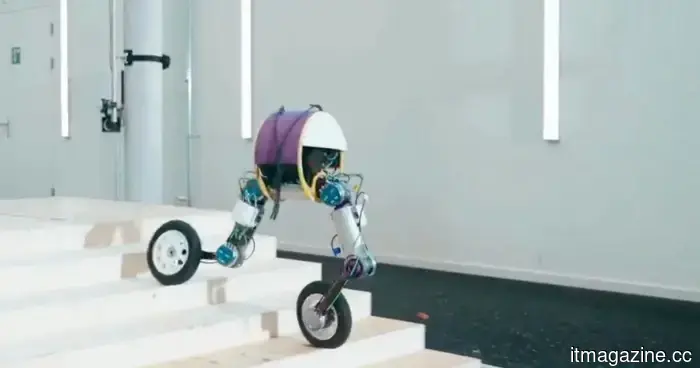 RAI’s incredible Roadrunner robot surpasses humanoid designs.
When the Robotics and AI (RAI) Institute discusses technology, it's important to pay attention. The organization was established by Marc Raibert, who also founded the robotics trailblazer Boston Dynamics, known for its remarkable Atlas robot and the dog-like Spot quadruped. Located in Massachusetts, the RAI Institute has recently introduced Roadrunner, a prototype of a bipedal-wheeled robot weighing 15 kg (33 lb). [...]
RAI’s incredible Roadrunner robot surpasses humanoid designs.
When the Robotics and AI (RAI) Institute discusses technology, it's important to pay attention. The organization was established by Marc Raibert, who also founded the robotics trailblazer Boston Dynamics, known for its remarkable Atlas robot and the dog-like Spot quadruped. Located in Massachusetts, the RAI Institute has recently introduced Roadrunner, a prototype of a bipedal-wheeled robot weighing 15 kg (33 lb). [...]
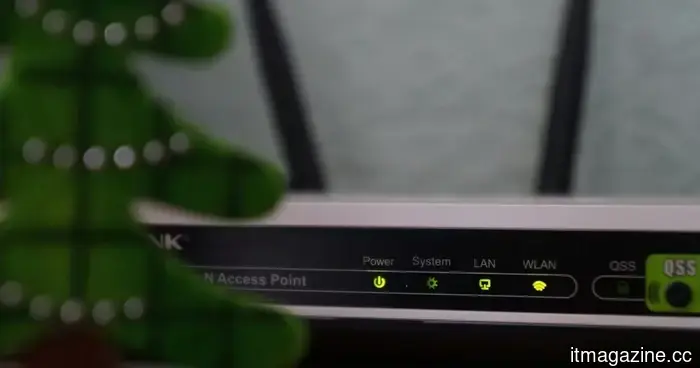 The US government has recently prohibited the use of all Wi-Fi routers manufactured outside the country.
The FCC has included all routers manufactured abroad on its national security "Covered List," which means that no new foreign-made routers are permitted to be sold in the United States.
The US government has recently prohibited the use of all Wi-Fi routers manufactured outside the country.
The FCC has included all routers manufactured abroad on its national security "Covered List," which means that no new foreign-made routers are permitted to be sold in the United States.
 Following the announcement for players to request refunds, Crimson Desert will now provide support for Intel Arc.
After receiving criticism for not including Intel Arc GPUs, the developers of Crimson Desert have announced that support and optimization are now officially forthcoming.
Following the announcement for players to request refunds, Crimson Desert will now provide support for Intel Arc.
After receiving criticism for not including Intel Arc GPUs, the developers of Crimson Desert have announced that support and optimization are now officially forthcoming.
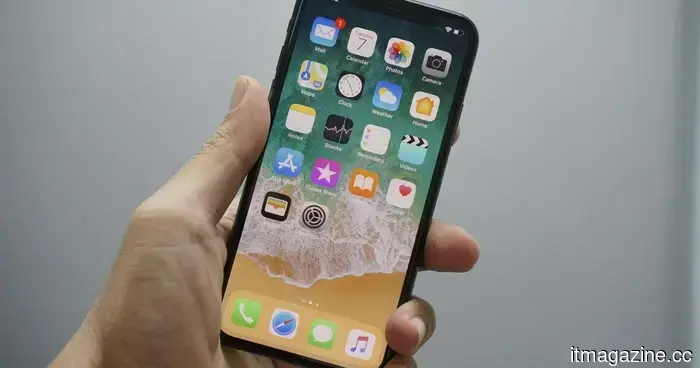 Your iPhone may be vulnerable if it isn't updated.
An exploit kit that can hack iPhones has been leaked and is now available to the public, posing a risk to millions of devices, particularly those using older software versions.
Your iPhone may be vulnerable if it isn't updated.
An exploit kit that can hack iPhones has been leaked and is now available to the public, posing a risk to millions of devices, particularly those using older software versions.
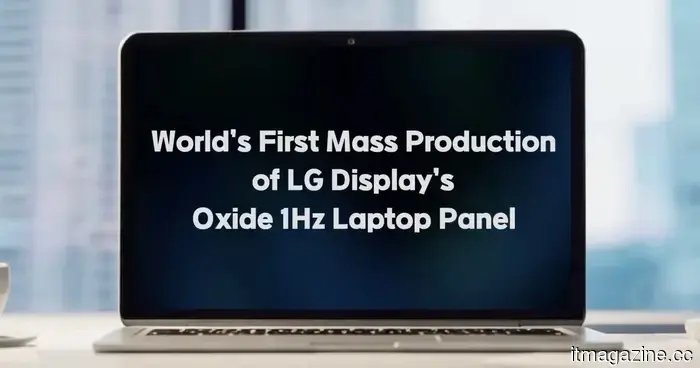 LG's next-generation 120Hz display is expected to significantly enhance laptop battery life.
LG Display has commenced large-scale production of a laptop panel that automatically reduces its refresh rate to 1Hz when the screen is not in use, resulting in up to 48% enhanced battery longevity.
LG's next-generation 120Hz display is expected to significantly enhance laptop battery life.
LG Display has commenced large-scale production of a laptop panel that automatically reduces its refresh rate to 1Hz when the screen is not in use, resulting in up to 48% enhanced battery longevity.
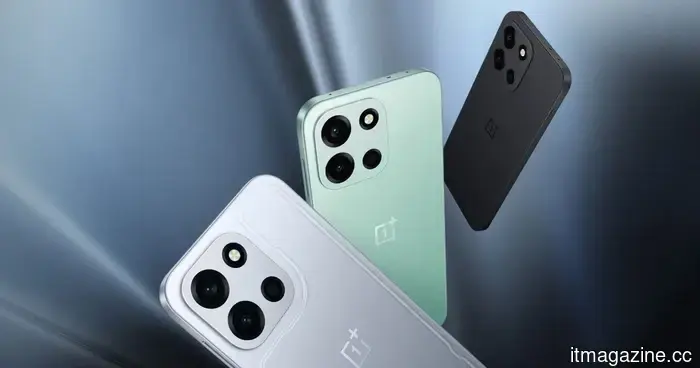 This new OnePlus phone might eliminate battery anxiety for good.
With a 9000mAh battery and fast charging, the OnePlus Nord 6 has the potential to excel in endurance; however, practical performance will determine if it truly alters expectations in the midrange market.
This new OnePlus phone might eliminate battery anxiety for good.
With a 9000mAh battery and fast charging, the OnePlus Nord 6 has the potential to excel in endurance; however, practical performance will determine if it truly alters expectations in the midrange market.
Lace secures $40 million to substitute chip-manufacturing lights with helium atoms.
Lace has secured $40 million from Atomico and Microsoft’s M12 to develop helium atom beam lithography, which has the potential to etch chip features that are ten times smaller.