

RAI’s incredible Roadrunner robot surpasses humanoid designs.
The robot's ability to move with ease is likely to astonish.
When the Robotics and AI (RAI) Institute discusses technology, it's important to pay attention. The organization was established by Marc Raibert, who also founded the robotics innovator Boston Dynamics, the company responsible for the impressive Atlas robot and the dog-like quadruped, Spot.
The RAI Institute, based in Massachusetts, has just introduced Roadrunner, a bipedal-wheeled robot prototype weighing 15 kg (33 lb). Its captivating design offers exceptional versatility, aided by its symmetrical, knee-jointed legs that enable efficient movement and effortless navigation around obstacles.
A brief video released by the Roadrunner team showcases the robot effortlessly lifting off from a stationary position and gliding across flat terrain. However, it truly impresses as it seamlessly ascends a flight of stairs, using its wheels like feet to reach the top. Roadrunner then descends a ramp and tackles the steps in reverse, akin to a stunt cyclist.
“Meet ‘Roadrunner,’ a 15kg (33 lb) bipedal wheeled robot prototype featuring multi-modal locomotion: side-by-side and inline wheel modes as well as stepping. Its symmetric legs articulate at the knee to avoid obstacles,” RAI Institute tweeted.
“The same control policy was trained to manage both side-by-side and in-line driving,” notes the RAI Institute in its post. “Various actions, such as standing from different ground configurations and balancing on one wheel, were successfully executed without additional training or modifications post-development.”
The RAI Institute intends to utilize the Roadrunner robot as a research platform to explore the boundaries of agile, dynamic mobility. Looking forward, one can envision a more advanced version being utilized in real-world scenarios for inspections or tasks in warehouses, potentially serving as a feasible alternative to bipedal humanoid robots.
Founded by Marc Raibert in 2022, the RAI Institute aims to enhance the integration of robotics and artificial intelligence. Building on the knowledge from industry pioneers, it has rapidly gained recognition for creating highly dynamic, agile robots capable of performing a wide range of complex movements, just like Roadrunner.
Not too long ago, Trevor relocated from one tea-drinking island nation that drives on the left (Britain) to another (Japan)…
Claude can now autonomously manage tasks on your PC without the complicated OpenClaw setup.
Just assign it a task, step away, and return to completed work. Claude will handle everything else.
OpenClaw made waves upon its release, proving that a genuine personal assistant capable of carrying out intricate commands on a computer is achievable. However, it’s not suitable for everyone—its setup is complicated and raises several safety concerns, making it better suited for technically skilled users. A more accessible alternative for the average consumer is Claude Cowork, which was recently launched by Anthropic.
The US government has now prohibited all foreign-made Wi-Fi routers.
The FCC has officially included foreign routers on its Covered List, identifying them as a national security risk to the United States. Consequently, no new foreign-produced routers can be sold in America unless they receive a special exemption. If you're concerned about your current router, there's no need to panic just yet; the ban currently only impacts new router approvals.
LG’s upcoming 120Hz display promises a significant improvement in laptop battery life.
With this new technology, your screen won’t waste power while you’re checking your inbox.
LG Display has started mass production of a new LCD laptop panel using Oxide 1Hz technology, which automatically adjusts the refresh rate from 1Hz to 120Hz based on on-screen activity. This technology is being produced in mass for laptops for the first time, and the battery life improvements are quite impressive. However, considering that 120Hz displays have existed for some time, you may wonder how this can be the first instance. The distinction lies in the fact that not all 120Hz displays operate the same way; most dynamically refresh the screen between 25Hz and 120Hz, depending on the content displayed.




Other articles
 Accumulus Technologies has introduced the Accumulus Connector.
Accumulus Technologies' latest Connector connects the existing systems of pharmaceutical and biotech companies directly to its live network.
Accumulus Technologies has introduced the Accumulus Connector.
Accumulus Technologies' latest Connector connects the existing systems of pharmaceutical and biotech companies directly to its live network.
 Your iPhone may be vulnerable if it isn't updated.
An exploit kit that can hack iPhones has been leaked and is now available to the public, posing a risk to millions of devices, particularly those using older software versions.
Your iPhone may be vulnerable if it isn't updated.
An exploit kit that can hack iPhones has been leaked and is now available to the public, posing a risk to millions of devices, particularly those using older software versions.
 EU broadcasters call for stricter regulations on Big Tech's influence over Smart TVs.
EU broadcasters are urging for smart TV systems and virtual assistants to be included under DMA regulations, expressing concerns that Big Tech is reinforcing its control over content accessibility.
EU broadcasters call for stricter regulations on Big Tech's influence over Smart TVs.
EU broadcasters are urging for smart TV systems and virtual assistants to be included under DMA regulations, expressing concerns that Big Tech is reinforcing its control over content accessibility.
 Following the announcement for players to request refunds, Crimson Desert will now provide support for Intel Arc.
After receiving criticism for not including Intel Arc GPUs, the developers of Crimson Desert have announced that support and optimization are now officially forthcoming.
Following the announcement for players to request refunds, Crimson Desert will now provide support for Intel Arc.
After receiving criticism for not including Intel Arc GPUs, the developers of Crimson Desert have announced that support and optimization are now officially forthcoming.
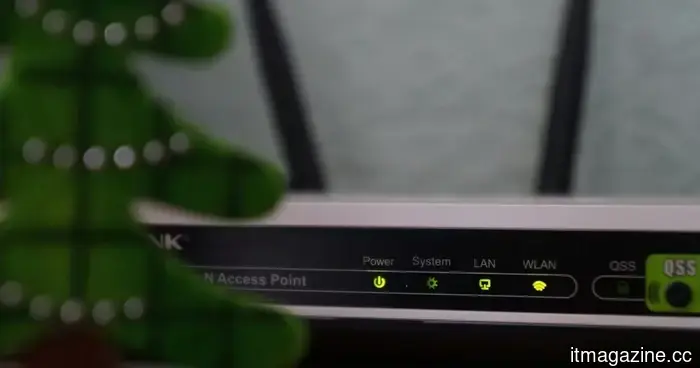 The US government has recently prohibited the use of all Wi-Fi routers manufactured outside the country.
The FCC has included all routers manufactured abroad on its national security "Covered List," which means that no new foreign-made routers are permitted to be sold in the United States.
The US government has recently prohibited the use of all Wi-Fi routers manufactured outside the country.
The FCC has included all routers manufactured abroad on its national security "Covered List," which means that no new foreign-made routers are permitted to be sold in the United States.
 Accumulus Technologies has introduced the Accumulus Connector.
Accumulus Technologies' latest Connector connects the existing systems of pharmaceutical and biotech companies directly to its live network.
Accumulus Technologies has introduced the Accumulus Connector.
Accumulus Technologies' latest Connector connects the existing systems of pharmaceutical and biotech companies directly to its live network.
RAI’s incredible Roadrunner robot surpasses humanoid designs.
When the Robotics and AI (RAI) Institute discusses technology, it's important to pay attention. The organization was established by Marc Raibert, who also founded the robotics trailblazer Boston Dynamics, known for its remarkable Atlas robot and the dog-like Spot quadruped. Located in Massachusetts, the RAI Institute has recently introduced Roadrunner, a prototype of a bipedal-wheeled robot weighing 15 kg (33 lb). [...]