
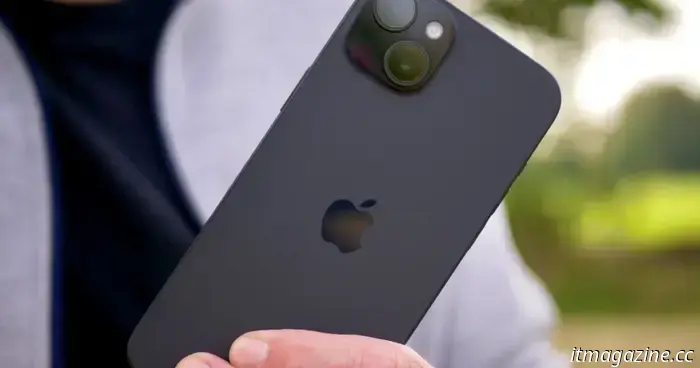
The importance of AppleCare+ for your iPhone, even as a subscription service.
Have you ever damaged your iPhone? Over the last ten years as an iPhone user, I’ve cracked two screens and had one iPhone stolen while traveling. Fortunately, there was one service that helped me through all these situations: AppleCare+.
Recently, Mark Gurman from Bloomberg reported that Apple is transitioning from a prepaid model to a subscription-only model for its protection plan. With subscriptions becoming more common in our lives and people experiencing subscription fatigue, some individuals are wary about adding another subscription.
However, having subscribed to AppleCare+ for multiple years, I believe it is not just another subscription but an essential component of owning an iPhone.
The change from prepaid to subscription
When AppleCare+ was first introduced, it was offered only as a prepaid service, requiring customers to spend at least 10% or more of their iPhone's price to protect their device. For many, including myself at that time, this made an already costly purchase even pricier and difficult to justify.
With the launch of the iPhone 11 in 2019, Apple introduced a monthly payment option for AppleCare+. This allowed users to pay monthly instead of prepaying for two years, similar to paying for a cell phone plan or other subscriptions. Therefore, Apple’s decision to shift to a subscription-only model is not surprising.
This move also aligns with Apple's focus on recurring revenue, especially since AppleCare+ is part of the subscription-based iPhone Upgrade Program. Paying monthly allows you to maintain coverage indefinitely, a benefit that wasn't possible with prepaid options for many years. Unfortunately, this shift to a subscription may also mean that AppleCare+ won’t be as affordable anymore.
AppleCare+ provides much more than just an extended warranty
When considering AppleCare+, it’s common to view it merely as an extended warranty, but that would undervalue what it offers to many users. It indeed covers accidental damage—like a broken screen, liquid damage, or even if your phone is run over by a car—and allows repairs or replacements for a fee that is much lower than what you'd pay otherwise.
Moreover, it offers additional benefits. You receive two years of technical support via phone or in-person at the Genius Bar, which is particularly helpful for elderly individuals or those not technologically savvy. If you keep your phone for a long time, it also safeguards your battery as Apple will replace it when it starts to degrade, giving your phone renewed life.
My favorite feature of AppleCare+ is the Theft and Loss option, which does exactly what you'd expect. It acts as an insurance policy for your iPhone, meaning if it's stolen or lost, Apple will replace it with an identical model. I learned this firsthand when my iPhone was stolen in Barcelona during MWC 2024, and it took Apple a week to send me a replacement—mainly due to my use of an eSIM-only US model in the UK where iPhones still have a physical SIM card tray. But it was the same model I had before. While the process could be smoother, it's ultimately much better than dealing with other insurance companies.
Does having AppleCare+ make financial sense?
At a rate of $10 per month for AppleCare+ and $14 per month for the Theft and Loss option, you might be questioning whether AppleCare+ is worth the expense. Personally, I often find myself asking this same question every year, especially if I haven’t made any claims. However, my iPhone being stolen and subsequently needing to fix a broken screen a few months later made it a must-have for every future iPhone purchase.
So, does it make sense for you? Let's reflect on my last five iPhones and instances where I've utilized AppleCare+.
To start, consider the costs. Assuming no price increases in the future and ignoring current discounts for those who prepay for two years, AppleCare+ would cost $120 annually without Theft and Loss, and $168 with that protection. Over five years, this totals about $840, although I spent less since I initially opted out of Theft and Loss protection, prepaid for at least two of those years, and received lower rates.
Each time I've accessed AppleCare+, there was also a fee associated with each claim. My Theft and Loss claim was $149, while two broken screens cost me $29 each, and one more damaged iPhone cost $99 to replace. Altogether, that amounted to $306 in additional claim fees.
Consider my iPhone 15 Pro, which was stolen in Barcelona. The 512GB model's replacement cost was $1,199, which exceeds what I spent on five years of AppleCare+ coverage.
What if you've never lost or had a phone stolen? In that case, without Theft and Loss, AppleCare+ would have cost me $600 in five years, plus an additional $157 in claim fees. A screen replacement for my iPhone 13 Pro would have run $279, while an iPhone 14
Other articles
 Sarah Michelle Gellar discusses the Buffy the Vampire Slayer reboot: ‘We’re moving in that direction’
Following the announcement earlier this week regarding a Buffy the Vampire Slayer reboot, Sarah Michelle Gellar responded on her Instagram about the Hulu series.
Sarah Michelle Gellar discusses the Buffy the Vampire Slayer reboot: ‘We’re moving in that direction’
Following the announcement earlier this week regarding a Buffy the Vampire Slayer reboot, Sarah Michelle Gellar responded on her Instagram about the Hulu series.
 Miles Teller has a single wish for Tom Cruise regarding Top Gun 3.
Will there be a Top Gun 3? If Miles Teller returns to the cockpit, he has a particular request for Tom Cruise.
Miles Teller has a single wish for Tom Cruise regarding Top Gun 3.
Will there be a Top Gun 3? If Miles Teller returns to the cockpit, he has a particular request for Tom Cruise.
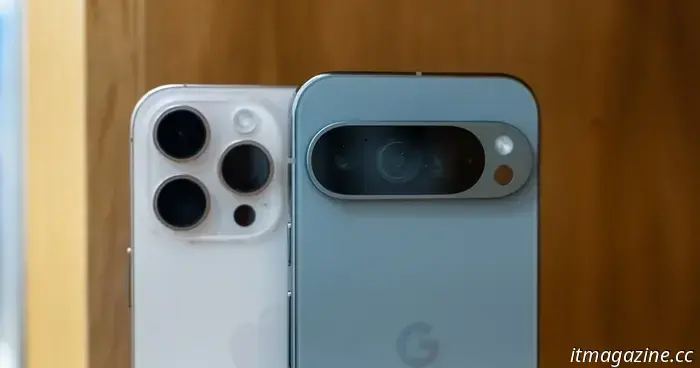 Phone cameras have become so advanced that they've effectively taken the place of my camera for work.
After ten years of carrying a large camera on my back, I concluded that it was time for a change. Here are the gadgets that allowed me to leave it at home for work!
Phone cameras have become so advanced that they've effectively taken the place of my camera for work.
After ten years of carrying a large camera on my back, I concluded that it was time for a change. Here are the gadgets that allowed me to leave it at home for work!
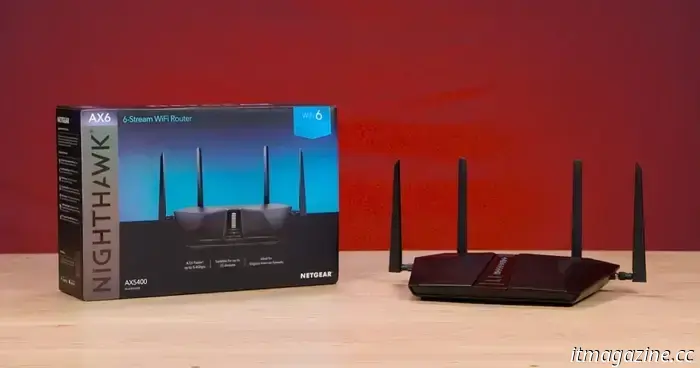 Your Netgear router could be a vulnerability for hackers.
Netgear has tackled two significant security vulnerabilities that impact various products.
Your Netgear router could be a vulnerability for hackers.
Netgear has tackled two significant security vulnerabilities that impact various products.
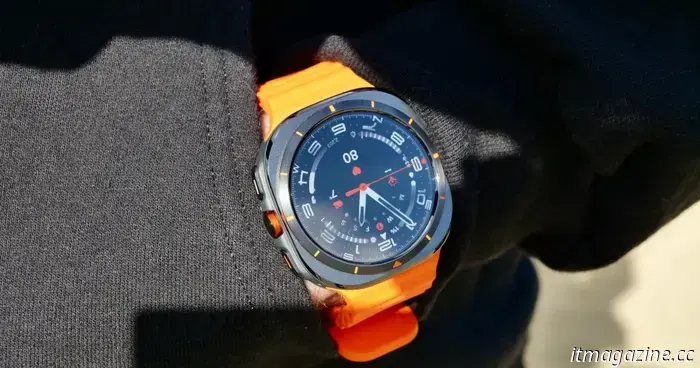 How I came to adore the impressive Galaxy Watch Ultra.
I began wearing the Samsung Galaxy Watch Ultra when I started using the Galaxy S25 Ultra, but I had no idea that my feelings about it would change significantly.
How I came to adore the impressive Galaxy Watch Ultra.
I began wearing the Samsung Galaxy Watch Ultra when I started using the Galaxy S25 Ultra, but I had no idea that my feelings about it would change significantly.
 JBL’s 100W portable Bluetooth speaker is currently available at a great discount.
Delight your Super Bowl party attendees with thrilling in-game sounds and festive music using the JBL Partybox Encore Essential.
JBL’s 100W portable Bluetooth speaker is currently available at a great discount.
Delight your Super Bowl party attendees with thrilling in-game sounds and festive music using the JBL Partybox Encore Essential.
The importance of AppleCare+ for your iPhone, even as a subscription service.
Although there are rumors that Apple may transition AppleCare+ to a subscription-only model, I believe it remains a crucial component of iPhone ownership. Here's my reasoning.