
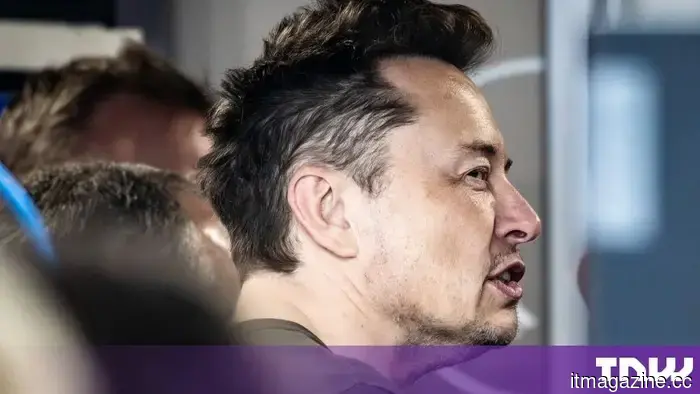
Zoox requested and received permission from NHTSA. Tesla, on the other hand, certified itself and is now facing a federal investigation.
Tesla's stock dropped approximately 6% subsequent to an unsuccessful Cybercab update and the National Highway Traffic Safety Administration (NHTSA) launching an investigation into the manner in which the company certified a vehicle lacking a steering wheel, pedals, or mirrors. In contrast, Amazon's Zoox sought an exemption and received approval in July, while Tesla opted for self-certification without filing for an exemption. The complexity arises from NHTSA's current proposal to eliminate the brake pedal requirement for fully automated vehicles.
On Friday, Tesla shares declined around 6% after a poorly received Cybercab update and the NHTSA’s investigation into how Tesla certified the vehicle, as reported by CNBC. The agency is scrutinizing the processes and technical information Tesla used to demonstrate compliance with federal motor vehicle safety standards concerning up to 1,000 Cybercabs. This vehicle lacks a steering wheel, brake or accelerator pedals, and mirrors. NHTSA indicated that Tesla did not seek an exemption regarding the standards affected by these omissions.
For context, Amazon’s Zoox took a different approach. It applied to NHTSA and was awarded approval in July for limited commercial deployment of its steering-wheel-free robotaxi. This presents the same regulatory question but with two distinct approaches: one company sought and received limited permission, while the other claimed compliance and is now being asked to provide evidence of its assertions.
This distinction is important to note, as self-certification is typically the mechanism under federal standards, allowing manufacturers to certify their own compliance instead of seeking type approval. Tesla has not created a shortcut, and the contentious issue is whether self-certification applies to vehicles that do not have the controls specified by the standards.
The allure of a quicker path is evident in Tesla’s experience. The company requested 5,000 robotaxis from Las Vegas, but was only granted permission for 10. A permission model that results in ten vehicles against a request for five thousand is not viable for fleet expansion. Conversely, self-certification for up to 1,000 vehicles represents a significantly different scale, hence why the basis for certification is critical.
Zoox’s approval was also limited in scope. Currently, neither permitted route is capable of scaling at the pace assumed by Tesla's robotaxi ambitions.
Complications arise from shifting regulations. NHTSA has proposed eliminating the federal requirement for brake pedals in vehicles designed exclusively for automated driving, with the change anticipated to be adopted later this year. Should this proposal advance, a major obstacle for a vehicle like the Cybercab could be removed, leading to claims that Tesla is advancing ahead of a regulatory change rather than in opposition to an established rule.
This represents a substantially different situation, potentially influencing the inquiry's outcome. Regulators generally perceive preempting a forthcoming amendment more leniently than violating an existing requirement, though the investigation remains active and no conclusions have been reached.
Regarding the event itself, the product announcements were less substantial than the regulatory news. Tesla hosted the Cybercab event in Austin, which was invite-only and not streamed, with Elon Musk absent from the presentation. The vehicle features a two-seat bronze design with butterfly doors, and users of the Tesla Robotaxi app can now request rides within a designated area in Austin. The initial rollout began with rides provided for staff before integrating into the ongoing Austin service.
The decision to hold an unstreamed launch without the founder present is unusual for a company that typically dramatizes such events. Investors seemingly interpreted Musk's absence as significant information.
This situation was not entirely unexpected. The regulator had already expressed interest; NHTSA announced its evaluation of the Cybercab rollout prior to the recent formal investigation, so this escalation follows a previously stated concern rather than emerging suddenly. Tesla’s fleet in Austin has been operating without safety drivers for some time, making the novelty of the situation centered around the vehicle rather than the automation. TechCrunch reported that the investigation is a reaction to the deployment rather than an incident.
Visibility has changed; a Model Y without a driver generates less scrutiny compared to a purpose-built vehicle devoid of any controls.
Examining developments in London provides another perspective. Uber and Wayve initiated operations with a licensed safety driver in each vehicle, leveraging private hire licensing instead of Britain’s newly established automated passenger permit scheme. Two companies, operating under different jurisdictions, made the same fundamental decision. The regulatory approach selected influences the product's characteristics more than the software's state.
Wayve chose a seemingly slower approach and placed cars on the road with a human driver. Conversely, Tesla opted for a quicker route, deploying a vehicle without controls while facing a federal inquiry.
Looking ahead, the focus should be on the scope of the investigation, which concerns the certification process and technical data for up to 1,000 vehicles, indicating a fleet-level inquiry rather than a fault investigation for a single incident.
Keep an eye on the progress of the brake pedal rulemaking. If the amendment is enacted while the investigation is ongoing, Tesla’s position could significantly improve without
Other articles
 Improved Models Alone Won't Suffice: China's AI Competition Shifts Focus to Costs, Products, and Monetizing Users.
Editor's note: This article was authored by Lucia, a reporter for TechNode. During an online media briefing held on September 1 for the 23rd UBS Securities A-Share Seminar,
Improved Models Alone Won't Suffice: China's AI Competition Shifts Focus to Costs, Products, and Monetizing Users.
Editor's note: This article was authored by Lucia, a reporter for TechNode. During an online media briefing held on September 1 for the 23rd UBS Securities A-Share Seminar,
 No one is able to forecast the prices of Amazon's ad reserves, not even Amazon itself. That is the argument.
The FTC alleges that Amazon provided misleading information about its advertising auction. In response, Amazon presents results and admits that no one can accurately forecast its reserve prices.
No one is able to forecast the prices of Amazon's ad reserves, not even Amazon itself. That is the argument.
The FTC alleges that Amazon provided misleading information about its advertising auction. In response, Amazon presents results and admits that no one can accurately forecast its reserve prices.
 The EU has classified ChatGPT as a search engine. Referring to it as a platform would have provided OpenAI with protection from liability.
The DSA designation pertains to the section of ChatGPT responsible for retrieval, excluding the conversational aspects. The platform's label provided safe harbor.
The EU has classified ChatGPT as a search engine. Referring to it as a platform would have provided OpenAI with protection from liability.
The DSA designation pertains to the section of ChatGPT responsible for retrieval, excluding the conversational aspects. The platform's label provided safe harbor.
 AI cloud company Nscale is aiming to secure $3.5 billion in funding before its IPO, with support from Nvidia and Third Point.
The London-based AI cloud company is seeking to raise $3.5 billion before its IPO and is informing investors that its contracts amount to $103 billion, which is twice the amount reported four weeks ago.
AI cloud company Nscale is aiming to secure $3.5 billion in funding before its IPO, with support from Nvidia and Third Point.
The London-based AI cloud company is seeking to raise $3.5 billion before its IPO and is informing investors that its contracts amount to $103 billion, which is twice the amount reported four weeks ago.
 Brussels stated that only a split would resolve issues with Google's ad technology. However, the judge who acknowledged the liability has now refused to mandate such a breakup.
A US judge declined to mandate divestiture. The Commission stated a year ago that only a sale would be effective and is still evaluating Google's proposal.
Brussels stated that only a split would resolve issues with Google's ad technology. However, the judge who acknowledged the liability has now refused to mandate such a breakup.
A US judge declined to mandate divestiture. The Commission stated a year ago that only a sale would be effective and is still evaluating Google's proposal.
 Luka's new AI projector initiates the drawing and allows the children to complete it.
Luka's AI drawing projector was introduced at IFA. The new toy regulations in Europe require manufacturers to evaluate mental health risks associated with digitally connected toys.
Luka's new AI projector initiates the drawing and allows the children to complete it.
Luka's AI drawing projector was introduced at IFA. The new toy regulations in Europe require manufacturers to evaluate mental health risks associated with digitally connected toys.
Zoox requested and received permission from NHTSA. Tesla, on the other hand, certified itself and is now facing a federal investigation.
Zoox submitted a petition to NHTSA and received approval in July. Tesla self-certified up to 1,000 Cybercabs and is currently being investigated.