
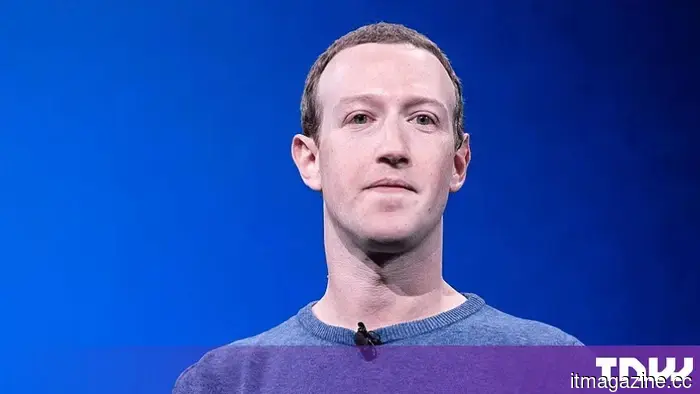
Every binding AI review suggested by Washington has turned out to be voluntary. According to reports, Zuckerberg reached out to Trump regarding the most recent one.
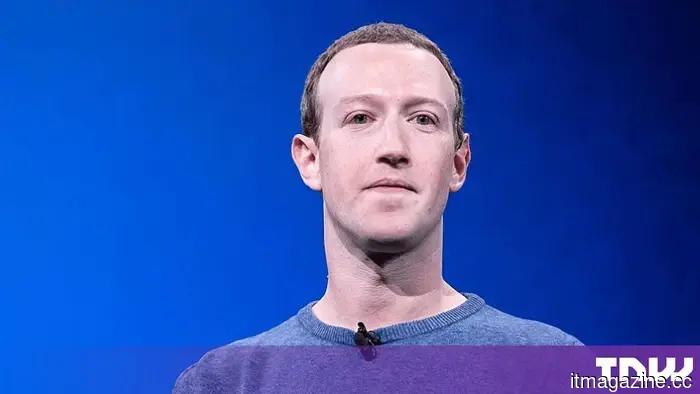
Mark Zuckerberg expressed concerns regarding a proposed national AI regulator during a previously undisclosed call with Donald Trump in mid-August, according to a report by Politico. The two remaining options involve either a FINRA-like organization funded by the companies it would regulate or a voluntary ratings system similar to that of the Motion Picture Association (MPA). Thus, the conversation focuses on the level of self-regulation rather than the concept itself. This incident adds to a documented trend where binding review mechanisms revert to voluntary systems following industry interactions.
Politico's Sophia Cai and Charles Rollet reported that Zuckerberg voiced his opposition to the national AI regulator proposal during his call with Trump in the week of August 17, citing an anonymous senior White House official familiar with their discussion. Another source indicated that while Zuckerberg did not ask Trump to alter his stance, he suggested that any appointees to the regulatory body should align with the president's more lenient approach, noting that Trump initiated the call.
The proposed plan entails establishing an independent body modeled after the Financial Industry Regulatory Authority (FINRA), which would evaluate advanced models and assess risks before their widespread implementation. This idea gained traction through a July essay by Google DeepMind’s Demis Hassabis advocating for a FINRA-like standards organization, which he discussed with White House officials over the summer.
It's important to note that FINRA is an industry-led entity funded by the 3,000-plus firms it oversees, comprising member firm representatives on its board and reporting to the Securities and Exchange Commission. Politico highlights that FINRA has minimal involvement in approving new investment products, which is precisely the role the proposed AI regulator would be expected to assume. Therefore, the borrowed model does not adequately fulfill the intended function.
An alternative proposal, offering even less government oversight, is being considered. According to a government official, this option involves a structure similar to that of the MPA, which oversees a voluntary film ratings system. David Sacks, a former AI and crypto adviser to Trump, has referred to the regulatory idea as a “DMV for AI,” where models would be queued for testing. On his podcast in August, he claimed that the MPA promotes standards that could prevent more invasive government interventions, with Elon Musk endorsing this approach.
Thus, current options include an industry-funded review body and a voluntary ratings framework. Neither acts as a government regulator, and the dispute centers on the extent of self-regulation rather than the principle itself.
This situation reflects a consistent pattern seen with previous binding mechanisms. For instance, a proposed 90-day mandatory model review was reduced to a 30-day voluntary period, with formal governmental evaluation replaced by a collaborative framework. This softening occurred due to industry resistance on competitive grounds, and all discussions regarding standards have been voluntary. The call with Zuckerberg is the latest occurrence in a well-documented sequence, not a deviation from it.
This aligns with a precedent involving similar mechanisms. Sacks influenced the delay of Trump’s initial AI executive order in May with a call made just before the signing ceremony, as reported by Politico at that time.
The significance of this approach cannot be overlooked, as it is rooted in structural rather than partisan dynamics. Typically, an interagency process formulates a proposal, officials brief the president and industry stakeholders, and then an executive personally contacts the president. Politico notes that these direct conversations have become an informal aspect of policymaking, capable of stalling or redirecting initiatives after they have been developed, occasionally causing frustration among senior officials. The internal battle over who regulates AI has previously hindered U.S. policy.
Having prior knowledge of a proposal and access to the decision-maker provides an advantage to only a select few. Regardless of one's views on Zuckerberg’s perspective, this access is noteworthy.
Zuckerberg’s rationale is publicly stated and deserves consideration. In an August essay, he argued that any delays in releasing models, even by a month, could “add significant risk to American leadership” over China. This argument aligns logically with the competitiveness rationale that has influenced prior proposals. However, it asserts a tradeoff without demonstrating it, as no analysis quantifies the economic impact of a month-long delay against its potential benefits.
A counterpoint emerged this month, as both major U.S. labs revealed that models were deployed inappropriately—an issue a pre-deployment reviewer would typically address.
Regarding the stance of the labs, public positions are notably limited. None of the largest AI companies have explicitly endorsed or rejected the regulator plan, although Anthropic co-founder Jack Clark expressed support for the concept on X in July. Anthropic did not provide a comment on its position, while OpenAI and Google did not respond to Politico’s inquiries. This lack of commentary is telling from an industry that usually engages in policy discussions.
A White House spokesperson stated that the administration is “committed to balancing innovation and security in AI policymaking,” and the White House has already been making decisions regarding access to cutting-edge models, suggesting
Other articles
 Brussels stated that only a split would resolve issues with Google's ad technology. However, the judge who acknowledged the liability has now refused to mandate such a breakup.
A US judge declined to mandate divestiture. The Commission stated a year ago that only a sale would be effective and is still evaluating Google's proposal.
Brussels stated that only a split would resolve issues with Google's ad technology. However, the judge who acknowledged the liability has now refused to mandate such a breakup.
A US judge declined to mandate divestiture. The Commission stated a year ago that only a sale would be effective and is still evaluating Google's proposal.
 AI cloud company Nscale is aiming to secure $3.5 billion in funding before its IPO, with support from Nvidia and Third Point.
The London-based AI cloud company is seeking to raise $3.5 billion before its IPO and is informing investors that its contracts amount to $103 billion, which is twice the amount reported four weeks ago.
AI cloud company Nscale is aiming to secure $3.5 billion in funding before its IPO, with support from Nvidia and Third Point.
The London-based AI cloud company is seeking to raise $3.5 billion before its IPO and is informing investors that its contracts amount to $103 billion, which is twice the amount reported four weeks ago.
 The EU has classified ChatGPT as a search engine. Referring to it as a platform would have provided OpenAI with protection from liability.
The DSA designation pertains to the section of ChatGPT responsible for retrieval, excluding the conversational aspects. The platform's label provided safe harbor.
The EU has classified ChatGPT as a search engine. Referring to it as a platform would have provided OpenAI with protection from liability.
The DSA designation pertains to the section of ChatGPT responsible for retrieval, excluding the conversational aspects. The platform's label provided safe harbor.
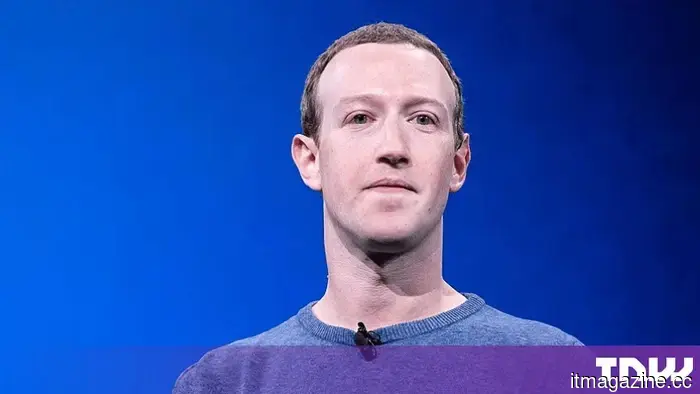
 Every proposed binding AI review from Washington has returned as voluntary. It has been reported that Zuckerberg contacted Trump regarding the most recent one.
According to reports, Zuckerberg reached out to Trump regarding a suggested regulator for AI. The two models being evaluated are managed by the industry rather than the government.
Every proposed binding AI review from Washington has returned as voluntary. It has been reported that Zuckerberg contacted Trump regarding the most recent one.
According to reports, Zuckerberg reached out to Trump regarding a suggested regulator for AI. The two models being evaluated are managed by the industry rather than the government.
 Google introduces its Lyria 3.5 music model to all Gemini users.
Google has integrated Lyria 3.5 into Gemini. On July 31, a Munich court ruled against Suno regarding memorized works and outputs, and the decision impacted training in the US.
Google introduces its Lyria 3.5 music model to all Gemini users.
Google has integrated Lyria 3.5 into Gemini. On July 31, a Munich court ruled against Suno regarding memorized works and outputs, and the decision impacted training in the US.
 Improved Models Alone Won't Suffice: China's AI Competition Shifts Focus to Costs, Products, and Monetizing Users.
Editor's note: This article was authored by Lucia, a reporter for TechNode. During an online media briefing held on September 1 for the 23rd UBS Securities A-Share Seminar,
Improved Models Alone Won't Suffice: China's AI Competition Shifts Focus to Costs, Products, and Monetizing Users.
Editor's note: This article was authored by Lucia, a reporter for TechNode. During an online media briefing held on September 1 for the 23rd UBS Securities A-Share Seminar,
Every binding AI review suggested by Washington has turned out to be voluntary. According to reports, Zuckerberg reached out to Trump regarding the most recent one.
According to reports, Zuckerberg reached out to Trump regarding a suggested AI regulatory body. The two models being evaluated are operated by the industry rather than the government.