
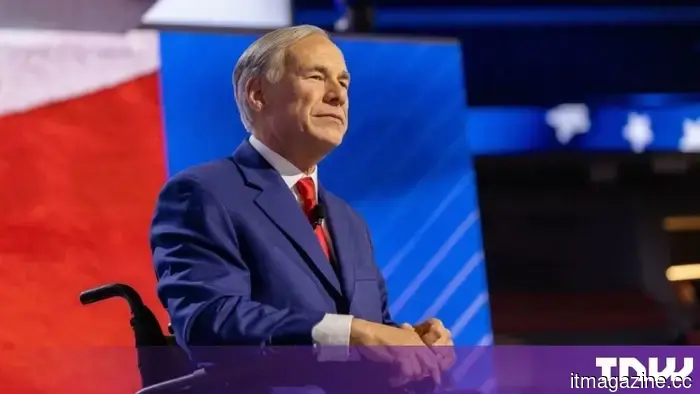
Texas Republicans are opposing data centers, and both candidates for the Senate support the same regulations regarding water.
Texas spent a decade encouraging data centre developers to come to the state. Now, however, its Republican leaders are competing to see who can impose the strictest regulations on them. According to Reuters, this shift has put Big Tech on alert in a state that houses more data centres than any other.
This change is becoming evident in the upcoming elections. Data centres have emerged as a significant topic in the governor's race and the contest for a US Senate seat in a state that was previously regarded mainly as a success story for economic development rather than a political challenge.
Ken Paxton, the attorney general and Senate candidate, introduced a four-point Texas First Data Center Plan last month. This plan advocates for a federal DATA Act, the use of closed-loop water systems, a prohibition on Chinese technology in data centres, and criminal accountability for violations regarding AI safety.
His Democratic rival has adopted a similar stance. James Talarico’s Hold Data Centers Accountable Plan proposes eliminating the state sales tax incentives that attracted the industry, establishing federal minimum standards, granting local communities greater control over projects, and mandating closed-loop water systems.
The similarities in their proposals are telling. Candidates from different parties have independently embraced the same water policy, indicating that the issue has shifted from ideology to a matter that directly affects people's utility bills.
Governor Greg Abbott is campaigning on the measures he has already implemented. “What I have done is working. The guidelines and guardrails I’ve established are now universally adopted across the state of Texas,” he stated, highlighting requirements for data centres to refrain from using water essential for communities and placing undue stress on the power grid.
This stance is relatively new. Abbott ordered a halt to new grid connections for an audit in August, following his support for a $40 billion Google investment in Texas just nine months prior.
The figures help clarify the situation. Texas had 474GW of interconnection requests, with approximately 90% coming from data centres, exceeding the state’s previous peak demand more than five times, and there was no reliable method to assess which projects would actually be constructed.
The industry has complicated the regulatory landscape. When Texas inquired about water and electricity usage, only 28 out of 377 companies responded, a lack of participation that likely hinders trust from regulators.
Abbott’s Democratic opponent argues that the current regulations are insufficient. Gina Hinojosa is calling for a moratorium and a special legislative session, claiming that developers “have all descended into our communities, into our neighborhoods, and there are no rules.”
Abbott has dismissed the notion of a special session, contending that the grid operator's data is incomplete and that lawmakers can tackle the matter when they reconvene in January, with the audit serving as the primary constraint until the election.
He has also begun addressing costs. Abbott directed the Public Utility Commission and ERCOT to shield residential ratepayers from the infrastructure expenses associated with data centres, essentially acknowledging a key argument from his opponents: that households have been shouldering part of the financial burden from the expansion.
At the national level, the Republican Party is experiencing a similar shift in public sentiment. Opposition to the establishment of local data centres has risen to 61% among Americans, up from 49% in March, while the Republican senatorial committee has cautioned AI companies that such backlash could jeopardize a Senate seat in Ohio.
Trump holds an opposing viewpoint. He argues that communities rejecting data centres are making an error, while Abbott has remarked that the companies “dug their own grave,” creating a rare visible disagreement between a president and a governor of the same party.
The industry has taken note of this shift. Its current approach involves a charm offensive focusing on community funding and local hiring commitments in response to an issue that has progressed from planning discussions to election campaigns.
The decisions made in Texas will have implications far beyond its borders. With one of the nation’s most lenient power markets and the highest concentration of data centre projects, should Texas tighten its regulations, other states may follow suit with similar measures.
Other articles
 ByteDance secures $29.6 billion, marking Asia's second-largest loan of the year, while obtaining it at a lower cost.
ByteDance has obtained a loan of $29.6 billion after banks submitted over $30 billion in orders, increasing the facility that originally started at $20 billion.
ByteDance secures $29.6 billion, marking Asia's second-largest loan of the year, while obtaining it at a lower cost.
ByteDance has obtained a loan of $29.6 billion after banks submitted over $30 billion in orders, increasing the facility that originally started at $20 billion.
 Schools are welcoming AI technology. However, New York City has prohibited its use for over half a million students.
New York City is pausing the use of generative AI for its younger students. Over 500,000 children will return to school without the availability of AI tools designed for students.
Schools are welcoming AI technology. However, New York City has prohibited its use for over half a million students.
New York City is pausing the use of generative AI for its younger students. Over 500,000 children will return to school without the availability of AI tools designed for students.
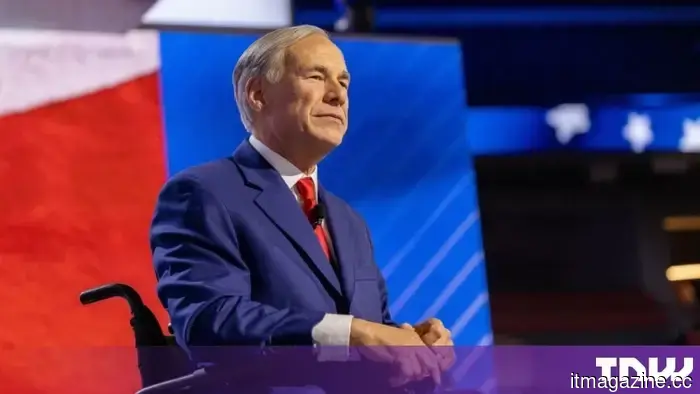 Texas Republicans are opposing data centers, and both Senate candidates are in agreement on the water regulations.
Data centers have emerged as a significant topic in the Texas gubernatorial and Senate races. Ken Paxton and James Talarico have both suggested implementing closed-loop water requirements, while Abbott is campaigning on the connection freeze he initiated in August.
Texas Republicans are opposing data centers, and both Senate candidates are in agreement on the water regulations.
Data centers have emerged as a significant topic in the Texas gubernatorial and Senate races. Ken Paxton and James Talarico have both suggested implementing closed-loop water requirements, while Abbott is campaigning on the connection freeze he initiated in August.
 Snowflake surpassed expectations in nearly every measure, except for one figure that went in the opposite direction.
Snowflake exceeded expectations for revenue, profit, and guidance, resulting in shares increasing by over 20%. However, its remaining performance obligations were $370 million lower than predictions.
Snowflake surpassed expectations in nearly every measure, except for one figure that went in the opposite direction.
Snowflake exceeded expectations for revenue, profit, and guidance, resulting in shares increasing by over 20%. However, its remaining performance obligations were $370 million lower than predictions.
 The US Army deployed a laser weapon on domestic territory before purchasing it.
AeroVironment secured a $464.8 million contract with the US Army for laser weapons. A few days prior, lasers from the same program successfully brought down three drones near the Mexican border.
The US Army deployed a laser weapon on domestic territory before purchasing it.
AeroVironment secured a $464.8 million contract with the US Army for laser weapons. A few days prior, lasers from the same program successfully brought down three drones near the Mexican border.
 Request an Uber, and a self-driving Mustang could arrive.
Londoners can now receive something unique when they request an Uber: a self-driving Ford Mustang Mach-E. Additionally, there is no extra charge for this experience.
Request an Uber, and a self-driving Mustang could arrive.
Londoners can now receive something unique when they request an Uber: a self-driving Ford Mustang Mach-E. Additionally, there is no extra charge for this experience.
Texas Republicans are opposing data centers, and both candidates for the Senate support the same regulations regarding water.
Data centers have emerged as a pivotal topic in the gubernatorial and Senate races in Texas. Ken Paxton and James Talarico have both suggested implementing closed-loop water mandates, while Abbott is campaigning on the water connection pause he initiated in August.