

Nvidia acquires Hugging Face for $12.9 billion. Thomas Wolf is placing his bets on Microduck, a robot priced at $399?
Thomas Wolf has spent ten years persuading the world that open-source AI is not merely a charity endeavor. On August 27, 2026, the market reached a conclusion. Nvidia consented to purchase Hugging Face, a company renowned for its role in the open-source AI ecosystem that hosts over 3 million open-source LLMs, for $12.9 billion, as reported by The Information. This valuation places the decade-old startup at approximately 86 times its $150 million in annualized revenue and nearly three times the $4.5 billion valuation it received in 2023.
This acquisition marks one of Nvidia’s largest to date, coinciding with the day the chipmaker announced a quarterly revenue of $96.2 billion and projected a 70 percent increase in revenue for the upcoming fiscal year. Additionally, it revealed an $18 billion commitment to equity investments through 2027. At Nvidia's current sales rate, $12.9 billion represents roughly thirteen days’ worth of sales.
Nvidia is poised to invest two weeks of revenue to secure the distribution element for the one segment of AI it has yet to dominate: open-source.
The irony is clear to anyone who has followed the company’s journey. In January, the Financial Times disclosed that Hugging Face had rejected a $500 million investment from Nvidia, which came at a $7 billion valuation, indicating that maintaining independence was more important than a quick capital influx.
Nvidia returned with a refreshed proposition. This time, it opted to purchase the entire company.
For Thomas Wolf, the co-founder and chief science officer, the focus has never been on an exit strategy. Instead, it has always revolved around the ecosystem. However, that ecosystem now belongs to Jensen Huang.
Thomas Wolf never intended to sell hardware. He established his reputation and a company now valued at $12.9 billion by doing the opposite. For years, Hugging Face has been referred to as the “GitHub for AI models,” serving as a platform where researchers freely shared open-source neural networks.
Wolf adheres to a principle: seek out talent, then address challenges. “I always wanted to collaborate with people I genuinely wanted to work with,” he notes. This instinct has guided him from theoretical physics to patent law and quantum computing, and has now led him to a new venture: a warehouse stocked with robotic arms.
This summer, Hugging Face is set to launch its second consumer robot kit, the Reachy Mini, priced between $300 and $500. The initial model, introduced last year for around $100, has already sold over 10,000 units, with the company on track to sell 20,000 this year. “People are truly excited,” says Wolf. “I’m very, very eager about this new model.”
This pivot is intriguing for a company that many in the tech world still view as the “GitHub for AI models.” Yet, Hugging Face, with its 250 employees, has spent the past year discreetly evolving from a repository of community-built models into a far more ambitious entity: a vertically integrated AI platform that encompasses leading models, physical robotics, and an enterprise storage business that Wolf claims is gaining momentum faster than any previous initiative.
From Software to Hardware
The shift towards robotics began with software. Hugging Face launched an open-source robotics library that quickly found traction. However, Wolf identified a bottleneck that software alone could not resolve. “Hardware was prohibitively expensive,” he explains. “Even the least expensive models still range from several thousand dollars to tens of thousands.”
For software developers eager to experiment with physical AI, the costs were simply too high. Consequently, Hugging Face created the most affordable credible entry point possible. The response was swift. “If you are a software developer interested in AI, you'd want to work with robots. There’s a need for accessible entry-level robots that can be purchased. So we began with a robotic arm, one of the models priced at $100. The excitement we saw was substantial.” This enthusiasm prompted Hugging Face to acquire the French robotics startup Pollen Robotics, which now plays a central role in Hugging Face’s physical AI division, merging its open-source software with affordable hardware—a new kit called the Reachy Mini, an open-source DIY desktop robot priced between $399 and $499, slated for release this summer.
The Reachy Mini isn’t the only robot set to launch this year. On the day Nvidia’s acquisition was announced, Thomas Wolf revealed Microduck, a 25-centimeter open-source biped featuring 15 actuators and a complete sensor suite, including a camera, speaker, LiDAR, NFC, Bluetooth, and Wi-Fi. Designed for training via reinforcement learning, it also includes numerous pre-trained policies enabling it to walk, sit, crouch, roller-skate, and pick up objects with its articulated beak—all for $399. Wolf describes it as “the first truly accessible RL robot.” Following
Other articles
 Instagram will restrict the visibility of AI influencers who do not include an AI-generated label on their profiles.
Instagram is changing the name of its AI creator label to AI-generated profile, and accounts without labels that display fake humans will now experience a reduction in their reach.
Instagram will restrict the visibility of AI influencers who do not include an AI-generated label on their profiles.
Instagram is changing the name of its AI creator label to AI-generated profile, and accounts without labels that display fake humans will now experience a reduction in their reach.
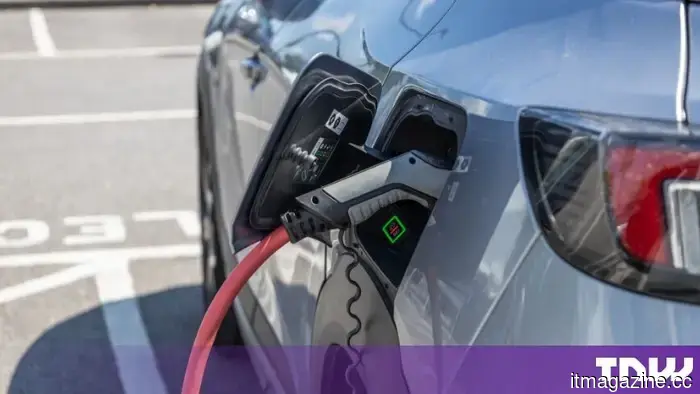 Oslo doesn’t require fast chargers in every location, and it demonstrates this on a daily basis.
Approximately 78% of Oslo's 4,519 public charging stations are slow AC chargers, and almost half of the vehicles in the city are electric. The right to plug in across Europe will take effect in May 2026.
Oslo doesn’t require fast chargers in every location, and it demonstrates this on a daily basis.
Approximately 78% of Oslo's 4,519 public charging stations are slow AC chargers, and almost half of the vehicles in the city are electric. The right to plug in across Europe will take effect in May 2026.
 A smartwatch capable of accurately measuring real blood pressure levels is on the horizon, and it has a stylish design.
The Huawei Watch D3 features an inflatable cuff strap instead of light sensors, providing real systolic and diastolic measurements instead of an estimate based on an algorithm.
A smartwatch capable of accurately measuring real blood pressure levels is on the horizon, and it has a stylish design.
The Huawei Watch D3 features an inflatable cuff strap instead of light sensors, providing real systolic and diastolic measurements instead of an estimate based on an algorithm.
 The issue of digital legacy: what becomes of those who created the memories?
Eighty-four percent of adults in the U.S. access YouTube, while seventy-one percent use Facebook; however, digital memories tend to be fragmented across different platforms without any context. The founders of Eternal Memory contend that digital legacy is a developing category in which the act of curation is more significant than the quantity.
The issue of digital legacy: what becomes of those who created the memories?
Eighty-four percent of adults in the U.S. access YouTube, while seventy-one percent use Facebook; however, digital memories tend to be fragmented across different platforms without any context. The founders of Eternal Memory contend that digital legacy is a developing category in which the act of curation is more significant than the quantity.
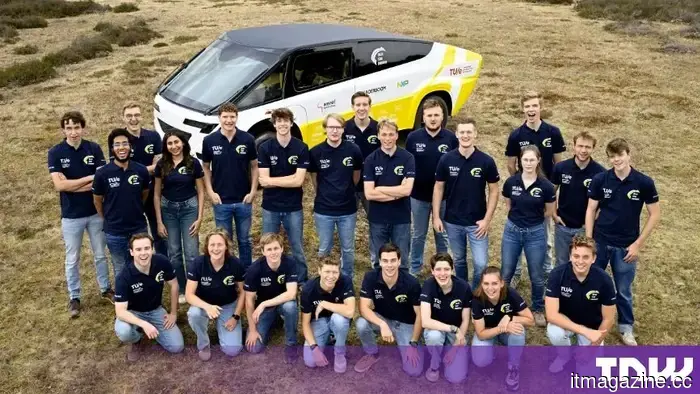 A solar-powered mobile clinic has successfully traveled 800 km throughout Kenya.
Dutch students traveled 800km across Kenya in a solar-powered ambulance, which generated more energy than it consumed. Europe has allocated 2.6 billion euros for health initiatives in Africa, but none of that funding is directed towards this project.
A solar-powered mobile clinic has successfully traveled 800 km throughout Kenya.
Dutch students traveled 800km across Kenya in a solar-powered ambulance, which generated more energy than it consumed. Europe has allocated 2.6 billion euros for health initiatives in Africa, but none of that funding is directed towards this project.
 Instagram will restrict the visibility of AI influencers who do not include an AI-generated label on their profiles.
Instagram is changing the name of its AI creator label to AI-generated profile, and accounts that display fake humans without a label will experience reduced reach.
Instagram will restrict the visibility of AI influencers who do not include an AI-generated label on their profiles.
Instagram is changing the name of its AI creator label to AI-generated profile, and accounts that display fake humans without a label will experience reduced reach.
Nvidia acquires Hugging Face for $12.9 billion. Thomas Wolf is placing his bets on Microduck, a robot priced at $399?
Nvidia has reached an agreement to purchase Hugging Face for $12.9 billion. Co-founder Thomas Wolf discusses the reasons behind the victory of open-source AI, the sale of $399 robots, and the future of the platform under Jensen Huang's leadership.