

The issue of digital legacy: what becomes of those who created the memories?
TL;DR: Many people create vast digital archives but often lack context for future viewers. Israel Elgamil and Itamar Evgey, the founders of Eternal Memory, are developing a digital time capsule platform where users can curate significant moments through photos, videos, and stories. They refer to various sources like Pew Research (84% of users on YouTube, 71% on Facebook) and Library of Congress guidance on digital preservation to highlight the gap between mere accumulation and meaningful preservation.
According to a 2025 survey by the Pew Research Center, 84% of U.S. adults use YouTube, 71% use Facebook, and 50% use Instagram, indicating a shift towards digital platforms for everyday expression. The Library of Congress points out that preserving digital materials can be more challenging than physical ones due to reliance on evolving technologies and formats. Their advice on personal archiving emphasizes selecting what matters, organizing it, and maintaining copies over time, suggesting that digital preservation involves both meaning and storage decisions.
Communication fragmentation is evident, with Pew's 2025 research revealing varying platform usage among age groups. People often have photos, conversations, videos, and achievements spread across multiple services, each tailored for specific types of communication. This creates a paradox where individuals can amass significant personal archives but provide little context for future viewers. The Library of Congress stresses that sustainable digital preservation requires careful attention to formats, metadata, access, and migration, highlighting the difference between keeping files and maintaining a usable historical record.
In this context, Elgamil and Evgey identify a growing area they call digital legacy. They aim to enable users to capture and preserve memories, creating personalized digital time capsules while they are still living. They describe the platform as a centralized, open space for preserving meaningful moments that illuminate a life. “We are moving from capturing everything to curating what matters,” Elgamil states. “The question becomes what will future generations actually want to understand?”
Their vision starts with a behavioral shift; users should not treat every photo or video as equally important but instead select moments that truly carry meaning, such as family gatherings, personal achievements, cherished places, significant relationships, or ordinary memories that acquire value over time. Currently, the platform is a free service, as Elgamil prioritizes accessibility and engagement while gaining traction.
He likens this concept to traditional photo albums, which provided a physical space for curated images and stories. Elgamil believes a digital legacy platform can serve as a modern equivalent, organizing photographs, videos, milestones, and connections in one space. He describes Eternal Memory as an "appetizer" that gives a focused sense of a person and what mattered to them.
This distinction informs their view of the emerging market. Evgey perceives Eternal Memory as complementary to social platforms rather than a replacement. While Instagram and Facebook center on ongoing social interaction, Eternal Memory is oriented towards purposeful preservation. He believes the difference lies in intent; a social post captures a moment for current viewers, while a curated memory offers context for those who discover it later.
The platform's public design also reflects Evgey's commitment to openness. He believes that people should be able to engage with a memory without unnecessary obstacles, while those wishing to build and organize their digital legacy can register and participate.
Elgamil envisions uses going beyond family albums; individuals might gather memories from their childhood home, document a creative journey, preserve the story behind a significant photograph, or compile milestones to help younger relatives understand older generations. He sees these collections as living time capsules that evolve as new moments are added.
He asserts that the future hinges on a broader stewardship question. Research on digital preservation indicates that files need ongoing management due to changes in formats, storage media, and playback technologies. Elgamil’s strategy emphasizes curation and accessibility to enhance the user experience, aiming to facilitate the discovery and understanding of personal history over time.
The founders regard curation as a means to retain ordinary details that may later prove most enlightening. Small moments can offer context that photos alone cannot.
The language surrounding the project is intentionally optimistic. Elgamil hopes that memories foster connections and happiness, evoking emotional responses when meaningful experiences are rediscovered. “We can’t live forever, but our memories can,” he remarks. He aims to create a space where future family members can stumble upon a photograph or story and simply inquire, “Did you know about this?”
This question encapsulates the significance the founders place on digital legacy. The future of digital life might involve fewer attempts to preserve everything and more intentional decisions about what deserves context, care, and continuity. “Your digital footprint is like your fingerprint,” they conclude. “It becomes part of who you are.”
Other articles
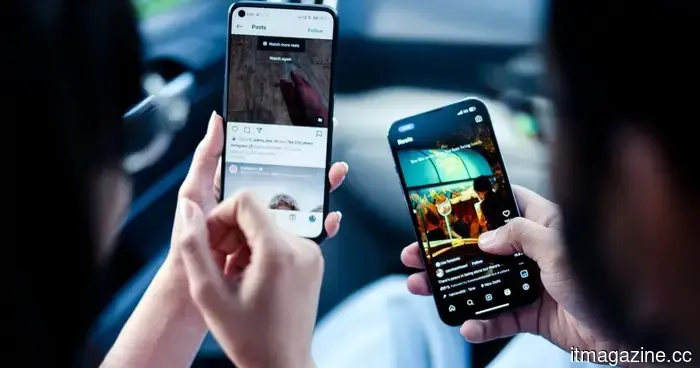 Instagram will restrict the visibility of AI influencers who do not include an AI-generated label on their profiles.
Instagram is changing the name of its AI creator label to AI-generated profile, and accounts without labels that display fake humans will now experience a reduction in their reach.
Instagram will restrict the visibility of AI influencers who do not include an AI-generated label on their profiles.
Instagram is changing the name of its AI creator label to AI-generated profile, and accounts without labels that display fake humans will now experience a reduction in their reach.
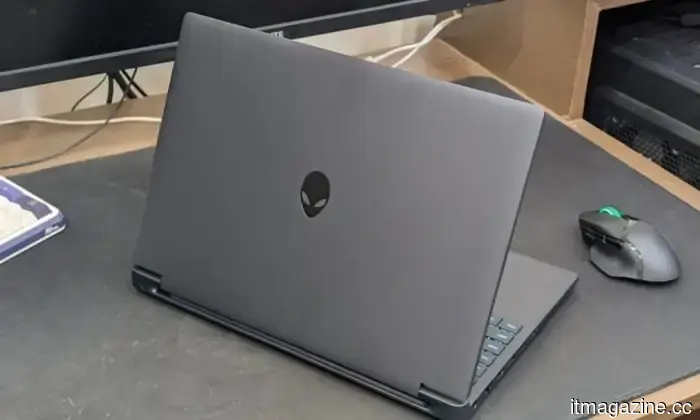 A smartwatch capable of accurately measuring real blood pressure levels is on the horizon, and it has a stylish design.
The Huawei Watch D3 features an inflatable cuff strap instead of light sensors, providing real systolic and diastolic measurements instead of an estimate based on an algorithm.
A smartwatch capable of accurately measuring real blood pressure levels is on the horizon, and it has a stylish design.
The Huawei Watch D3 features an inflatable cuff strap instead of light sensors, providing real systolic and diastolic measurements instead of an estimate based on an algorithm.
 The persistent nagging from OneDrive in Windows 11 is set to come to an end.
Windows 11 is introducing a proper option to opt-out of OneDrive backup, replacing the recurring prompts that previously allowed users to continue, postpone, or skip, but never to permanently decline.
The persistent nagging from OneDrive in Windows 11 is set to come to an end.
Windows 11 is introducing a proper option to opt-out of OneDrive backup, replacing the recurring prompts that previously allowed users to continue, postpone, or skip, but never to permanently decline.
 Next-generation speaker technology transmits music and speech directly to a single listener without disturbing those around them.
Researchers at POSTECH have created an ultrasound speaker that focuses music and speech towards a single listener, preventing the sound from dispersing broadly in the surrounding area.
Next-generation speaker technology transmits music and speech directly to a single listener without disturbing those around them.
Researchers at POSTECH have created an ultrasound speaker that focuses music and speech towards a single listener, preventing the sound from dispersing broadly in the surrounding area.
 I reviewed Amazon's Labor Day deals on earbuds, and these six are definitely worth purchasing.
I reviewed Amazon's Labor Day deals on earbuds and narrowed it down to six options to consider, ranging from the $59 Nothing earbuds to discounted Bose and AirPods.
I reviewed Amazon's Labor Day deals on earbuds, and these six are definitely worth purchasing.
I reviewed Amazon's Labor Day deals on earbuds and narrowed it down to six options to consider, ranging from the $59 Nothing earbuds to discounted Bose and AirPods.
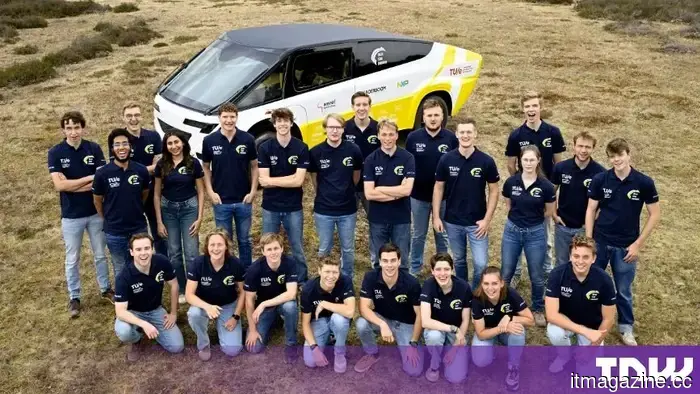 A solar-powered mobile clinic has successfully traveled 800 km throughout Kenya.
Dutch students traveled 800km across Kenya in a solar-powered ambulance, which generated more energy than it consumed. Europe has allocated 2.6 billion euros for health initiatives in Africa, but none of that funding is directed towards this project.
A solar-powered mobile clinic has successfully traveled 800 km throughout Kenya.
Dutch students traveled 800km across Kenya in a solar-powered ambulance, which generated more energy than it consumed. Europe has allocated 2.6 billion euros for health initiatives in Africa, but none of that funding is directed towards this project.
The issue of digital legacy: what becomes of those who created the memories?
Eighty-four percent of adults in the U.S. access YouTube, while seventy-one percent use Facebook; however, digital memories tend to be fragmented across different platforms without any context. The founders of Eternal Memory contend that digital legacy is a developing category in which the act of curation is more significant than the quantity.