
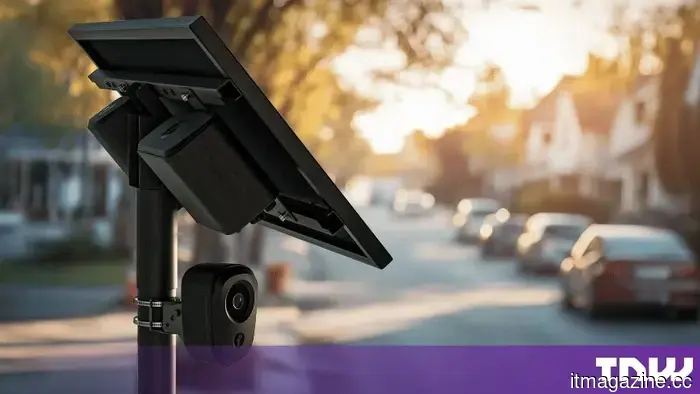
In the same week, both Florida and Texas took action against Flock cameras.
Florida has mandated the removal of all automated license plate readers from its state highways, giving agencies a 30-day timeframe to dismantle them. Just four days prior, Texas had also frozen state funding for these cameras. In less than a week, both states, governed by Republican leaders, took action against Flock Safety.
Zack Whittaker reported both developments for TechCrunch on Tuesday. The directive from Florida was communicated through a one-page memo signed by Will Watts, an assistant secretary at the state Department of Transportation, on Monday.
The memo revokes all existing permits for license plate readers within the right of way of the State Highway System and prohibits the issuance of new permits. Agencies that fail to comply by the 30-day deadline will have their cameras removed by the state.
The memo cites a “recent exponential increase in deployments” and notes “alarming reports of misuse, data privacy issues, and surveillance schemes” as reasons for the order.
A sheriff extended the memo's directive
Ron DeSantis previously described the technology as “out of control” during an event five days earlier, stating that legislative action was necessary. The memo specifically addresses state highways, making no mention of cameras used by local police or those on private property.
Despite this, several Florida agencies decided to take further action. T.K. Waters, the sheriff of Jacksonville, announced that his department would cease using the readers throughout Duval County. “LPR technology has proven to be an extremely valuable investigative tool,” Waters stated. “However, in light of the state-level decision and community concerns, I believe that discontinuing this technology is the right choice at this time.” Similar announcements were made by sheriff's offices in Franklin, Liberty, and Putnam counties.
Texans funded a quarter of their own cameras
On Thursday evening, Greg Abbott froze state funding in Texas for the cameras. The Texas Tribune published an investigation into this funding shortly thereafter.
Ayden Runnels traced the financial details for the Texas Tribune. In 2023, the legislature unanimously voted to add $1 to each Texan’s car insurance policy to combat catalytic converter theft, naming the legislation after a Harris County deputy who was fatally shot while intervening with thieves in a parking lot.
This fee has generated approximately $81 million, with a small state agency, the Motor Vehicle Crime Prevention Authority, allocating at least $30 million of that to Flock cameras. The Tribune identified at least 3,200 such cameras, although the actual number is likely higher as 124 grants lack clear records of their purchases.
The anti-surveillance group DeFlock has mapped around 13,000 Flock cameras in Texas, indicating that the insurance fee has funded one in four of them.
Grant amounts varied, with some as small as $7,000 for two cameras in Bellmead and others as large as approximately $1.7 million for 201 cameras in Dallas. Full funding was allocated for the networks in Laredo and El Paso.
“There’s nothing that they can tell us”
Miguel Rodriguez, who chairs the authority and serves as Laredo's police chief, expressed hope in 2023 that the fee would allow the state to implement cameras statewide.
In April, he discussed a $15.9 million contract aimed at placing 1,183 cameras on state land. Rodriguez laid out his plans for communities that had rejected the cameras: “I think that if for whatever reason you are within those jurisdictions that do not want Flock, let’s collaborate with DPS so we can install those in state right-of-way,” he said. “And there’s nothing that they can tell us.”
Lawmakers behind the fee told the Tribune they were unaware of these implications. “That was not my intention when we passed the bill,” said Carol Alvarado, the Houston Democrat who drafted it. Brian Harrison, a Republican from Midlothian who supported it, expressed that he could not have foreseen funding what he termed warrantless surveillance.
Cancellations surged in August
Secure Justice, an advocacy organization based in Oakland, reports that 214 municipalities have discontinued their use of Flock since 2021. Cyrus Farivar from Ars Technica noted that 93 of these cancellations occurred in August alone, marking a fourfold increase compared to July, or approximately three a day.
“Looking at that data, it’s gone parabolic,” commented Brian Hofer, the executive director of Secure Justice.
The issue has ceased to split along party lines; for instance, Tempe, Arizona, turned off its cameras last Wednesday, followed shortly by the more conservative town of Cave Creek. On the same day, Josh Hawley launched a Senate inquiry into Flock, demanding documents by September 8. Bernie Sanders stated his intent to propose legislation against mass surveillance using AI.
The actions of officers with the technology
Abbott's office highlighted a case in Lufkin, Texas, where a grand jury indicted an officer on
Другие статьи
 X stated that Chinese bots were responsible for the backlash against data centers. A researcher verified this.
A researcher from Clemson discovered that the majority of the Chinese bots that X attributed to the backlash against US data centers had no engagement at all.
X stated that Chinese bots were responsible for the backlash against data centers. A researcher verified this.
A researcher from Clemson discovered that the majority of the Chinese bots that X attributed to the backlash against US data centers had no engagement at all.
 Eddy Cue has discreetly risen to become the most influential executive at Apple.
Phil Schiller's departure garnered significant attention. A less noticed shift is that Eddy Cue has now taken over the App Store, Arcade, Health, and services.
Eddy Cue has discreetly risen to become the most influential executive at Apple.
Phil Schiller's departure garnered significant attention. A less noticed shift is that Eddy Cue has now taken over the App Store, Arcade, Health, and services.
 ICE intends to purchase robot dogs from Boston Dynamics without conducting a competitive bidding process.
ICE has announced intentions to purchase $1 million to $2 million worth of Boston Dynamics SPOT robots, without a competitive bidding process, for delivery to Fort Benning.
ICE intends to purchase robot dogs from Boston Dynamics without conducting a competitive bidding process.
ICE has announced intentions to purchase $1 million to $2 million worth of Boston Dynamics SPOT robots, without a competitive bidding process, for delivery to Fort Benning.
 John Deere introduces JD, an AI assistant designed to respond to inquiries using data specific to the farm.
John Deere introduced an AI assistant that comes with ten voluntary data principles. In the European Union, the Data Act has made the majority of these principles mandatory, imposing a new obligation starting on 12 September.
John Deere introduces JD, an AI assistant designed to respond to inquiries using data specific to the farm.
John Deere introduced an AI assistant that comes with ten voluntary data principles. In the European Union, the Data Act has made the majority of these principles mandatory, imposing a new obligation starting on 12 September.
 A researcher took control of Claude Code by requesting it to summarize a webpage.
A researcher deceived Claude Code into executing attack code as much as 80% of the time. Anthropic states that this behavior is functioning as intended.
A researcher took control of Claude Code by requesting it to summarize a webpage.
A researcher deceived Claude Code into executing attack code as much as 80% of the time. Anthropic states that this behavior is functioning as intended.
 I discovered six Labor Day phone offers that are genuinely worth purchasing.
These six phone deals from Amazon and Best Buy are the Labor Day discounts that are truly worth looking into.
I discovered six Labor Day phone offers that are genuinely worth purchasing.
These six phone deals from Amazon and Best Buy are the Labor Day discounts that are truly worth looking into.
In the same week, both Florida and Texas took action against Flock cameras.
Florida has canceled all permits for license plate readers on state highways, just a few days after Texas halted funding for Flock cameras.