

X stated that Chinese bots were responsible for the backlash against data centers. A researcher verified this.
X reported discovering a Chinese bot farm encouraging Americans to oppose AI data centers. A researcher investigating these accounts found that nearly no one had encountered them. Darren Linvill, a researcher at Clemson University, identified at least 59 of these accounts, all of which had zero engagement. He suggested that X likely suspended them before they could gain any following, describing the situation as a “non-story.” "No real people saw these posts concerning data centers," Linvill stated.
Ninety posts from January
Linvill co-directs Clemson’s Media Forensics Hub, which focuses on online disinformation. He utilized a Clemson platform that retains data from suspended X accounts and searched for an obscure hashtag visible in X’s published screenshots. This hashtag, capacityauction, yielded 90 posts, all from January. Each account shared two or three posts before being suspended by X, according to a spreadsheet Linvill provided to Business Insider, which TNW has not verified. The posts primarily consisted of links, with several directing to local reports on PJM’s 2027/2028 capacity auction, which cleared at the cap of $333.44 per MW-day but did not meet the grid operator’s reliability target. Other posts featured AI-generated cartoons depicting data center operators profiting while families opened their electricity bills.
What X disclosed—and omitted
On Thursday, X’s Global Government Affairs account announced the discovery, stating its safety team had identified a bot farm consisting of approximately 200,000 accounts, with around 200 of them demonstrating behavior that could manipulate a legitimate debate regarding American AI and energy policy. The post received 3.2 million views but did not specify any accounts or operators. Craig Hale pointed out in TechRadar the lack of details regarding connections to China, engagement or reach statistics, and what the remaining 199,800 accounts were doing. X did not refute any of the claims but described the debate as legitimate, noting that the accounts violated its authenticity policy. It has not elaborated on the extent of the 200 accounts’ reach or the content of the other 199,800 accounts.
OpenAI reported the same campaign in June
Linvill mentioned that some posts highlighted by X had been previously featured in an OpenAI threat report from June. TNW reported on that finding when OpenAI indicated that accounts linked to China had utilized ChatGPT to produce opposition to US data centers. "They are clearly connected," Linvill stated. "OpenAI identified it back in June." OpenAI referred to this operation as Data Center Bandwagon, noting that the accounts typically posted in Simplified Chinese while requesting English outputs and used VPNs to bypass restrictions from mainland China. OpenAI also documented these accounts sharing genuine news articles about capacity auctions and data center power demands.
Governor claims China is not the reason for his actions
Governor Greg Abbott has spent this month halting data center construction in Texas. When asked on Fox News on Friday if genuine concerns about data centers stemmed from China, he denied it. “I haven’t acted because of anything said by China; I’ve done it by listening to and working with constituents,” Abbott stated. “None of that pertains to China.” He acknowledged that China is attempting to influence the debate but asserted that his change in stance resulted from feedback from Texans in the communities where the projects were set to occur. He mentioned that the power demand he observed was up to five times the state's current supply capabilities.
Abbott directed the state utility commission and grid operator to protect residents from infrastructure costs. He proposed a ban on rural projects and asserted that developments must undergo audits first, claiming these regulations have prevented approximately 1,800 projects. TNW reported on his shift earlier this month when he claimed that the industry had created its own problems.
Opposition is measurable
A University of Pennsylvania survey conducted in early August showed that 61% opposed new local data centers, a 12-point increase from its earlier readings in February and March. A YouGov survey from the previous week indicated that 24% of Americans viewed new data centers positively, whereas 47% considered them detrimental. Business Insider referenced a Gallup poll from May that reported local opposition exceeding 70%. The construction has encountered widespread resistance; TNW reported in July that protests have occurred in 42 states and that over 500 moratoriums had been enacted.
Who is publishing the research
Samuel Woolley, a propaganda researcher at the University of Pittsburgh, emphasized that the opposition is both real and bipartisan. He noted that every report he has reviewed regarding Chinese data center propaganda has originated from a Big Tech company with a “vested interest” in the expansion. Elon Musk owns X, and his companies rely on data centers. “We should approach research that might have political implications skeptically,” Woolley remarked. Jim Prosser, a communications consultant and former Twitter corporate communications head, echoed this sentiment to Axios, stating that consensus between Greg Abbott and Kathy Hochul likely isn’t due to a Chinese
Другие статьи
 The Poco F9 series features a Bose-tuned subwoofer, 5x zoom capabilities, and large battery capacities.
The Poco F9 Ultra and F9 Pro elevate the brand into the flagship category with advanced Qualcomm processors, 185Hz screens, and high-quality camera components.
The Poco F9 series features a Bose-tuned subwoofer, 5x zoom capabilities, and large battery capacities.
The Poco F9 Ultra and F9 Pro elevate the brand into the flagship category with advanced Qualcomm processors, 185Hz screens, and high-quality camera components.
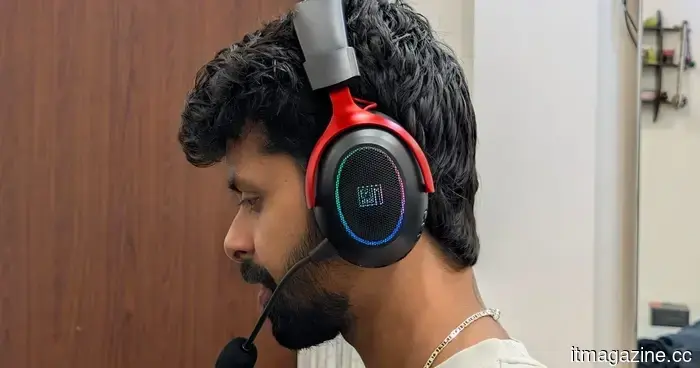 Epomaker GX1 review: This $50 gaming headset shouldn't be this impressive.
The Epomaker GX1 offers unexpectedly impressive positional audio, a high-quality detachable microphone, reliable wireless connectivity, and outstanding battery life, all for only $50.
Epomaker GX1 review: This $50 gaming headset shouldn't be this impressive.
The Epomaker GX1 offers unexpectedly impressive positional audio, a high-quality detachable microphone, reliable wireless connectivity, and outstanding battery life, all for only $50.
 I had forgotten that phones could still amaze me until I used one that has a subwoofer.
The POCO F9 Ultra combines high-end hardware with a specialized Bose-tuned subwoofer, and an energetic gathering made me realize that smartphone speakers can still be truly captivating.
I had forgotten that phones could still amaze me until I used one that has a subwoofer.
The POCO F9 Ultra combines high-end hardware with a specialized Bose-tuned subwoofer, and an energetic gathering made me realize that smartphone speakers can still be truly captivating.
 Fervo has entered into a 396MW geothermal agreement with Google, set to commence in 2028.
Google has secured a contract for up to 396MW of geothermal energy from Fervo, with the possibility of increasing it to nearly 1GW. In 2022, the European Union had approximately 1GW of geothermal capacity.
Fervo has entered into a 396MW geothermal agreement with Google, set to commence in 2028.
Google has secured a contract for up to 396MW of geothermal energy from Fervo, with the possibility of increasing it to nearly 1GW. In 2022, the European Union had approximately 1GW of geothermal capacity.
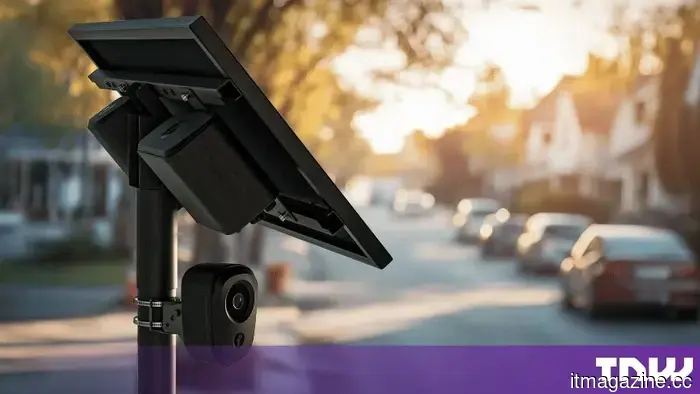 In the same week, both Florida and Texas took action against Flock cameras.
Florida has canceled all permits for license plate readers on state highways, just a few days after Texas halted funding for Flock cameras.
In the same week, both Florida and Texas took action against Flock cameras.
Florida has canceled all permits for license plate readers on state highways, just a few days after Texas halted funding for Flock cameras.
 Meta is moving away from Google Chat in favor of Slack, as it claims that agents perform more effectively on the latter platform.
Meta is said to be shifting from Google Chat to Slack, as it is deemed more suitable for AI agents. Meanwhile, European governments are transitioning to sovereign stacks without any.
Meta is moving away from Google Chat in favor of Slack, as it claims that agents perform more effectively on the latter platform.
Meta is said to be shifting from Google Chat to Slack, as it is deemed more suitable for AI agents. Meanwhile, European governments are transitioning to sovereign stacks without any.
X stated that Chinese bots were responsible for the backlash against data centers. A researcher verified this.
A researcher from Clemson discovered that the majority of the Chinese bots that X attributed to the backlash against US data centers had no engagement at all.