
John Deere introduces JD, an AI assistant designed to respond to inquiries using data specific to the farm.
John Deere has introduced JD, an AI assistant designed to respond to straightforward inquiries using a farm's own machine and field data, along with a voluntary ten-point Farmer Data Commitment. In the EU, these commitments are primarily mandated by the Data Act, which prevents manufacturers from utilizing farm data to determine a farm's value.
JD has been integrated into John Deere's farm management platform, enabling it to answer straightforward questions with the grower’s own field and machine data, as reported by Unite.AI.
The examples provided are quite specific, including comparisons of fuel usage during tillage across different years, variations in planting singulation between fields, and which sprayer operator covers the most acres per hour.
The focus is on eliminating the need to sift through data. "JD transforms the process from navigating through an overwhelming amount of data to simply asking a question," stated Jahmy Hindman, the chief technology officer, regarding the tool within the Operations Center.
Currently, the release is limited to a select group in the U.S. Interested customers can express their interest at the Farm Progress Show in Iowa, with broader availability anticipated later this year.
This launch comes with a commitment regarding data usage. The ten principles ensure that farmers maintain control over their data, that Deere does not sell their data, and that they can stop sharing it with third parties at any time.
Deere claims a strong track record in this area, noting that it was the first agricultural equipment manufacturer to receive Ag Data Transparent certification in 2018.
In Europe, these commitments became mandates a year ago with the implementation of the Data Act for connected products since September 12, 2025.
The rights under this act align closely with Deere's principles. Users can obtain their data for free in a structured, machine-readable format and can request the manufacturer to transfer it to a third party.
One aspect of the Data Act, Article 4(13), has no equivalent in the ten principles. It prohibits data holders from using this data to infer insights about a user’s financial status, assets, or production methods.
This clause targets machines like JD. A manufacturer that can access a farm's yields, fuel expenditures, and machinery hours is well-informed about the farm's purchasing capacity.
In ten days, a new obligation will come into effect. From September 12, all connected products sold in the EU must be designed to ensure the data is accessible to users by default, which is essential for startups like PerPlant in Copenhagen.
John Deere has not indicated whether JD will be available in Europe. The current early access program is exclusive to the U.S., and the assistant operates based on data already available within its platform.
This contrasts with the European system, where the value in vertical AI agriculture is shifting legally to the farmer rather than relying on promises.
Другие статьи
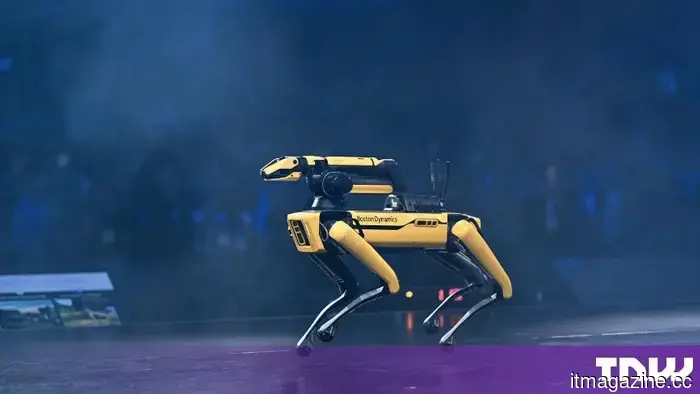 ICE intends to purchase robot dogs from Boston Dynamics without conducting a competitive bidding process.
ICE has announced intentions to purchase $1 million to $2 million worth of Boston Dynamics SPOT robots, without a competitive bidding process, for delivery to Fort Benning.
ICE intends to purchase robot dogs from Boston Dynamics without conducting a competitive bidding process.
ICE has announced intentions to purchase $1 million to $2 million worth of Boston Dynamics SPOT robots, without a competitive bidding process, for delivery to Fort Benning.
 These 6 smart home deals for Labor Day address genuine issues.
Six smart home offers for Labor Day from Amazon and Best Buy that can genuinely enhance the functionality of your home.
These 6 smart home deals for Labor Day address genuine issues.
Six smart home offers for Labor Day from Amazon and Best Buy that can genuinely enhance the functionality of your home.
 Apple has appointed a new CEO, and Tim Cook endorsed this decision by referencing Steve Jobs.
John Ternus has taken over as Apple's CEO following Tim Cook's 15-year tenure. In Cook's farewell memo, he referenced Steve Jobs, and he will continue to serve as executive chair.
Apple has appointed a new CEO, and Tim Cook endorsed this decision by referencing Steve Jobs.
John Ternus has taken over as Apple's CEO following Tim Cook's 15-year tenure. In Cook's farewell memo, he referenced Steve Jobs, and he will continue to serve as executive chair.
 The Sonos Ace Ultra includes a feature that I wish all headphones had.
The Sonos Ace Ultra features improved noise cancellation, extended battery life, and an innovative method for transferring audio between your headphones and Sonos speakers without the need to use your phone.
The Sonos Ace Ultra includes a feature that I wish all headphones had.
The Sonos Ace Ultra features improved noise cancellation, extended battery life, and an innovative method for transferring audio between your headphones and Sonos speakers without the need to use your phone.
 In the same week, both Florida and Texas took action against Flock cameras.
Florida has canceled all permits for license plate readers on state highways, just a few days after Texas halted funding for Flock cameras.
In the same week, both Florida and Texas took action against Flock cameras.
Florida has canceled all permits for license plate readers on state highways, just a few days after Texas halted funding for Flock cameras.
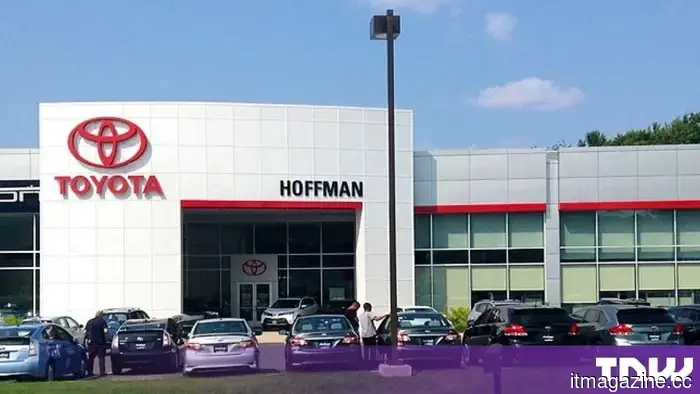 Toyota's system resembling FSD will be introduced in 2028, but the driver remains responsible.
Toyota's competitor to FSD is set to launch in 2028, labeled as Level 2++, while maintaining driver responsibility. Starting December 9, the EU will classify the software itself as a product.
Toyota's system resembling FSD will be introduced in 2028, but the driver remains responsible.
Toyota's competitor to FSD is set to launch in 2028, labeled as Level 2++, while maintaining driver responsibility. Starting December 9, the EU will classify the software itself as a product.
John Deere introduces JD, an AI assistant designed to respond to inquiries using data specific to the farm.
John Deere introduced an AI assistant that comes with ten voluntary data principles. In the European Union, the Data Act has made the majority of these principles mandatory, imposing a new obligation starting on 12 September.