
LG Energy Solution enters into a 10-year lithium agreement in Arkansas beginning in 2029.
LG Energy Solution has entered into a binding 10-year take-or-pay agreement to acquire 8,000 tonnes annually of battery-grade lithium carbonate from Smackover Lithium in Arkansas, a joint venture where Norway’s state-controlled Equinor holds 45%, starting in 2029. Earlier, in January 2022, LG made a similar offtake agreement with Vulcan Energy in Germany, scheduled to commence deliveries in 2025.
The American lithium purchased by LG will consist of 8,000 tonnes a year of battery-grade carbonate beginning in 2029, according to Bloomberg. The supplier has Norwegian ties; Smackover Lithium is a joint venture with Standard Lithium operating 55% of it, while Equinor owns the remaining 45%.
Equinor itself is not a mining enterprise; it is two-thirds owned by the Norwegian state, which invested in two projects by Standard Lithium in May 2024, paying $30 million for past expenses and development support.
The lithium is situated deep underground, approximately two miles beneath Arkansas, existing in brine within limestone and extracted chemically rather than through traditional mining methods.
This binding take-or-pay agreement represents the second of its kind for the project, following a similar deal for 8,000 tonnes with trader Trafigura in March, and together they account for about 90% of the planned offtake.
The vision has expanded beyond just automotive applications. “Data centers cannot function without energy storage,” stated Standard Lithium CEO David Park in a Bloomberg interview.
In Europe, the geological conditions resemble those of Lithium resources, yet the industry is lacking. According to the European Commission's raw materials factsheet, the EU contributes less than 0.1% to global lithium mine production.
Processing shows an even worse scenario. The same factsheet indicates a 100% dependency on imports for processing, compared to the Critical Raw Materials Act's goal of having 40% of consumption met by EU processing by 2030.
Vulcan Energy’s Lionheart project in the Upper Rhine Valley is a similar scale initiative, aiming to produce 24,000 tonnes a year of lithium hydroxide from geothermal brine, which impacts Europe's battery ambitions.
LG was the first to secure lithium from that project, signing a binding agreement with Vulcan in January 2022 for 41,000 to 50,000 tonnes over five years, with deliveries anticipated to begin in 2025.
So far, those deliveries have not yet started. Vulcan reached its final investment decision in December 2025, began construction of its Frankfurt facility in April, and aims to achieve commercial production by 2028, in a market transformed by Northvolt.
This presents a notable comparison: the European contract signed four years ago was expected to deliver last year, while the American contract signed recently is slated for 2029.
Recycling is progressing more swiftly than traditional drilling. The first industrial battery recycling facility in Europe opened this year, and the 25% recycling benchmark established by the Act is the only one that does not require the drilling of new boreholes.
Other articles
 Huawei’s latest competitor to the Galaxy Z TriFold features a double-fold design, has a capacity of 2TB, and is strikingly designed in purple.
Huawei's upcoming tri-fold features a new inward-folding design that safeguards its large flexible display, while also incorporating 2TB of storage, stylus compatibility, privacy screen options, and three elegant finishes.
Huawei’s latest competitor to the Galaxy Z TriFold features a double-fold design, has a capacity of 2TB, and is strikingly designed in purple.
Huawei's upcoming tri-fold features a new inward-folding design that safeguards its large flexible display, while also incorporating 2TB of storage, stylus compatibility, privacy screen options, and three elegant finishes.
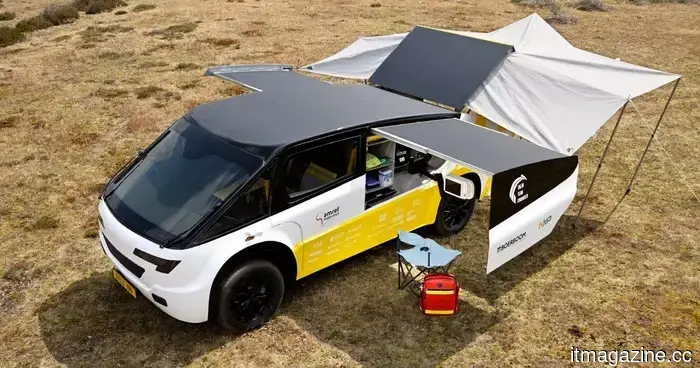 A solar-powered ambulance has successfully navigated 500 miles of challenging terrain.
A solar-powered ambulance created by Solar Team Eindhoven has successfully finished an 800-kilometer trial in Kenya, demonstrating its ability to reach remote clinics and provide power for medical devices.
A solar-powered ambulance has successfully navigated 500 miles of challenging terrain.
A solar-powered ambulance created by Solar Team Eindhoven has successfully finished an 800-kilometer trial in Kenya, demonstrating its ability to reach remote clinics and provide power for medical devices.
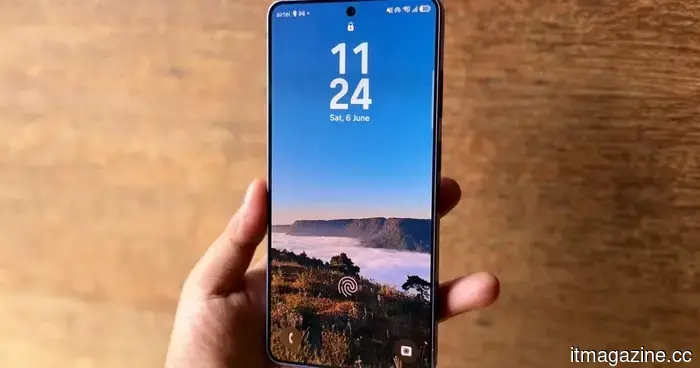 Several Galaxy S26 Ultra users continue to experience the red tint problem even after applying the latest fix.
Samsung recently released a solution for the red tint problem impacting certain Galaxy S26 Ultra devices, but a new report indicates that it does not fix the issue for all users.
Several Galaxy S26 Ultra users continue to experience the red tint problem even after applying the latest fix.
Samsung recently released a solution for the red tint problem impacting certain Galaxy S26 Ultra devices, but a new report indicates that it does not fix the issue for all users.
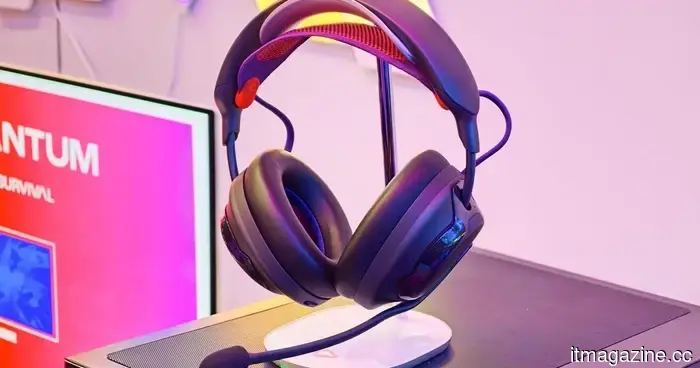 JBL believes that the future of gaming audio lies in being more intelligent, not merely wireless.
I had a conversation with Gordon Tong from JBL at Gamescom 2026 regarding wireless gaming, 50mm carbon drivers, AI-driven footsteps, and the company’s approach to Quantum.
JBL believes that the future of gaming audio lies in being more intelligent, not merely wireless.
I had a conversation with Gordon Tong from JBL at Gamescom 2026 regarding wireless gaming, 50mm carbon drivers, AI-driven footsteps, and the company’s approach to Quantum.
 Hugging Face is offering a robot duck priced at $399 that comes with open-source software.
Hugging Face's Microduck is an open-source robot duck priced at $399 that can walk, skate, and lift approximately 100 grams. Preorders are available now, with shipping expected by Christmas.
Hugging Face is offering a robot duck priced at $399 that comes with open-source software.
Hugging Face's Microduck is an open-source robot duck priced at $399 that can walk, skate, and lift approximately 100 grams. Preorders are available now, with shipping expected by Christmas.
 ChatGPT Ads reaches an annualized figure of $1 billion as the EU regulates it under the Digital Services Act.
OpenAI reports that ChatGPT Ads has achieved an annualized revenue of $1 billion and has launched self-service purchasing in Europe, coinciding with the Commission's designation under the DSA.
ChatGPT Ads reaches an annualized figure of $1 billion as the EU regulates it under the Digital Services Act.
OpenAI reports that ChatGPT Ads has achieved an annualized revenue of $1 billion and has launched self-service purchasing in Europe, coinciding with the Commission's designation under the DSA.
LG Energy Solution enters into a 10-year lithium agreement in Arkansas beginning in 2029.
LG Energy reached a 10-year lithium offtake agreement with an Arkansas project in which Equinor holds a 45% stake. The contract established in 2022 for German lithium is set to fulfill deliveries by 2025.