

ChatGPT Ads reaches an annualized figure of $1 billion as the EU regulates it under the Digital Services Act.
OpenAI has announced that ChatGPT Ads has achieved an annualized revenue run rate of $1 billion within just 200 days and has introduced self-service buying options across Europe, India, the Middle East, and North Africa. On the same day, the European Commission classified ChatGPT as a Very Large Online Search Engine under the Digital Services Act, citing 159.1 million reported monthly users in the EU.
According to OpenAI, ChatGPT's advertising division has reached $1 billion in annualized revenue in less than 200 days, with self-service buying now available in Europe, India, the Middle East, and North Africa. The explanation provided is the existence of a free tier. Advertising coexists with subscription services, enterprise contracts, and paid API access, which support a free ChatGPT used by over a billion users weekly.
Additionally, it was reported on the same day, although not mentioned by OpenAI, that the European Commission classified ChatGPT as a Very Large Online Search Engine under the Digital Services Act, as reported by Euronews. The trigger for this classification is the 159.1 million average monthly active users in the EU, exceeding the threshold of 45 million.
ChatGPT had already begun being marketed in Europe, with TNW reporting earlier this month that ChatGPT ads were reaching clients in 31 European countries through OpenAI's own sales force and its partners. What changed is the accessibility for buyers; Ads Manager now allows any business to purchase ads directly, enabling small and medium enterprises to enter a market previously dominated by agencies.
One responsibility that comes with this designation is that designated platforms and search engines must maintain a public advertisement repository, according to the Commission's guidelines. This repository must include a year's worth of historical data after an ad concludes, detailing the content, the sponsoring party, the duration of the ad, the targeting parameters used, and the audience reach.
Currently, advertising purchasing is sufficiently detailed to warrant interest, with cost per click and outcome-optimized bidding representing the majority of campaigns, following TNW's coverage of the shift to CPC. It is unlikely that the stricter advertising regulations will apply, as the prohibition on ads that use sensitive data is aimed at online platform providers, while ChatGPT has been identified as a search engine.
The announcement also addresses personalization. OpenAI states that the system may leverage a user's broader interactions with ChatGPT, depending on their country and settings, as part of developing conversational ads.
The extent of the classification's implications remains publicly unclear. ChatGPT is supervised by Ireland’s digital services coordinator, and OpenAI has four months to comply with the requirements that come with this designation. This timing is noteworthy because users share information with chatbots that they typically would not enter into a search engine, yet the regulations applicable to that data are directed at a category distinct from where ChatGPT has been classified.
Other articles
 Google Maps features another "America," and Canadians are not pleased.
Google Maps is now referring to Lake Ontario as “Lake America” for users in the U.S., following the same regional naming strategy it implemented for the Gulf of Mexico last year.
Google Maps features another "America," and Canadians are not pleased.
Google Maps is now referring to Lake Ontario as “Lake America” for users in the U.S., following the same regional naming strategy it implemented for the Gulf of Mexico last year.
 LG Energy Solution enters into a 10-year lithium agreement in Arkansas beginning in 2029.
LG Energy reached a 10-year lithium offtake agreement with an Arkansas project in which Equinor holds a 45% stake. The contract established in 2022 for German lithium is set to fulfill deliveries by 2025.
LG Energy Solution enters into a 10-year lithium agreement in Arkansas beginning in 2029.
LG Energy reached a 10-year lithium offtake agreement with an Arkansas project in which Equinor holds a 45% stake. The contract established in 2022 for German lithium is set to fulfill deliveries by 2025.
 NASA's latest telescope can capture 100 times more of the sky than Hubble does in one image.
NASA's Roman Space Telescope has started its journey of a million miles to L2, equipped with a wide-angle infrared camera aimed at mapping billions of galaxies and discovering thousands of planets.
NASA's latest telescope can capture 100 times more of the sky than Hubble does in one image.
NASA's Roman Space Telescope has started its journey of a million miles to L2, equipped with a wide-angle infrared camera aimed at mapping billions of galaxies and discovering thousands of planets.
 Several Galaxy S26 Ultra users continue to experience the red tint problem even after applying the latest fix.
Samsung recently released a solution for the red tint problem impacting certain Galaxy S26 Ultra devices, but a new report indicates that it does not fix the issue for all users.
Several Galaxy S26 Ultra users continue to experience the red tint problem even after applying the latest fix.
Samsung recently released a solution for the red tint problem impacting certain Galaxy S26 Ultra devices, but a new report indicates that it does not fix the issue for all users.
 Huawei’s latest competitor to the Galaxy Z TriFold features a double-fold design, has a capacity of 2TB, and is strikingly designed in purple.
Huawei's upcoming tri-fold features a new inward-folding design that safeguards its large flexible display, while also incorporating 2TB of storage, stylus compatibility, privacy screen options, and three elegant finishes.
Huawei’s latest competitor to the Galaxy Z TriFold features a double-fold design, has a capacity of 2TB, and is strikingly designed in purple.
Huawei's upcoming tri-fold features a new inward-folding design that safeguards its large flexible display, while also incorporating 2TB of storage, stylus compatibility, privacy screen options, and three elegant finishes.
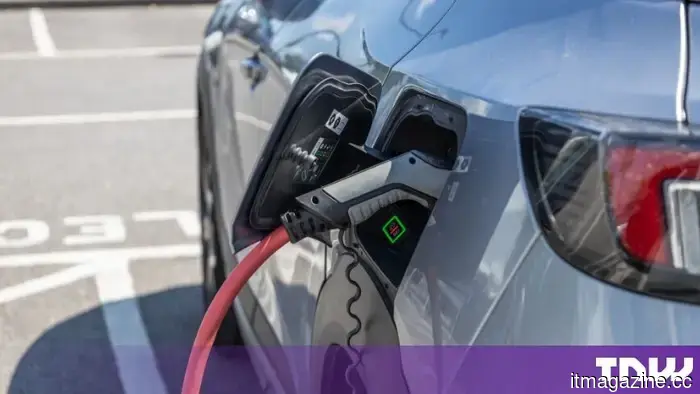 Oslo doesn’t require fast chargers in every location, and it demonstrates this on a daily basis.
Approximately 78% of Oslo's 4,519 public charging stations are slow AC chargers, and almost half of the vehicles in the city are electric. The right to plug in across Europe will take effect in May 2026.
Oslo doesn’t require fast chargers in every location, and it demonstrates this on a daily basis.
Approximately 78% of Oslo's 4,519 public charging stations are slow AC chargers, and almost half of the vehicles in the city are electric. The right to plug in across Europe will take effect in May 2026.
ChatGPT Ads reaches an annualized figure of $1 billion as the EU regulates it under the Digital Services Act.
OpenAI reports that ChatGPT Ads has achieved an annualized revenue of $1 billion and has launched self-service purchasing in Europe, coinciding with the Commission's designation under the DSA.