
Honda and Nissan will collaborate and utilize shared software in their vehicles starting in 2029.
Eighteen months after their proposed merger collapsed over control issues, Honda and Nissan have decided to collaborate on the software used in their vehicles.
The two companies signed a joint development agreement on Monday that pertains to electronic control units, an in-vehicle operating system, middleware, and vehicle control software, with the first models expected to be ready by fiscal 2029. This agreement is more focused than a merger and, from an engineering perspective, is more integrated. Standardizing core ECUs necessitates consensus on the computers that manage the brakes, steering, battery, and cabin, as well as the connections among them.
Both companies presented their choice as driven by the need for speed and cost efficiency. The stated reasons were shorter development cycles and better investment returns, following what they described as thorough analyses of potential collaborations in the software sector. No details regarding costs or savings were provided, no suppliers were mentioned, nor were any executives quoted, and the specific ECUs to be standardized were not disclosed.
Fiscal 2029 is crucial to consider. This timeline indicates that architecture work must be finalized well in advance of the first vehicle's arrival in showrooms, highlighting the long-term nature of such decisions and the limited scope for changes later on.
The components being standardized are those that consumers do not see but deeply notice. Issues like a faltering operating system, failed over-the-air updates, or incompatible control units can severely impact the perception of a car's modernity.
The challenge both companies are tackling is significant and extends beyond Japan. Modern vehicles depend on tens of millions of lines of code across various controllers, with manufacturers facing high costs associated with solo development that were not an issue for engines.
The solution lies in scale. Arm has suggested that the industry requires unified foundations rather than numerous custom stacks, which is exactly what the two automakers achieving operating system collaboration represents.
Competitive pressure is emerging from a specific source. BYD has developed its own 4nm driving chip and is incorporating LiDAR into a $10,000 vehicle, a level of vertical integration that neither Japanese firm can independently achieve.
Chinese brands have been rapidly gaining market share in Europe, largely due to the software experience they offer in vehicles. Consumers comparing a Chinese EV to a Japanese counterpart in 2029 will likely evaluate their operating systems as much as their drivetrains.
What makes this agreement particularly significant is the context from which it arises. Merger discussions fell apart in February 2025 when Honda suggested making Nissan a wholly owned subsidiary, a proposal Nissan rejected, leading both companies to back away.
Collaborating on an operating system without shared ownership poses a greater challenge. Future disagreements over features, release timelines, or security updates will need to be resolved between two independent entities with differing product cycles and issues.
There’s a well-known precedent in the industry. Shared platforms have been successful for decades, involving fixed specifications for metal and tooling, while software decisions continue long after the vehicle is launched.
Nissan faces more pressing concerns, having spent the time since the merger’s failure restructuring. Honda, being the larger and more stable partner, reflects the imbalance that contributed to the merger's downfall and remains unchanged.
Both companies have expressed their intention to continue seeking collaboration in other areas, mentioning shared goals like carbon neutrality and reducing traffic fatalities. These are ambitions rather than formal agreements, and this distinction is important in their announcement.
What is currently in place is a signed document, a clearly defined technical scope, and a timeline leading to 2029. Whether this collaboration endures will depend more on the two organizations rather than strictly on the software itself.
Other articles
 What if the first embodied AI you encounter is a combat robot?
Often, when we discuss embodied intelligence, the initial thoughts that arise are related to factories, warehouses, and robots performing tangible tasks.
What if the first embodied AI you encounter is a combat robot?
Often, when we discuss embodied intelligence, the initial thoughts that arise are related to factories, warehouses, and robots performing tangible tasks.
 Singapore is investing S$220 million in fintech as private funding reaches a ten-year low.
MAS pledged S$220 million over a three-year period as part of FSTI 4.0, just three days after KPMG reported that fintech investments in Singapore decreased to $499 million in the first half of the year.
Singapore is investing S$220 million in fintech as private funding reaches a ten-year low.
MAS pledged S$220 million over a three-year period as part of FSTI 4.0, just three days after KPMG reported that fintech investments in Singapore decreased to $499 million in the first half of the year.
 Meta plans to spend as much as $10 billion annually on Anthropic's AI models.
Internally, Meta estimated expenditures of up to $10 billion annually on Anthropic's AI models, even as Zuckerberg publicly criticized the company.
Meta plans to spend as much as $10 billion annually on Anthropic's AI models.
Internally, Meta estimated expenditures of up to $10 billion annually on Anthropic's AI models, even as Zuckerberg publicly criticized the company.
 Sony and Warner have filed a lawsuit against Anthropic regarding the use of copyrighted music in the training of Claude, aiming for $150,000 for each track.
Sony Music and Warner Chappell have filed a lawsuit against Anthropic, claiming that the company illegally used tens of thousands of songs to train Claude.
Sony and Warner have filed a lawsuit against Anthropic regarding the use of copyrighted music in the training of Claude, aiming for $150,000 for each track.
Sony Music and Warner Chappell have filed a lawsuit against Anthropic, claiming that the company illegally used tens of thousands of songs to train Claude.
 The Justice Department revised its hacking announcement two days afterward.
A DOJ statement indicated that Chinese hackers had targeted the Senate, the Fed, and NASA. The updated version clarifies that they were targets, and only a portion of them were compromised.
The Justice Department revised its hacking announcement two days afterward.
A DOJ statement indicated that Chinese hackers had targeted the Senate, the Fed, and NASA. The updated version clarifies that they were targets, and only a portion of them were compromised.
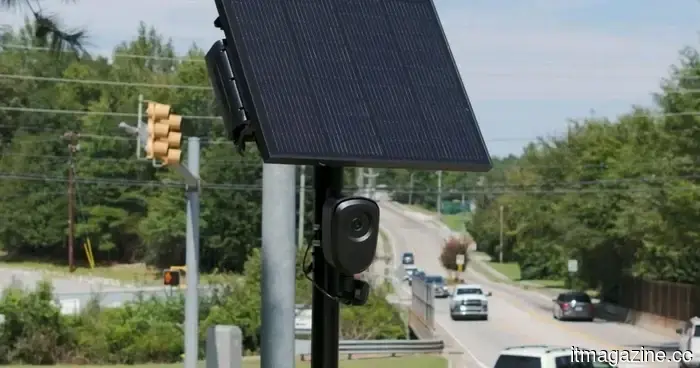 Just $1 was enough for Texas to fill the state with Flock surveillance cameras funded by motorists.
Approximately 3,200 Flock cameras in Texas were financed by funds generated from a $1 auto insurance fee that was initially authorized to address vehicle crime.
Just $1 was enough for Texas to fill the state with Flock surveillance cameras funded by motorists.
Approximately 3,200 Flock cameras in Texas were financed by funds generated from a $1 auto insurance fee that was initially authorized to address vehicle crime.
Honda and Nissan will collaborate and utilize shared software in their vehicles starting in 2029.
Eighteen months after their merger discussions failed, the two Japanese automakers reached an agreement to standardize electronic control units, an in-vehicle operating system, and control software.