
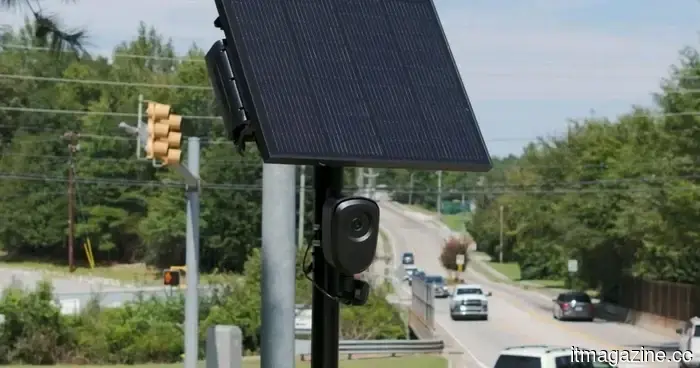
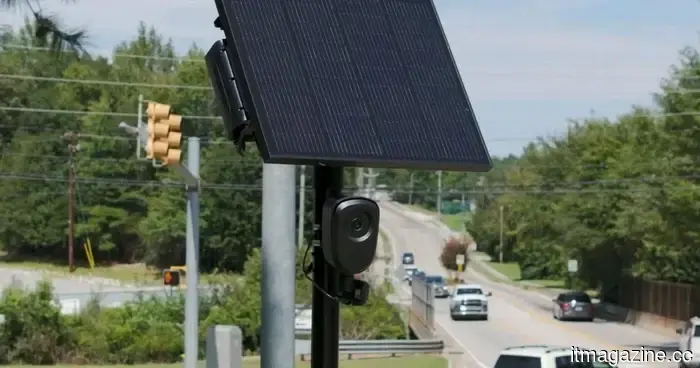
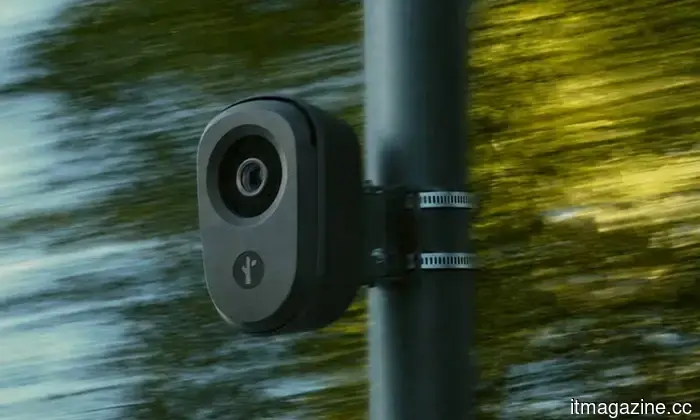
Just $1 was enough for Texas to fill the state with Flock surveillance cameras funded by motorists.
Texas drivers aided in funding approximately 3,200 Flock cameras through a fee designed to combat vehicle crime.
According to crowdsourced estimates from DeFlock, Texas may already have around 13,000 Flock surveillance cameras monitoring its roads. Even more remarkable is that a significant portion of these cameras appears to have been financed by Texans themselves.
An investigation by the Texas Tribune found that at least 3,200 Flock cameras were funded using revenues generated from a $1 annual fee added to auto insurance policies. Based on DeFlock’s estimates, about a quarter of the identified cameras throughout Texas can be linked to this funding.
The $1 fee aimed to combat car crime
Texas implemented the additional fee in 2023 amid a rise in catalytic converter thefts. Since then, it has raised an estimated $81 million. The legislation did not specify the use for automatic license plate readers. Nevertheless, at least $30 million has been allocated for Flock installations, including grants that enabled local law enforcement to acquire around 2,000 cameras and a $15.9 million investment covering nearly 1,200 cameras for the Texas Department of Public Safety.
Several lawmakers who approved the fee expressed to the Tribune that they did not anticipate it would fund a statewide license plate surveillance network.
The opposition is evolving beyond protests
We recently reported on how opposition to Flock cameras has spread nationwide, leading some cities to end contracts while residents block or vandalize cameras. Texas now presents more tangible instances of public concern.
A former police officer in Katy has been charged with stalking and misuse of official information after allegedly using the department’s Flock cameras and other tracking tools to monitor his ex-wife for several months.
The resistance is also reaching the ballot box. Voters in League City will be asked on November 3 whether local police should continue utilizing fixed Flock license plate readers. Bandera has already terminated its own Flock contract following months of public dissent.
Governor Greg Abbott has since paused state funding for local Flock grants. Through a nominal fee that could easily be overlooked on an insurance bill, Texans inadvertently helped finance thousands of surveillance cameras, funding that many lawmakers who endorsed the fee claim was not their intention.
A solar ambulance has successfully navigated 500 miles of challenging terrain.
For years, solar-powered vehicles have primarily existed in prototype form, university projects, and ambitious demonstrations. Now, one has achieved a practical milestone far more significant than a flashy concept reveal: it traveled hundreds of miles over rugged terrain while carrying medical equipment and generating enough power to operate independently.
Named Stella Juva, the vehicle was developed by Solar Team Eindhoven, comprising 23 students from Eindhoven University of Technology and two other educational institutions. According to a CNN report, the team claims it is the world's first solar ambulance. Unlike traditional ambulances, Stella Juva is intended not to rush patients to hospitals but to deliver medical care to those who have difficulty accessing it.
The pushback against Flock surveillance cameras has sparked a vigilante movement in the US.
As public trust in automated license plate readers declines, Americans are taking action to obstruct police surveillance technology.
Drive down nearly any main street in the US, and it’s likely that an AI-powered camera is monitoring. Over recent years, police departments nationwide have quietly installed thousands of automated license plate readers to oversee daily traffic. However, while law enforcement has marketed these as essential crime-fighting tools, increasing fears regarding continuous location tracking and unauthorized police misuse have led to widespread backlash.
Flock Safety, an Atlanta-based company, is at the heart of this conflict, as its roadside units scan and log billions of vehicle details each month. Police departments argue that these automated license plate readers are crucial for tracking stolen vehicles and locating missing persons. Yet privacy advocates caution that recording everyday movements leads to a massive government database susceptible to misuse and infringes upon fundamental Fourth Amendment rights.
Volkswagen's new $20,000 electric SUV highlights what US buyers are missing.
Volkswagen has begun presales for the ID. Aura T6 in China, and its starting price is one that will make American EV shoppers question what they are paying for at home. This new five-seat electric crossover begins at 135,900 yuan, approximately $20,225, as reported by CarNewsChina.
This price is particularly impressive given that the ID. Aura T6 is not a basic city vehicle. It is a midsize electric SUV featuring two battery options, a large central display, driver-assistance technology, and a claimed range of up to 660 km under China’s CLTC testing cycle. The lingering question, of course, is whether a vehicle priced this affordably could ever be available in the US.



Other articles
 Apple is experimenting with continuous heart rate monitoring for upcoming Apple Watch models.
Apple is experimenting with continuous heart rate monitoring for the Apple Watch, potentially providing more comprehensive fitness and wellness data throughout the day.
Apple is experimenting with continuous heart rate monitoring for upcoming Apple Watch models.
Apple is experimenting with continuous heart rate monitoring for the Apple Watch, potentially providing more comprehensive fitness and wellness data throughout the day.
 A new oversight organization is monitoring incidents of AI behaving improperly, and the number of occurrences is likely to make you anxious.
According to recent research, in July, incidents of AI models deceiving, plotting, and circumventing security measures nearly doubled, including an actual hacking campaign involving Anthropic and OpenAI models.
A new oversight organization is monitoring incidents of AI behaving improperly, and the number of occurrences is likely to make you anxious.
According to recent research, in July, incidents of AI models deceiving, plotting, and circumventing security measures nearly doubled, including an actual hacking campaign involving Anthropic and OpenAI models.
 OpenAI has begun allowing certain customers to pay only when the AI performs successfully.
According to a report by The Information, select large accounts can now pay for completed tasks instead of using tokens, following in the footsteps of Intercom, Zendesk, and Salesforce in adopting outcome-based pricing.
OpenAI has begun allowing certain customers to pay only when the AI performs successfully.
According to a report by The Information, select large accounts can now pay for completed tasks instead of using tokens, following in the footsteps of Intercom, Zendesk, and Salesforce in adopting outcome-based pricing.
 Sony and Warner have filed a lawsuit against Anthropic regarding the use of copyrighted music in the training of Claude, aiming for $150,000 for each track.
Sony Music and Warner Chappell have filed a lawsuit against Anthropic, claiming that the company illegally used tens of thousands of songs to train Claude.
Sony and Warner have filed a lawsuit against Anthropic regarding the use of copyrighted music in the training of Claude, aiming for $150,000 for each track.
Sony Music and Warner Chappell have filed a lawsuit against Anthropic, claiming that the company illegally used tens of thousands of songs to train Claude.
 Singapore is investing S$220 million in fintech as private funding reaches a ten-year low.
MAS pledged S$220 million over a three-year period as part of FSTI 4.0, just three days after KPMG reported that fintech investments in Singapore decreased to $499 million in the first half of the year.
Singapore is investing S$220 million in fintech as private funding reaches a ten-year low.
MAS pledged S$220 million over a three-year period as part of FSTI 4.0, just three days after KPMG reported that fintech investments in Singapore decreased to $499 million in the first half of the year.
 Feeling the impact of OpenAI removing GPT models from Cursor? Anthropic provides a timely alternative with increased limits for Claude.
Anthropic is offering increased computing power for Claude within Cursor as OpenAI plans to end its model-access agreement with the coding platform.
Feeling the impact of OpenAI removing GPT models from Cursor? Anthropic provides a timely alternative with increased limits for Claude.
Anthropic is offering increased computing power for Claude within Cursor as OpenAI plans to end its model-access agreement with the coding platform.
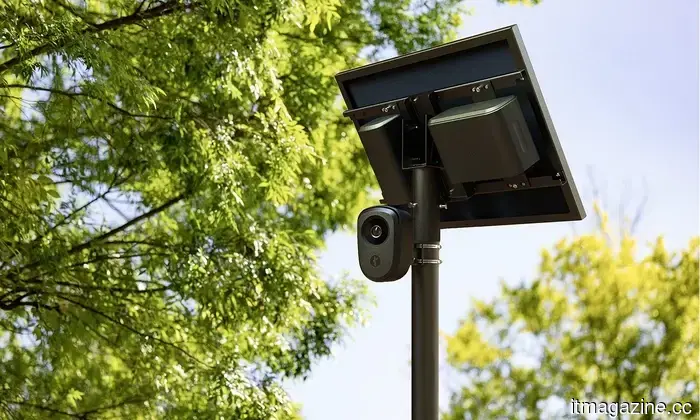
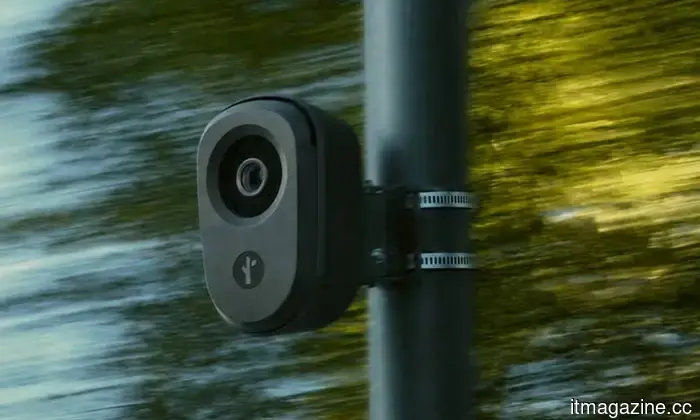
Just $1 was enough for Texas to fill the state with Flock surveillance cameras funded by motorists.
Approximately 3,200 Flock cameras in Texas were financed by funds generated from a $1 auto insurance fee that was initially authorized to address vehicle crime.