

Singapore is investing S$220 million in fintech as private funding reaches a ten-year low.
Singapore has pledged S$220 million, approximately $173 million, to its fintech sector over the next three years. This announcement came just three days after KPMG revealed that private investment in Singaporean fintech had reached its lowest level for the first half of the year in nearly a decade.
The timing is intentional, and it is clear to all involved. Gan Kim Yong, the Deputy Prime Minister, Minister of Trade and Industry, and Chairman of the Monetary Authority of Singapore, detailed this commitment on Monday.
The funding will be allocated through the fourth phase of the Financial Sector Technology and Innovation (FSTI) scheme, which has been in operation since 2015 and has supported over 350 projects. FSTI 4.0 is divided into six tracks focusing on institutional innovation, AI adoption, infrastructure and platforms, and talent development.
The talent track features the most concrete commitment, with plans to create at least 1,000 fintech internships over the next three years, with stipends being co-funded. This approach represents a direct intervention in the labor market rather than a grant initiative.
“These initiatives will assist our financial institutions, fintech companies, and employees in innovating, scaling, and developing capabilities to capitalize on emerging opportunities,” Gan remarked. He positioned the AI opportunity in terms of seizing prospects instead of defensive strategies, emphasizing that the financial sector is not a zero-sum game.
The private market, however, presents a gloomier picture. Singaporean fintech firms raised $499 million across 53 deals in the first half of 2026, a decline from $1.45 billion across 97 deals during the same timeframe last year.
The breakdown reveals an even grimmer scenario. One significant $320 million round in cross-border payments in June constituted nearly two-thirds of the total amount raised, meaning the remaining ecosystem shared roughly $179 million.
While deal count decreased less significantly than total value, dropping from 97 to 53, this illustrates a market that continues to engage but at smaller transaction sizes, rather than one that has ground to a halt. The typical pattern in a downturn sees early-stage activities holding robust while larger growth rounds diminish.
When examining by sector, the trend is recognizable. AI and machine learning amassed $365.9 million across 18 deals, while digital assets accounted for 27 deals totaling $95.5 million, indicating that the crypto sector remains active and AI is attracting significant investment.
This situation does not imply that Singapore is a minor market; it is home to around 1,800 fintech companies employing roughly 10,000 people, and the sector garnered approximately S$3 billion in 2025 prior to the decline.
The downturn is not unique to Singapore, providing broader context. Funding for UK fintech also fell to a decade low this year, and funding rounds across Europe are being completed amidst a general downturn rather than a recovery.
Singapore has a specific motivation to act without delay, as its financial center competes directly with Hong Kong, Dubai, and London for the same businesses, and a hub that appears stagnant for two years cannot simply pick up where it left off.
What sets Singapore apart is its response strategy. The UK opted for a £1 billion private growth fund to fill an identified gap, while Singapore is relatively modestly allocating public funds into infrastructure, adoption, and human resources.
S$220 million will not replace the billion dollars in private capital that has disappeared, nor is it intended to. Co-funding an internship or an AI initiative reduces the risks associated with experimentation, which is distinct from directly investing in equity.
The effectiveness of this approach hinges on the reasons behind the decline. If investors have merely adjusted their valuations of fintech globally, lower-cost experiments could sustain companies until market sentiment improves. Conversely, if Singapore is losing competitiveness to rival hubs, a talent subsidy alone will not rectify the situation.
FSTI, however, benefits from a solid track record. With eleven years of operation and 350 projects, there is ample evidence of the scheme's strengths, which is more than can be said for many industrial policies at the time of renewal.
The government is banking on this initial initiative—three years, six tracks, a thousand internships—and aims to be strategically positioned when investment returns.
Altri articoli
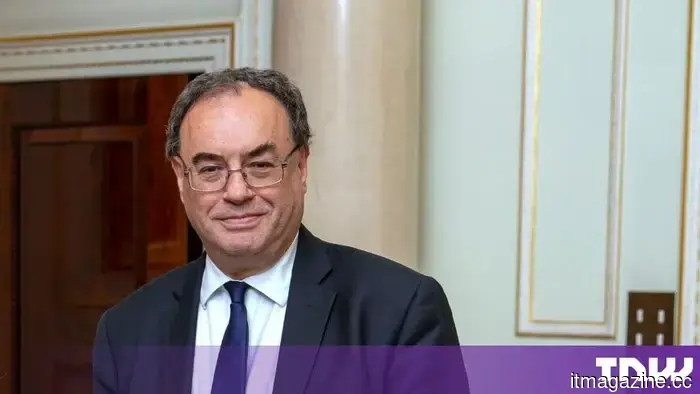 Gli attacchi informatici guidati dall'IA sono ora il principale rischio per il sistema finanziario, afferma l'FSB.
Andrew Bailey ha detto ai ministri delle finanze del G20 che l'IA cambia la velocità, la scala e l'economia di un attacco informatico, ponendolo al di sopra di ogni altra preoccupazione per la stabilità.
Gli attacchi informatici guidati dall'IA sono ora il principale rischio per il sistema finanziario, afferma l'FSB.
Andrew Bailey ha detto ai ministri delle finanze del G20 che l'IA cambia la velocità, la scala e l'economia di un attacco informatico, ponendolo al di sopra di ogni altra preoccupazione per la stabilità.
 SB Energy ha dato a OpenAI 5,5 miliardi di dollari in warrant per firmare un contratto di locazione di 20 anni.
Il sviluppatore di proprietà di SoftBank ha emesso i warrant per garantire OpenAI come inquilino principale di un campus da dieci gigawatt in Ohio. Sono aumentati di 1,9 miliardi di dollari da gennaio.
SB Energy ha dato a OpenAI 5,5 miliardi di dollari in warrant per firmare un contratto di locazione di 20 anni.
Il sviluppatore di proprietà di SoftBank ha emesso i warrant per garantire OpenAI come inquilino principale di un campus da dieci gigawatt in Ohio. Sono aumentati di 1,9 miliardi di dollari da gennaio.
 Gli scribi AI stanno sbagliando i nomi dei farmaci e le diagnosi nei registri del NHS.
Healthwatch England ha scoperto che i segretari AI trascrivono in modo errato farmaci e diagnosi. Ventisette sono in uso e nessuno è regolamentato come dispositivo medico.
Gli scribi AI stanno sbagliando i nomi dei farmaci e le diagnosi nei registri del NHS.
Healthwatch England ha scoperto che i segretari AI trascrivono in modo errato farmaci e diagnosi. Ventisette sono in uso e nessuno è regolamentato come dispositivo medico.
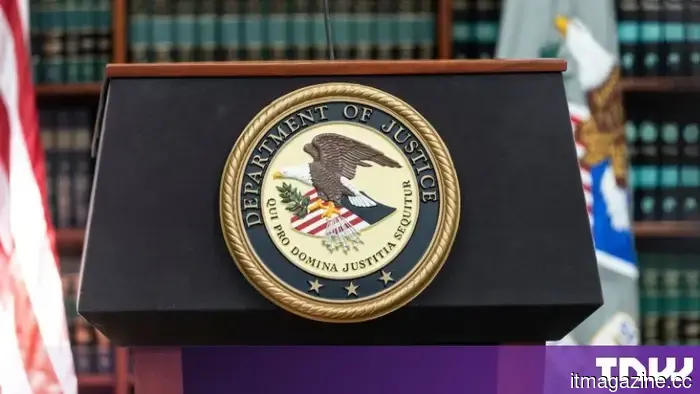 Il Dipartimento di Giustizia ha riscritto il proprio annuncio di hacking due giorni dopo.
Un comunicato del DOJ ha affermato che gli hacker cinesi avevano colpito vittime nel Senato, nella Fed e nella NASA. La versione rivista dice che erano obiettivi e solo alcuni sono stati compromessi.
Il Dipartimento di Giustizia ha riscritto il proprio annuncio di hacking due giorni dopo.
Un comunicato del DOJ ha affermato che gli hacker cinesi avevano colpito vittime nel Senato, nella Fed e nella NASA. La versione rivista dice che erano obiettivi e solo alcuni sono stati compromessi.
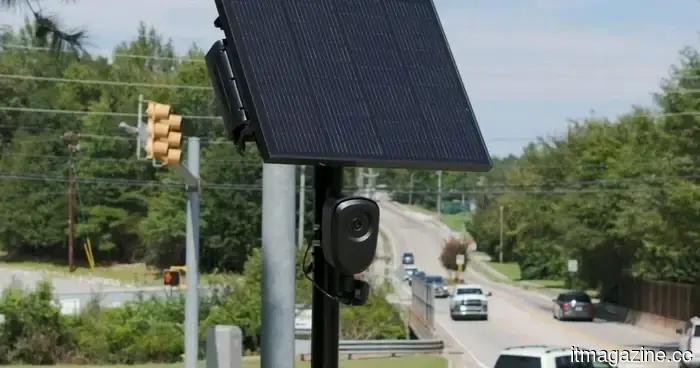 $1 è tutto ciò che è servito affinché il Texas riempisse lo stato di telecamere di sorveglianza Flock dalle tasche dei conducenti.
Circa 3.200 telecamere Flock in Texas sono state finanziate attraverso i fondi raccolti da una tassa di assicurazione auto di $1 originariamente approvata per combattere il crimine veicolare.
$1 è tutto ciò che è servito affinché il Texas riempisse lo stato di telecamere di sorveglianza Flock dalle tasche dei conducenti.
Circa 3.200 telecamere Flock in Texas sono state finanziate attraverso i fondi raccolti da una tassa di assicurazione auto di $1 originariamente approvata per combattere il crimine veicolare.
 Sony e Warner hanno appena citato in giudizio Anthropic per l'uso di musica protetta da copyright utilizzata per addestrare Claude, chiedendo 150.000 dollari per brano.
Sony Music e Warner Chappell stanno facendo causa ad Anthropic, sostenendo che l'azienda abbia piratato decine di migliaia di canzoni per addestrare Claude.
Sony e Warner hanno appena citato in giudizio Anthropic per l'uso di musica protetta da copyright utilizzata per addestrare Claude, chiedendo 150.000 dollari per brano.
Sony Music e Warner Chappell stanno facendo causa ad Anthropic, sostenendo che l'azienda abbia piratato decine di migliaia di canzoni per addestrare Claude.
Singapore is investing S$220 million in fintech as private funding reaches a ten-year low.
MAS pledged S$220 million over a three-year period as part of FSTI 4.0, just three days after KPMG reported that fintech investments in Singapore decreased to $499 million in the first half of the year.