

Sony Music and Warner Chappell have filed a lawsuit against Anthropic regarding the inclusion of song lyrics in the training data for Claude.
Sony Music Publishing and Warner Chappell have filed a lawsuit against Anthropic in California, claiming that song lyrics were unlawfully sourced from pirate archives. The suit names Dario Amodei and Benjamin Mann personally and seeks damages of up to $150,000 for each composition involved. A court in Munich ruled in November 2025 that storing lyrics within a model constitutes reproduction, noting that the text and data mining exception does not apply.
According to Business Insider, the lawsuit was initiated in a Northern California court, naming Amodei and Mann. The language used by the publishers is assertive, alleging a "brazen campaign of illegal torrenting, scraping, and mass downloading of copyrighted works."
The songs cited are well-known, including Eye of the Tiger, Hallelujah, September, Livin’ On a Prayer, and Great Balls of Fire, along with songs by Mariah Carey and Taylor Swift. The alleged method resembles a previous issue Anthropic faced, as the complaint references the same archives, Library Genesis and Pirate Library Mirror, that were involved in a $1.5 billion settlement with authors.
The publishers seek a jury trial and statutory damages, aiming for up to $150,000 for each composition used in training, which represents the legal maximum for willful infringement, though no court has previously awarded such an amount.
In contrast, authors in the last case received around $3,000 per title, shared with their publishers, leaving each party with roughly $1,500. The disparity between these figures highlights the negotiation dynamics; one is a mutually agreed figure, while the other is an initial demand in an unresolved case.
A European court has previously addressed a similar issue regarding song lyrics, involving a different defendant. The Regional Court of Munich ruled against OpenAI in November 2025, determining that storing lyrics in a model counts as reproduction, and that outputs reciting them represent communication to the public. Furthermore, it ruled that the text and data mining exception does not apply; permanent memorization surpasses transient analysis, and the rightsholder had opted out. This judgment, however, is not final.
The European exception has an additional stipulation that is particularly relevant here: it applies only to works that the miner had lawful access to, and materials from a pirate library do not qualify as lawful access.
Additionally, the AI Act imposes requirements on general-purpose model providers, who must maintain a copyright policy and disclose a summary of their training data, with oversight from an enforcement unit in Brussels. This demonstrates a notable asymmetry; American rights holders must resort to legal action to ascertain what was taken from them, while those in Europe have the right to be informed.
Other articles
 How Bill Gates utilizes AI and why he believes nobody is getting ready for it.
Bill Gates is suggesting a tax on artificial intelligence and robots, similar to his proposal from February 2017. During that same month, the European Parliament chose to exclude the tax from its regulations on robotics.
How Bill Gates utilizes AI and why he believes nobody is getting ready for it.
Bill Gates is suggesting a tax on artificial intelligence and robots, similar to his proposal from February 2017. During that same month, the European Parliament chose to exclude the tax from its regulations on robotics.
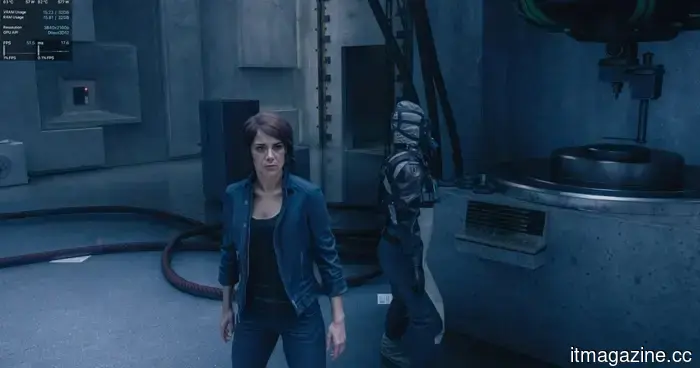 The leak of Nvidia's DLSS 5 is enhancing the visual appeal of games while also making people behave more oddly.
We are all aware that Nvidia revealed its newest DLSS 5 in March 2026, which claimed to deliver photorealistic lighting in gaming. However, Nvidia's significant advancement in AI-driven gaming graphics has come unexpectedly: via a leaked, incomplete version of DLSS 5 that modders have already been able to implement in multiple games. The preliminary outcomes are impressive and unusual. [...]
The leak of Nvidia's DLSS 5 is enhancing the visual appeal of games while also making people behave more oddly.
We are all aware that Nvidia revealed its newest DLSS 5 in March 2026, which claimed to deliver photorealistic lighting in gaming. However, Nvidia's significant advancement in AI-driven gaming graphics has come unexpectedly: via a leaked, incomplete version of DLSS 5 that modders have already been able to implement in multiple games. The preliminary outcomes are impressive and unusual. [...]
 Mobile operators claim that UK networks are unprepared for AI traffic.
VodafoneThree claims that UK networks are unprepared for AI traffic and is advocating for changes in planning regulations. Meanwhile, the EU's Gigabit Infrastructure Act has already established that permits are automatically granted.
Mobile operators claim that UK networks are unprepared for AI traffic.
VodafoneThree claims that UK networks are unprepared for AI traffic and is advocating for changes in planning regulations. Meanwhile, the EU's Gigabit Infrastructure Act has already established that permits are automatically granted.
Sony Music and Warner Chappell have filed a lawsuit against Anthropic regarding the inclusion of song lyrics in the training data for Claude.
Sony Music Publishing and Warner Chappell have taken legal action against Anthropic concerning song lyrics. In 2025, a court in Munich determined that memorizing lyrics constitutes reproduction.