

A report from MIT indicates that AI is capable of completing nearly any undergraduate assignment that is presented to it.
A report from an MIT committee indicates that AI can reliably complete nearly any written assignment in its undergraduate curriculum and has noticeably changed campus culture in less than three years. In the European Union, monitoring systems that track student performance during exams are considered high-risk under the AI Act, and the use of emotion recognition in education has been prohibited since February 2025.
According to MIT, artificial intelligence can now convincingly fulfill almost any undergraduate task assigned. This finding was released this week by its ad hoc AI committee, as reported by Futurism.
The scope of the report is extensive, encompassing essays, mathematical and scientific problems, proofs, and coding tasks, with the assertion that AI models produce legitimate solutions for all these areas.
A particularly noteworthy finding is not related to academic dishonesty but highlights that the technology has prompted significant changes in campus dynamics within a short period. Attendance at office hours has decreased, online discussion participation has declined, and there are anecdotal indications of fewer study groups in residence halls and libraries—issues that are not linked to cheating.
Other universities have begun to respond to these shifts. For instance, the University of Chicago’s law school has prohibited phones and laptops in first-year classes, and Princeton has eliminated a century-old honor code.
The trend points toward increasing supervision. If the integrity of work is in question, the solution is to observe the individual completing it, which reflects a timeless response to a modern dilemma.
In Europe, the legal approach begins with oversight rather than concluding with it; here, monitoring is the central activity, not just addressing cheating.
Prior to these developments, universities were already using AI to detect cheating, a practice that TNW previously described as unsettling.
The AI Act has specific provisions regarding this issue. Education is one of the sectors it identifies for stringent regulation, just short of an outright ban. Systems designed for monitoring and identifying prohibited behavior during exams are categorized as high-risk under Annex III, alongside admissions and the assessment of educational outcomes.
The deadlines for these requirements were originally set for this month but were extended to December 2, 2027, due to the Digital Omnibus, allowing institutions and their software vendors an additional sixteen months.
However, the bans were upheld, with emotion recognition in education explicitly outlawed since February 2025, and the EU having the authority to inspect models and penalize providers.
Thus, the debate in the U.S. centers on whether to monitor students at all, while the discussion in Europe was settled earlier, focusing instead on the degree of scrutiny.
Other articles
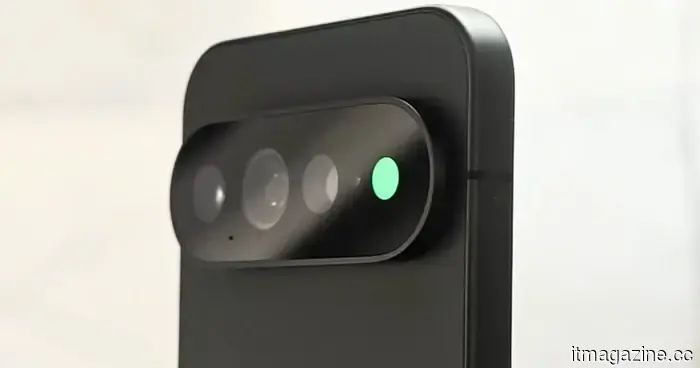 The HiLight Studio app uncovers what Google conceals regarding the RGB light of the Pixel 11 Pro, but it's not suitable for everyone.
The third-party HiLight Studio app generally functions well, but the Shizuku setup and its inconsistent reliability highlight the actual issue.
The HiLight Studio app uncovers what Google conceals regarding the RGB light of the Pixel 11 Pro, but it's not suitable for everyone.
The third-party HiLight Studio app generally functions well, but the Shizuku setup and its inconsistent reliability highlight the actual issue.
.jpg) Three overlooked films on HBO Max that you should check out this weekend (August 29-30).
Three underrated HBO Max films to consider streaming this weekend, featuring a Swedish coming-of-age classic and a gripping thriller by Soderbergh.
Three overlooked films on HBO Max that you should check out this weekend (August 29-30).
Three underrated HBO Max films to consider streaming this weekend, featuring a Swedish coming-of-age classic and a gripping thriller by Soderbergh.
 The Anbernic RG 55G1 is a $150 device resembling the Switch Lite, designed specifically for retro gaming.
Nintendo's Switch Lite has influenced many handheld devices, but Anbernic's newest model closely mirrors it while incorporating its own unique hardware elements to make the comparison noteworthy. The Anbernic RG 55G1 will be available from August 31, starting at a price of $150, featuring a compact design, a […]
The Anbernic RG 55G1 is a $150 device resembling the Switch Lite, designed specifically for retro gaming.
Nintendo's Switch Lite has influenced many handheld devices, but Anbernic's newest model closely mirrors it while incorporating its own unique hardware elements to make the comparison noteworthy. The Anbernic RG 55G1 will be available from August 31, starting at a price of $150, featuring a compact design, a […]
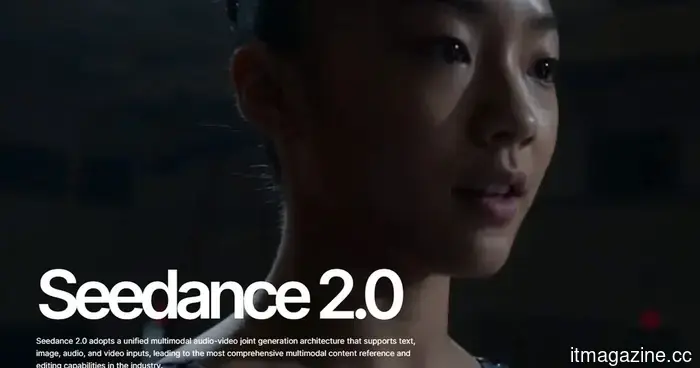 AI is playing an increasingly significant role in short dramas, and actors are bearing the consequences.
The entertainment sector might be on the verge of a peculiar new reality: the performer you're watching might not actually be a human actor. AI-generated dramas and virtual performers are transitioning from experimental technology to mainstream entertainment, as production companies are progressively utilizing artificial intelligence to generate characters, scenes, and even complete short-form productions. This change is occurring rapidly […]
AI is playing an increasingly significant role in short dramas, and actors are bearing the consequences.
The entertainment sector might be on the verge of a peculiar new reality: the performer you're watching might not actually be a human actor. AI-generated dramas and virtual performers are transitioning from experimental technology to mainstream entertainment, as production companies are progressively utilizing artificial intelligence to generate characters, scenes, and even complete short-form productions. This change is occurring rapidly […]
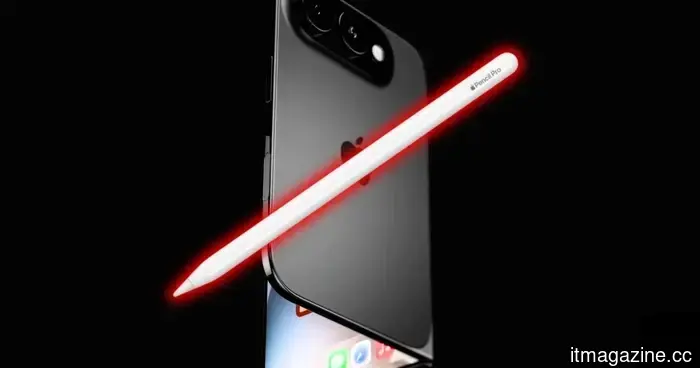 Apple reportedly experimented with a stylus for the foldable iPhone but ultimately decided against it.
Apple has experimented with a compact, magnetic Apple Pencil designed for the foldable iPhone, but Mark Gurman from Bloomberg is skeptical that it will be released next month.
Apple reportedly experimented with a stylus for the foldable iPhone but ultimately decided against it.
Apple has experimented with a compact, magnetic Apple Pencil designed for the foldable iPhone, but Mark Gurman from Bloomberg is skeptical that it will be released next month.
 Google Maps has renamed Lake Ontario to Lake America for users in the United States.
Google Maps has recently started designating Lake Ontario as Lake America for users in the United States, following an update to a federal database. Meanwhile, users in Europe can view both names for the same body of water.
Google Maps has renamed Lake Ontario to Lake America for users in the United States.
Google Maps has recently started designating Lake Ontario as Lake America for users in the United States, following an update to a federal database. Meanwhile, users in Europe can view both names for the same body of water.
A report from MIT indicates that AI is capable of completing nearly any undergraduate assignment that is presented to it.
According to MIT's AI committee, models are capable of reliably completing nearly any undergraduate task. In Europe, the use of exam monitoring software is considered high-risk under the AI Act.