

AI is playing an increasingly significant role in short dramas, and actors are bearing the consequences.
The entertainment sector may be entering an unusual new era: the performer you are viewing might not actually be a human actor.
AI-created dramas and digital actors are transitioning from experimental technology to mainstream entertainment, as production companies are increasingly utilizing artificial intelligence to generate characters, scenes, and even complete short-form productions. This change is occurring swiftly enough that some actors are already facing job losses—and in some instances, they are being asked to assist in creating the AI versions that will take their place.
The Financial Times highlights that powerful new video-generating tools, such as ByteDance’s Seedance 2.0, are accelerating the integration of AI in short dramas. This technology enables companies to create higher-quality videos more rapidly while significantly lowering production costs.
AI is not just assisting actors; it is taking their roles.
The magnitude of this transformation is hard to overlook. DataEye reports that in May, 89 out of the top 100 animated dramas on Douyin, ByteDance’s Chinese short-video platform, were AI-produced. The Financial Times also indicates that approximately 128,000 short dramas were launched in the first quarter of 2026, over three times the total released in the entire previous year—and around 95% of these were generated by AI, according to the China Netcasting Services Association.
The financial incentives clarify why producers are adopting this technology. Professor Shen Yang from Tsinghua University explained to the FT that a three-to-five-minute drama, which previously required a team of five and around three months to complete in 2024, can now be produced by a single person in just one or two days.
Production costs have also decreased alongside these timelines. Zeelin, an AI animation company, reportedly released about 8,000 one-minute short-drama episodes in May, with average production costs ranging from $90 to $120 per minute—about 10% of what it would cost with human involvement. For audiences, this could lead to a surge in inexpensive, quickly-produced entertainment. For performers, however, the outlook is far less promising.
During a discussion at SXSW in Austin, acclaimed filmmaker Steven Spielberg voiced his concerns regarding the growing impact of artificial intelligence in creative fields. Spielberg mentioned in an interview at the 2026 event that while he supports technology in many areas, he is firmly opposed to AI replacing human creativity in filmmaking.
The individuals behind the performances are increasingly becoming the raw material.
Greg Wollner, an actor and producer of short dramas, shared with the FT that he was producing three projects a week before the launch of Seedance 2.0. After its release, he stated, “everything just went,” resulting in many of his peers leaving the industry.
Some actors are being asked to “distill” their images, voices, and acting styles into AI systems before losing their positions. A host for a children's educational program recounted being pressured to agree to the creation of an AI version of herself or risk being replaced by other performers. She eventually negotiated a five-year contract that included one year’s salary and rights of approval.
Amazon’s MGM Studio division is now also implementing artificial intelligence to enhance efficiency and cut costs in film and television production. While Hollywood is concerned about AI's effect on jobs and industry practices, the company aims to embed it throughout the creative process.
Reuters reports that Albert Cheng leads a small team at Amazon’s “AI Studio,” developing proprietary tools to speed up pre-production planning and post-production editing. Cheng indicates that the AI Studio's goal is to reduce costs and enhance creative workflows while engaging writers, directors, actors, and other creative professionals at every stage.
This is why the emergence of AI dramas is significant, even if you never watch one. The technology is illustrating a new model for entertainment, in which the costly human production process can increasingly be condensed into software. AI-generated performers are no longer waiting for the future; they are already vying for screen time—and the audience may not always recognize the distinction.

Other articles
 The robot pizza chefs are not performing well.
The anticipated future of fast food was meant to resemble this scenario: enter a restaurant, make an order, and observe a robot expertly creating your pizza with mechanical accuracy. However, several companies that vowed to automate pizza preparation have found it challenging to transform that idea into a viable business. The most recent instance is Picnic, whose […]
The robot pizza chefs are not performing well.
The anticipated future of fast food was meant to resemble this scenario: enter a restaurant, make an order, and observe a robot expertly creating your pizza with mechanical accuracy. However, several companies that vowed to automate pizza preparation have found it challenging to transform that idea into a viable business. The most recent instance is Picnic, whose […]
 Anthropic has just demonstrated a preliminary version of self-enhancing AI.
Anthropic is investigating self-enhancing AI by allowing Claude to research, evaluate, and improve training techniques for a more robust Claude model, achieving measurable improvements in various behavioral issues.
Anthropic has just demonstrated a preliminary version of self-enhancing AI.
Anthropic is investigating self-enhancing AI by allowing Claude to research, evaluate, and improve training techniques for a more robust Claude model, achieving measurable improvements in various behavioral issues.
 The Anbernic RG 55G1 is a $150 device resembling the Switch Lite, designed specifically for retro gaming.
Nintendo's Switch Lite has influenced many handheld devices, but Anbernic's newest model closely mirrors it while incorporating its own unique hardware elements to make the comparison noteworthy. The Anbernic RG 55G1 will be available from August 31, starting at a price of $150, featuring a compact design, a […]
The Anbernic RG 55G1 is a $150 device resembling the Switch Lite, designed specifically for retro gaming.
Nintendo's Switch Lite has influenced many handheld devices, but Anbernic's newest model closely mirrors it while incorporating its own unique hardware elements to make the comparison noteworthy. The Anbernic RG 55G1 will be available from August 31, starting at a price of $150, featuring a compact design, a […]
 The robotic pizza chefs are not faring well.
The envisioned future of fast food was meant to feature an experience where you enter a restaurant, make your order, and observe a robot precisely putting together your pizza. However, various companies that aimed to automate pizza production have found it challenging to translate that idea into a viable business. The most recent case is Picnic, whose [...]
The robotic pizza chefs are not faring well.
The envisioned future of fast food was meant to feature an experience where you enter a restaurant, make your order, and observe a robot precisely putting together your pizza. However, various companies that aimed to automate pizza production have found it challenging to translate that idea into a viable business. The most recent case is Picnic, whose [...]
 Feeling the impact of OpenAI removing GPT models from Cursor? Anthropic provides a timely alternative with increased limits for Claude.
Anthropic is offering increased computing power for Claude within Cursor as OpenAI plans to end its model-access agreement with the coding platform.
Feeling the impact of OpenAI removing GPT models from Cursor? Anthropic provides a timely alternative with increased limits for Claude.
Anthropic is offering increased computing power for Claude within Cursor as OpenAI plans to end its model-access agreement with the coding platform.
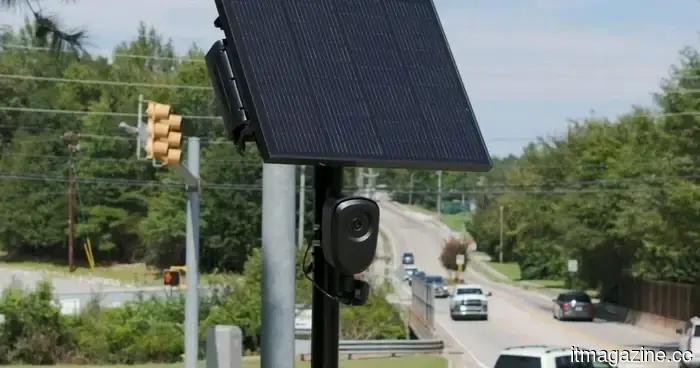 Just $1 was enough for Texas to fill the state with Flock surveillance cameras funded by drivers.
Approximately 3,200 Flock cameras in Texas were financed by funds obtained from a $1 auto insurance fee that was initially approved to address vehicle crime.
Just $1 was enough for Texas to fill the state with Flock surveillance cameras funded by drivers.
Approximately 3,200 Flock cameras in Texas were financed by funds obtained from a $1 auto insurance fee that was initially approved to address vehicle crime.
AI is playing an increasingly significant role in short dramas, and actors are bearing the consequences.
The entertainment sector might be on the verge of a peculiar new reality: the performer you're watching might not actually be a human actor. AI-generated dramas and virtual performers are transitioning from experimental technology to mainstream entertainment, as production companies are progressively utilizing artificial intelligence to generate characters, scenes, and even complete short-form productions. This change is occurring rapidly […]