
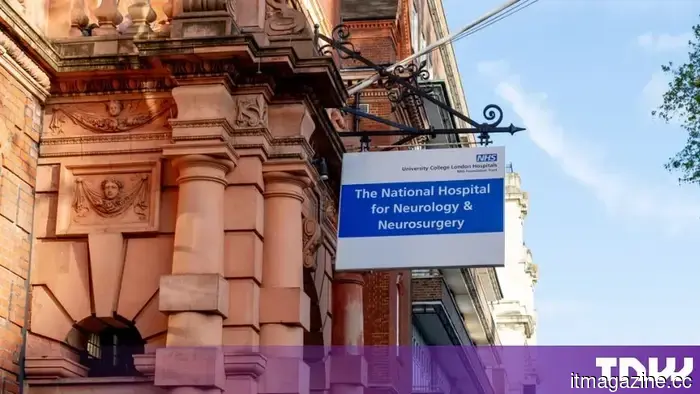
Surgeons in London have successfully excised a brain tumor in the first operation of its kind to utilize AI assistance.
Surgeons at the National Hospital for Neurology and Neurosurgery in London have successfully removed a brain tumor in what University College London Hospitals claims is the world's first effective AI-assisted operation of this nature. The system analyzed live camera footage during the surgery, aiding the team in identifying nerves and blood vessels adjacent to the tumor. This operation is part of a collection of clinical tools, including AI that has been shown to assess certain rare cancers more accurately than traditional biopsies.
Conducted in May, the operation's details were kept confidential until Thursday to allow the patient time to recover. It took place at NHNN, which is part of the University College London Hospitals NHS Foundation Trust, established in 1859 as the first specialized neurosurgical hospital globally.
The patient, Rhys Hibbert, a 48-year-old customer service manager from Bedfordshire, had an 11mm tumor on his pituitary gland, diagnosed in 2024 and initially treated without surgical intervention. His symptoms worsened post-diagnosis, resulting in severe hormone imbalances and vision issues, with health officials warning that he risked blindness without the surgery.
The pituitary gland, located behind the nasal cavity and just below the optic nerves, is accessed in this type of surgery via an endoscope inserted through the nose. This endoscope provided the camera feed that the AI system analyzed.
According to UCLH, the system aided the team in identifying essential anatomy, surgical tools, and tissue interactions during the procedure in real time, while the surgical team maintained complete control over the operation. Dr. Sophia Bano, the technical lead and associate professor in robotics and AI at UCL, explained that by training on hundreds of surgical videos, the system encountered a variety of surgical scenarios that would typically take a surgeon many years to experience.
An earlier phase of this UCL research program was publicly presented in 2023, indicating that the AI had been trained using over 200 recordings of pituitary surgeries. Researchers had anticipated that AI assistance in brain surgery would be realized within two years. UCLH noted that the system had gained a level of surgical experience in roughly 10 months that a novice would take about ten years to reach.
Hibbert reflected on his recovery through the lens of his eyesight, saying, “When I came round, I could see everything in the room clearly,” noting that it now feels like he has “a 360-degree panoramic view of everything around me.” He resumed work within weeks after the surgery, with a swift recovery in both his vision and mobility. He also remarked on the hospital’s legacy, mentioning that it is fitting for the first AI-assisted neurosurgery to happen at such a historic institution.
The operation was financed by the National Institute for Health and Care Research, a health research agency supported by the Department of Health and Social Care, as part of a clinical trial. Professor Mike Lewis, the NIHR's scientific director for innovation, referred to it as “pioneering surgery” that highlights “the potential of advanced AI to assist surgeons and enhance patient care.”
The team has previously published related findings. A 2024 paper in npj Digital Medicine, which tested the method offline on still images rather than in surgery, reported an increase in the accuracy of anatomical identification from 70.7% to 77.5% using a standard overlap measure. The enhancement was greater among medical students, whose scores rose from 66.2% to 78.9%, compared to more experienced participants. Working autonomously, the model achieved a score of 79.1% on a separate test set.
The model used in that study was trained with 640 images sourced from 64 surgical videos. The authors indicated that their work constituted an offline evaluation rather than a real-time test of the system during surgery.
The system employed in the recent operation has not yet been named publicly, and no specific accuracy or outcome metrics from the procedure have been disclosed. Furthermore, details regarding the trial’s name, size, and design remain unspecified, and no regulatory status was provided, in contrast to clinical devices such as the FDA-authorized robotic blood-draw system or the commercial AI agents hospitals are currently deploying.
Other articles
 Ridley Scott has confirmed that the upcoming Alien film will focus on Michael Fassbender's character, David.
Ridley Scott has confirmed that a new Alien film will focus exclusively on Michael Fassbender's character, David, picking up from the cliffhanger conclusion of Covenant after a lengthy period of ambiguity.
Ridley Scott has confirmed that the upcoming Alien film will focus on Michael Fassbender's character, David.
Ridley Scott has confirmed that a new Alien film will focus exclusively on Michael Fassbender's character, David, picking up from the cliffhanger conclusion of Covenant after a lengthy period of ambiguity.
 Apple has announced its 'Surprise and Shine' event scheduled for September 9.
Apple has announced an event for September 9, during which a foldable iPhone is anticipated, while the regular iPhone 18 has been postponed to spring.
Apple has announced its 'Surprise and Shine' event scheduled for September 9.
Apple has announced an event for September 9, during which a foldable iPhone is anticipated, while the regular iPhone 18 has been postponed to spring.
 Huawei aims to establish additional AI partnerships in the pharmaceutical sector, primarily with Chinese pharmaceutical companies.
The president of Huawei's healthcare division has stated that additional collaborations with pharmaceutical companies are on the horizon, primarily involving local Chinese drug manufacturers.
Huawei aims to establish additional AI partnerships in the pharmaceutical sector, primarily with Chinese pharmaceutical companies.
The president of Huawei's healthcare division has stated that additional collaborations with pharmaceutical companies are on the horizon, primarily involving local Chinese drug manufacturers.
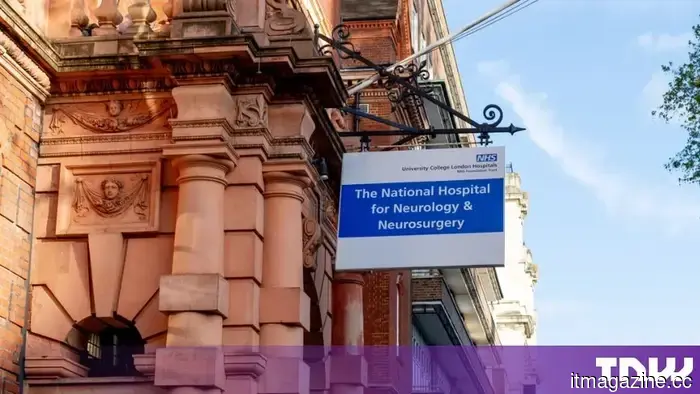 Surgeons in London have performed the first-ever brain tumor removal surgery with the assistance of AI.
Surgeons at the National Hospital for Neurology and Neurosurgery in London successfully extracted an 11mm pituitary tumor using an AI system that analyzed the live feed from the endoscope.
Surgeons in London have performed the first-ever brain tumor removal surgery with the assistance of AI.
Surgeons at the National Hospital for Neurology and Neurosurgery in London successfully extracted an 11mm pituitary tumor using an AI system that analyzed the live feed from the endoscope.
 LibreOffice 26.8 introduces many great features while avoiding any intrusive AI elements.
The Document Foundation has launched LibreOffice 26.8, which introduces enhanced paragraph typography, expanded spreadsheet functionalities, and no intrusive AI features to the open-source office suite.
LibreOffice 26.8 introduces many great features while avoiding any intrusive AI elements.
The Document Foundation has launched LibreOffice 26.8, which introduces enhanced paragraph typography, expanded spreadsheet functionalities, and no intrusive AI features to the open-source office suite.
 The regulator in South Korea has stated that the restrictions imposed by Meta for teenagers should be enforced globally, rather than being limited to the United States.
South Korea's media regulator has contended that Meta's recently announced youth protections should be implemented globally, shortly after the company stated that these measures do not automatically apply everywhere.
The regulator in South Korea has stated that the restrictions imposed by Meta for teenagers should be enforced globally, rather than being limited to the United States.
South Korea's media regulator has contended that Meta's recently announced youth protections should be implemented globally, shortly after the company stated that these measures do not automatically apply everywhere.
Surgeons in London have successfully excised a brain tumor in the first operation of its kind to utilize AI assistance.
Surgeons at the National Hospital for Neurology and Neurosurgery in London excised an 11mm pituitary tumor while an AI system analyzed the live feed from the endoscope.