

Increasing expenses associated with the token consumption competition.
Recently, there has been a rise in a practice known as Tokenmaxxing. An increasing number of companies are monitoring their employees' productivity through tokens utilized for AI activities. Jensen Huang, CEO of Nvidia, has encapsulated the prevailing view succinctly: “If that $500,000 engineer did not consume at least $250,000 worth of tokens, I will be extremely concerned.”
Critics may contend that Jensen has a vested interest in promoting elevated token usage, as it correlates directly with Nvidia's revenue growth. This mindset is widespread in corporate America, affecting various product firms and startups alike. Databricks CEO Ali Ghodsi highlighted an engineer who spent over $7000 on AI tokens, while startups such as Sendbird have implemented leaderboards to track employee token usage.
The drive for increased token consumption extends beyond technology companies; it is a general trend. The legal tech startup Harvey has seen its token spending rise approximately 12 times to 12 trillion tokens per month. At this point, it is apparent that everyone is eager to boost their token expenditures, but it warrants an exploration of the underlying reasons for this trend.
The notion is that greater token usage equals enhanced productivity, or at least that is the assertion made by AI proponents and the early adopters of tokenmaxxing. There is a competitive rush to maximize token spending, and companies are willing to absorb the associated costs. The integration of large language models (LLMs) signifies a transformative approach to work across various industries, with businesses that fail to adapt quickly risk being left behind.
The financial implications of the LLM usage are significant and have prompted many companies to set limits on token consumption as expenses have surged dramatically since the initial excitement of token maxxing in early 2026. A notable instance emerged when Uber's CTO Praveen Neppalli Naga revealed in an interview with The Information that the company had exhausted its annual AI budget in just four months and needed to reassess its strategy.
As reported by Sarah Perez, Uber isn't the only firm confronting an AI budget crisis. Meta’s Adam Mosseri envisions a future with token limits imposed on each employee and has already enacted measures to reduce unnecessary token use. The AI spending leaderboard discussed earlier this year has already been terminated, with Microsoft cancelling Claude code licenses and consolidating all users under Copilot.
The rising costs linked to the tokenmaxxing trend necessitate an examination of the fundamental causes behind the steep increase in enterprise expenses. Several factors contribute to the escalating costs associated with LLM usage. Some are tied to the widespread adoption of AI throughout corporate America; in 2026, companies began creating internal dashboards to monitor AI expenditure and actively encouraged employees to incorporate more AI into their daily tasks.
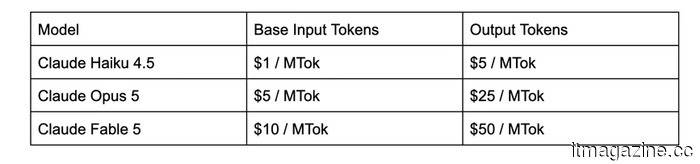
Model selection plays a key role in this phenomenon. Beyond broader adoption, one significant factor behind inflated token costs is the choice of model. Premium models can be 5 to 10 times more expensive than their optimized counterparts.
The following table illustrates the cost differences between Claude's optimized and premium models, with all pricing listed on a per-million-token basis as of July 2026, which may evolve but still serves to emphasize the main argument. When using Haiku as a baseline, Opus 5 is five times more costly. Furthermore, newer flagship models, such as Fable 5, can be ten times pricier than optimized models like Haiku. This emphasizes model selection as a crucial strategy for cost optimization.
To address the rising expenses associated with high token consumption, companies are urged to make wise model choices. For complex coding tasks, larger frontier models like Opus are advisable, while models such as Haiku are better suited for quick inquiries and subagent functions.
The context window size significantly impacts costs as well. In simpler terms, the context window represents the working memory of the LLM for the session, encompassing prompts, conversation histories, retrieved documents, and the model's responses. Doubling the context window size could quadruple the computational requirements.
To illustrate the financial impact of context utilization, I will conduct a basic test. Two identical Claude sessions will be initiated. Both will be asked the same question, but one session will include The Odyssey by Homer in its context window.
Both sessions will respond to the query: “Who is Calypso and why did she keep Odysseus captive?” This particular question is chosen because The Odyssey contains 132,953 words, roughly equating to 177,000 tokens. This format, in contrast to a coding session where new dependencies may be downloaded and third-party packages analyzed, results in a predictable context consumption pattern.
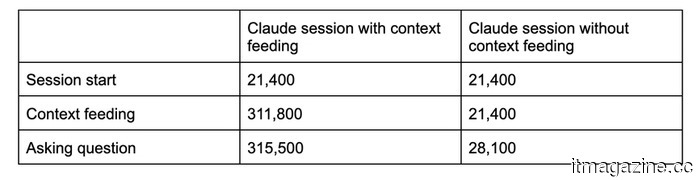
The session without the text provided for context will be equipped to perform a web search and answer the question at a reduced token cost. The following table details the token consumption for each session.
The substantial disparity in token consumption translates into noticeable differences in session costs. An interesting observation is that despite both sessions posing identical questions, the expenses varied significantly. The session with context feeding
Other articles
 Waystar deploys agentic AI to handle claims, denials, and documentation.
Waystar's new agents independently resubmit denied insurance claims. In Germany, there are restrictions on the number of hospital bills that can be contested, and each bill is assigned a price.
Waystar deploys agentic AI to handle claims, denials, and documentation.
Waystar's new agents independently resubmit denied insurance claims. In Germany, there are restrictions on the number of hospital bills that can be contested, and each bill is assigned a price.
 Nvidia’s RTX Spark is preparing for significant PC games, including anti-cheat features.
RTX Spark is receiving support for significant PC titles like Apex Legends, F1 25, ARC Raiders, and THE FINALS, while Nvidia is also addressing anti-cheat functionality.
Nvidia’s RTX Spark is preparing for significant PC games, including anti-cheat features.
RTX Spark is receiving support for significant PC titles like Apex Legends, F1 25, ARC Raiders, and THE FINALS, while Nvidia is also addressing anti-cheat functionality.
 A few days in, the battery life of the Pixel 11 Pro XL hasn't been great for me so far.
After 72 hours of using the Pixel 11 Pro XL, I'm achieving less than 6 hours of screen-on time, which is significantly lower than the Galaxy S26 Ultra and iPhone 17 Pro Max.
A few days in, the battery life of the Pixel 11 Pro XL hasn't been great for me so far.
After 72 hours of using the Pixel 11 Pro XL, I'm achieving less than 6 hours of screen-on time, which is significantly lower than the Galaxy S26 Ultra and iPhone 17 Pro Max.
 The concept of AI receptionists appears to be concerning after a patient disclosed that it did not comprehend her request.
AI receptionists are being implemented to manage GP calls and decrease wait times, yet patient complaints are highlighting issues related to accessibility, communication, and the need for human support.
The concept of AI receptionists appears to be concerning after a patient disclosed that it did not comprehend her request.
AI receptionists are being implemented to manage GP calls and decrease wait times, yet patient complaints are highlighting issues related to accessibility, communication, and the need for human support.
 Barret Zoph is returning to Google after six years and two startup ventures.
Barret Zoph, co-founder of Thinking Machines Lab, is set to join Google DeepMind as Vice President of Research, just weeks after Demis Hassabis stepped down from his role as CEO.
Barret Zoph is returning to Google after six years and two startup ventures.
Barret Zoph, co-founder of Thinking Machines Lab, is set to join Google DeepMind as Vice President of Research, just weeks after Demis Hassabis stepped down from his role as CEO.
 How close are robots to being utilized on production lines? The journey of Galbot towards industrial AI.
For many years, industrial robots have mainly been utilized for performing repetitive tasks. This is especially true on highly standardized production lines, like those in the automotive industry.
How close are robots to being utilized on production lines? The journey of Galbot towards industrial AI.
For many years, industrial robots have mainly been utilized for performing repetitive tasks. This is especially true on highly standardized production lines, like those in the automotive industry.
Increasing expenses associated with the token consumption competition.
The reasons behind tokenmaxxing increasing AI expenses, the impact of model selection and context windows on LLM costs, and the importance for companies to prioritize results.