
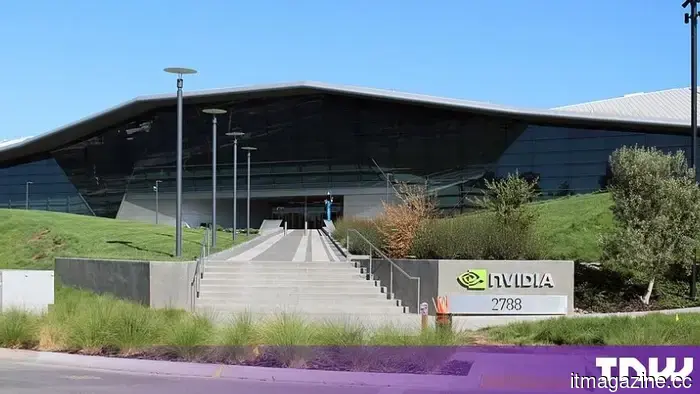
Nvidia announced a revenue of $96.2 billion for the second quarter.
Nvidia announced quarterly revenue of $96.2 billion, marking a 106% increase compared to the same quarter last year. In a first for the company, it also provided guidance for the entire year ahead. Following the announcement, shares dipped approximately 1.3% but rose significantly once chief financial officer Colette Kress discussed the $500 billion financing plan collaborated with six major financial institutions, suggesting this was the information investors were eagerly anticipating.
Data center revenue comprised $89.0 billion of the total, up 117% year over year, representing over 92% of Nvidia's total sales. Edge computing made up the remaining $7.2 billion, and Vera Rubin is now fully operational.
The year-ahead forecast is the key highlight rather than the revenue beat. "We’ve never forecasted, never guided to a year in advance," stated Jensen Huang, with Kress estimating growth for fiscal 2028 at around 70%. Based on this, it suggests close to $690 billion in revenue, significantly higher than the analyst consensus of about $570 billion.
Melissa Otto of S&P Global Visible Alpha remarked that this figure "blew away expectations," and Kress framed it as a minimum expectation, noting that the company is supply constrained and that revenue could potentially double.
For the upcoming quarter, Nvidia's more immediate guidance is $108.0 billion, plus or minus 2%, compared to the consensus of $104.19 billion. This projection assumes no data center compute revenue from China, a market where Nvidia accounted for less than 1% of the quarter's data center revenue.
What influenced the stock was the discussion on circular financing, which critics have referred to throughout the summer. "We recognize the scale of this support, and we know some will call this circular financing. We see it differently," Kress remarked, emphasizing that "we’re not making loans" and that independent capital backs each deal individually.
The scale Kress acknowledged is indeed substantial. Nvidia has invested about $50 billion into advanced AI labs and has maximum gross guarantee exposure of $108.5 billion, partnering with Apollo, BlackRock, Blackstone, Brookfield, Goldman Sachs, and KKR to raise over $500 billion in external funding for AI infrastructure.
The financial reports clarify this relationship more effectively than the commentary. GAAP earnings of $2.46 per share exceeded the non-GAAP figure of $2.22, a reversal influenced by $7.77 billion in net gains from equity securities, indicating that a substantial portion of the reported profit stems from Nvidia's increased values in its customer stakes.
Rubin is central to the entire forecast, with Kress anticipating the fastest ramp the company has experienced, projected to account for about one-fifth of data center revenue this quarter. The financial rationale supports this, as Nvidia estimates revenue per gigawatt of installed capacity at $18 billion for Hopper, $25 billion for Blackwell, and $40 billion for Rubin.
Gross margin remained at 75% and is projected to be 74% this quarter, with Kress indicating a baseline of 71 to 72% before stabilizing at 72 to 73% next year. Rising memory costs are the contributing factor, and analysts had specifically requested reassurance on margin performance.
Additionally, Nvidia returned a record $26 billion to shareholders during the quarter, with $20 billion allocated for buybacks and $6 billion for dividends, the next of which will be $0.25 per share due on October 1.
This is a company generating more cash than it can utilize on itself while also securing funding for others' data centers, with off-balance-sheet structures in the sector absorbing a significant portion of the remaining funds.
The market's response reflects more on positioning than performance. "Nvidia has beaten expectations every quarter for two straight years," noted Mark Malek of Siebert. “The stock is flat since the last earnings call. Flat!”
Bill Birmingham from Rex Financial highlighted a pertinent data point, observing that reports in July about the OpenAI guarantees caused Nvidia’s five-year credit default swap spread to rise from 40 to 82 basis points, resulting in a loss of roughly $250 billion in its equity value.
This indicates that the market is evaluating Nvidia as a credit entity rather than merely as a chip manufacturer, a perspective that aligns with the trend of transforming computing into an asset class.
Other articles
 The concept of AI receptionists appears to be concerning after a patient disclosed that it did not comprehend her request.
AI receptionists are being implemented to manage GP calls and decrease wait times, yet patient complaints are highlighting issues related to accessibility, communication, and the need for human support.
The concept of AI receptionists appears to be concerning after a patient disclosed that it did not comprehend her request.
AI receptionists are being implemented to manage GP calls and decrease wait times, yet patient complaints are highlighting issues related to accessibility, communication, and the need for human support.
 According to their own spreadsheet, Microsoft employees are spending an average of $300 per month on AI.
An internal spreadsheet reveals that Microsoft employees are documenting their AI expenditures alongside their salary increases. Increased usage did not result in larger bonuses or promotions.
According to their own spreadsheet, Microsoft employees are spending an average of $300 per month on AI.
An internal spreadsheet reveals that Microsoft employees are documenting their AI expenditures alongside their salary increases. Increased usage did not result in larger bonuses or promotions.
 Huawei's attempt to construct AI data centers in Egypt has prompted a rush of activity in Washington.
Huawei has made a proposal to export 2,008 Ascend chips to Egypt. The State Department is putting together a counter-bid involving Nvidia, AMD, and Microsoft.
Huawei's attempt to construct AI data centers in Egypt has prompted a rush of activity in Washington.
Huawei has made a proposal to export 2,008 Ascend chips to Egypt. The State Department is putting together a counter-bid involving Nvidia, AMD, and Microsoft.
 Gemini 3.5 Transcribe encourages you to let go of the pressure to be a flawless speaker.
Google's Gemini 3.5 Transcribe automatically eliminates filler words such as "um" and "ah" from your spoken content, converting disjointed speech into polished, organized text.
Gemini 3.5 Transcribe encourages you to let go of the pressure to be a flawless speaker.
Google's Gemini 3.5 Transcribe automatically eliminates filler words such as "um" and "ah" from your spoken content, converting disjointed speech into polished, organized text.
 Salesforce is placing Claude at the core of its products and incorporating itself within Claude.
Salesforce and Anthropic have unveiled Claudeforce, designating Claude as the primary model for Agentforce and Slack, while incorporating Salesforce as a plugin within Claude.
Salesforce is placing Claude at the core of its products and incorporating itself within Claude.
Salesforce and Anthropic have unveiled Claudeforce, designating Claude as the primary model for Agentforce and Slack, while incorporating Salesforce as a plugin within Claude.
 Ridley Scott has confirmed that the upcoming Alien film will focus on Michael Fassbender's character, David.
Ridley Scott has confirmed that a new Alien film will focus exclusively on Michael Fassbender's character, David, picking up from the cliffhanger conclusion of Covenant after a lengthy period of ambiguity.
Ridley Scott has confirmed that the upcoming Alien film will focus on Michael Fassbender's character, David.
Ridley Scott has confirmed that a new Alien film will focus exclusively on Michael Fassbender's character, David, picking up from the cliffhanger conclusion of Covenant after a lengthy period of ambiguity.
Nvidia announced a revenue of $96.2 billion for the second quarter.
Nvidia reported a revenue of $96.2 billion and provided its first forecast for the upcoming year, with the CFO specifically discussing circular financing during the call.